By Adefolarin A.Olamilekan
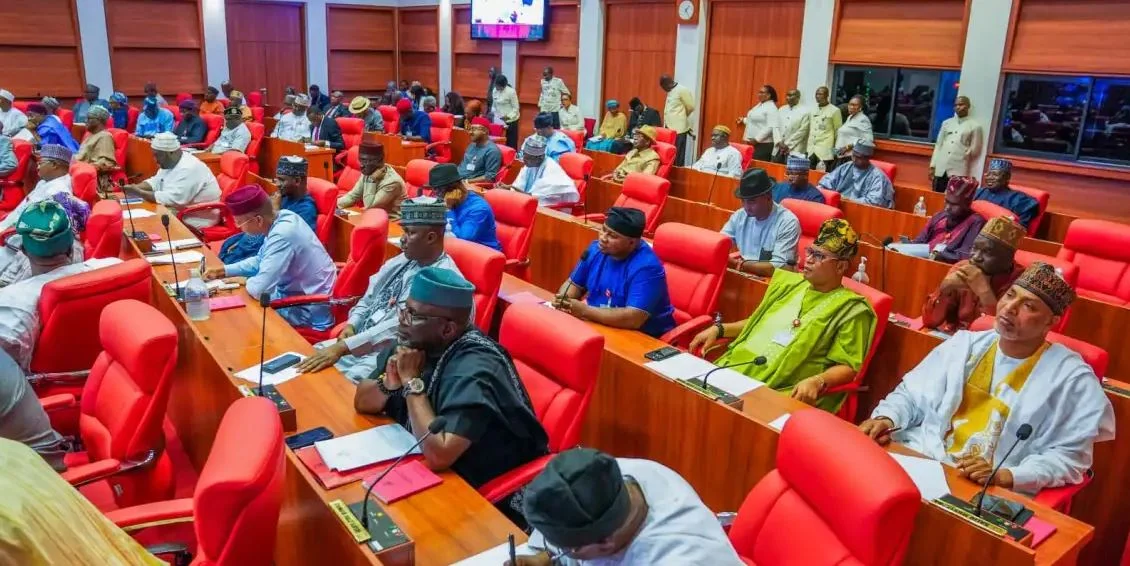
The fuel subsidy debate has resurfaced as Nigeria moves closer to another general election, bringing the tension between political promises and economic realities back to the centre of national discourse. Former Vice President Atiku Abubakar’s pledge to restore the fuel subsidy regime has reignited a deeply divisive debate, with Nigerians split between the prospect of immediate relief at the pump and the broader fiscal consequences for the economy.
The critical question, however, is not simply whether Nigerians need cheaper fuel, but whether the country can sustainably afford the subsidy. Should short-term economic relief take precedence over long-term fiscal stability?
More importantly, does Nigeria have the fiscal capacity to finance another subsidy regime without worsening its debt burden, constraining public investment and reopening the leakages that characterised the previous system?
From a political economy perspective, the subsidy debate must therefore move beyond electoral rhetoric and confront the hard question of who ultimately pays for the relief—and at what cost to the Nigerian economy.
We need to understand that the recent debate among political actors over the return or reversal of fuel subsidy is driven more by political emotions than by sound economic reasoning. The argument for the return of subsidy appears largely devoid of empirical evidence and is not sufficiently grounded in any sustainable economic model.
More importantly, the call for a return of fuel subsidy has increasingly become a form of sweet political rhetoric, but one that lacks basic fiscal-economic judgement. Critically, the debate is also characterised by political propaganda, with some political actors attempting to justify what could ultimately become unrealistic election promises that may be difficult, if not impossible, to fulfil.
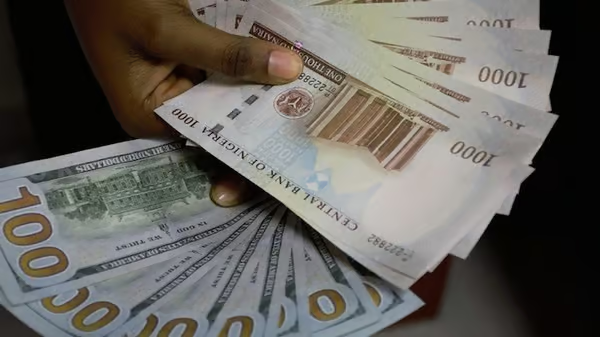
On the sacrifice Nigerians have had to make following the removal of fuel subsidy, it is important to acknowledge that the policy has generated significant fiscal savings, some of which have been channelled to subnational governments. We have also witnessed greater stability in the foreign exchange market under the current CBN management, alongside the rebuilding of the country’s external reserves to over $53 billion.
The question we should therefore ask is: what would have happened if that bold decision had not been taken? The likely consequences would have included deeper fiscal imbalances, persistent foreign exchange bottlenecks, inadequate external reserves to support international trade, reduced capacity to finance critical infrastructure, and increasing difficulty in meeting government obligations, including salaries and pensions.
There is no doubt that the removal of petrol subsidy has come with a deep and painful sacrifice for Nigerians. However, from a political-economy perspective, the policy has also helped to protect the government from a potentially larger fiscal crisis. In the long run, the objective should not simply be to return to a subsidy regime because it is politically popular, but to build an economy where government resources are deployed more efficiently towards productive investment, infrastructure and social protection.
Unfortunately, this is both an important and sensitive issue because subsidy generates mixed reactions. In principle, subsidy is one of the responsibilities of government, particularly when it is designed to cushion the impact of economic hardship on vulnerable citizens.
However, it would be counterproductive for government to continue focusing heavily on subsidising consumption when the more sustainable approach should be to direct greater support towards production. The reason is simple: Nigeria already operates various forms of subsidy across different sectors of the economy.
There are subsidies in pensions and gratuities, education through public institutions, healthcare, agriculture through interventions such as fertiliser support, and electricity, among others. These are all financial commitments that place significant pressure on government resources.
At the same time, the government is expected to provide and maintain infrastructure such as roads, railways, seaports and airports, while also financing security and other essential public services. The reality is that Nigeria’s fiscal space is limited, and the country cannot sustainably afford to subsidise everything at the same time.
The more troubling aspect is that corruption has become deeply embedded in some areas of Nigeria’s subsidy system. This is partly why many Nigerians do not even recognise the various forms of subsidy they are already benefiting from. The debate, therefore, should not simply be about whether subsidy should exist or not, but about what should be subsidised, who should benefit, how much government can afford, and how the system can be made transparent and accountable.
Going forward, First, government must educate Nigerians on what subsidy actually means and clearly communicate the different areas in which citizens are already benefiting from government subsidies.
Second, government must eliminate the corruption and leakages that have undermined Nigeria’s subsidy system. This should cover areas including pensions, agriculture and fertiliser support, housing, healthcare, education, electricity and other social interventions.
Third, government must demonstrate stronger commitment to transparency and accountability in the way subsidies are designed, funded and implemented across all sectors and subsectors of the economy. Nigerians must be able to see where the money is going and who is benefiting from it.
Finally, political actors and politicians must exercise restraint and be more responsible in the subsidy debate. Political propaganda must not be allowed to replace economic reality. Politicians must recognise that election promises should be based on what the economy can genuinely sustain, rather than on political rhetoric, emotional appeals or promises that could further weaken the country’s fiscal position.
The fundamental issue is not whether Nigerians deserve relief—they do. The real question is how government can provide that relief without creating another fiscal burden that will ultimately be paid for by Nigerians themselves.
Adefolarin A.Olamilekan
Political Economists and Broadcast Journalist
Host of The Market Report show Adbn Television
Tel: [email protected]
Tel: 08073814436