
By Clement Nwabuko
ABUJA (PRECISE POST) – Vice Presidential candidate of the Nigeria Democratic Congress (NDC) and former Kano State Governor Senator Rabiu Musa Kwankwaso, has accused Governor Abba Kabir Yusuf of allegedly attempting to use the Economic and Financial Crimes Commission (EFCC) to tarnish his reputation and drag members of his family into political controversy.
Kwankwaso also alleged that Yusuf was deploying state resources and influential government institutions to undermine his political standing ahead of the 2027 general elections.
The former governor made the allegations in a statement published on his Facebook page on Friday, November 27, 2026, expressing concern over what he described as the politicisation of anti-corruption institutions and the deterioration of his longstanding relationship with his former political protégé.
Kwankwaso, who said he had known Yusuf for 43 years, recalled that the incumbent governor served under him as Personal Assistant, Principal Private Secretary and commissioner before emerging as the NNPP’s preferred governorship candidate in the 2019 and 2023 elections.
He said Yusuf eventually won the 2023 governorship election through their collective political efforts, lamenting that the trust and relationship built over the years had allegedly been abused.
According to him, the governor had, some months ago, personally submitted a formal request to the EFCC seeking an investigation against him but allegedly resorted to other means after failing to compel the commission to act outside its established procedures.
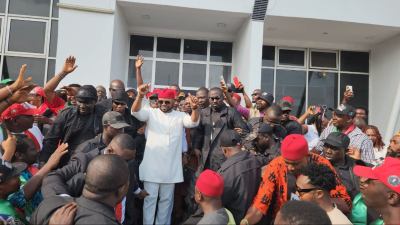
Kwankwaso specifically accused Yusuf of allegedly using an organisation identified as the Society for Anti-Corruption and Good Governance Initiative (SACGGI) to organise protests at the EFCC headquarters in an attempt to mount pressure on the anti-graft agency.
He claimed that the organisation was neither registered with the Corporate Affairs Commission (CAC) nor had any verifiable digital presence or formal relationship with the EFCC or the Independent Corrupt Practices and Other Related Offences Commission (ICPC).
The former governor further alleged that members of the Kano State Government were selectively leaking information to the media and amplifying reports in a manner designed to portray him and his family negatively.
He argued that the alleged campaign was politically motivated and intended to weaken his political movement ahead of the 2027 elections, warning that such developments could heighten political tension and threaten the peace and security of Kano State.
Kwankwaso also alleged that the campaign extended beyond him to other political candidates, particularly the NNPP governorship candidate in Kano State, Comrade Aminu Abdussalam, who is reportedly defending his candidacy before the Independent National Electoral Commission (INEC) and the courts.
He accused the governor of allegedly attempting to influence institutions, including INEC and the judiciary, to prevent the publication of Abdussalam’s name as a governorship candidate and ultimately frustrate his participation in the 2027 elections.
According to Kwankwaso, the alleged objective was to clear the way for Yusuf to contest the election without a formidable opposition candidate.
He, however, commended the EFCC for what he described as its professional handling of two previous invitations extended to him during his years in public service, expressing appreciation for the commission’s prudence and adherence to established procedures.
The former governor also defended his public service record, listing his eight years as governor of Kano State, 17 years in the civil service, service as Deputy Speaker of the House of Representatives during the aborted Third Republic, Minister of Defence, Special Adviser to the President on Darfur and member of the Eighth Senate, among other positions.
He maintained that he had preserved a clean record more than 11 years after leaving office as governor, insisting that his public achievements and record remained intact.
Kwankwaso consequently cautioned younger and serving public office holders against political persecution and the misuse of public institutions, reminding them that public office was transient.
“Those who live in glass houses should be careful about throwing stones,” he warned.
He also thanked members of the public who, according to him, had refused to be misled by what he described as attempts to damage his reputation, urging political actors to respect the independence of government institutions.
Kwankwaso concluded by warning that any attempt to compromise the credibility of anti-corruption agencies, INEC and the judiciary could erode public confidence in the country’s democratic institutions.
He reaffirmed his commitment to the peace of Kano State and Nigeria.