
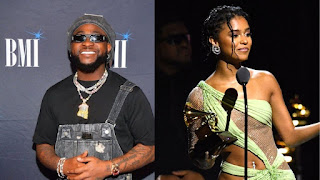
Music critics have attributed Nigeria’s artistes’ inability to shine at the 2026 Grammy in the United States of America to poor craft and organised scheming. KEHINDE OSASONA gives more insights in this report.
Red carpet, eye-catching fashions, the microphones, golden plaque and, of course, expectations usually characterise every annual Grammy Awards ceremony.
The 68th edition of the event that took place at the Crypto.com Arena in Los Angeles USA was not an exception. It was high-octane; it was the winners’ glorious moments.
The ceremony which was hosted by Trevor Noah and celebrated the very best in the global music stage had in attendance a broad spectrum of artistes from around the world – fashionistas; managers; record label owners; promoters; influencers; music buffs, and critics – was not without inspiring speeches and electrifying performances.
From Billie Eilish; FKA Twigs; Olivia Dean; Davido; Bad Bunny; Lady Gaga; Angelique Kidjoe; Tyla, among others from Europe, Africa, The Americas and Asia, it was a full house and none escaped the prying eyes of award-winning “paparazzi photographers” who captured every moment snapping non-stop while relishing the moments.
Post-mortem?
Despite a very strong presence in various categories, Nigerian artists led by David Adeleke aka OBO, his main rivals Ayodeji Irahim (Wizkid), Sarah Aderibigbe (Ayra Starr), Damini Ogulu (Burna Boy) all failed to win any competitive award at the star-studded night.
While South Africa’s Tyla won Best African Music Performance for Push 2 Start, beating Burna Boy’s Love, Davido and Omah Lay’s With You, and Ayra Starr and Wizkid’s Gimme Dat, the Nigeria’s stars all came home empty handed, a development that has not only generated endless arguments both online and off-line, it has also raised questions about the modalities used in crowning eventual winners.
Davido and Burna Boy also lost their nominations for the Best Global Music Album and Best Global Music Performance categories.
Burna Boy also lost in the Best African Music Performance categories, while Davido, Ayra Starr, Wizkid and Omah Lay also missed out in the African music category, which was won by Tyla.
Tyla’s victory marked her second win in the category, having previously won with Water when the award was introduced
AlthoughNigeria’s artisteshave sold out arenas across Europe and Americas, featured big artistes across the globe and were prominent on Spotify a number of times, some schools of thought who were mostly music critics and buffs told Blueprint Weekend that the ceremony was very competitive and that there was more to Grammys than meets the eye.
While expressing his disappointment, a Nigeria’s artiste, Inetimi Alfred, known as Timaya, bemoaned the poor outing. He wrote via his X handle: “This Grammys no sweet oo!”
However, a recording artiste, Akintunde Brown, while revisiting Nigeria’s outing in Lagos, slammed Nigerian artistes, saying: “Nigerian musicians can not win Grammy awards because we sing in our local dialects and the sounds are poor.”
Brown argued further that Nigeria’s hip hop and other genres do not conform to world music standards.
“The genre of music we create in Nigeria cannot blend with what obtains in international music. David Adeleke aka Davido and Olamide Adedeji, and their likes do not even stand a single chance to win anything because the beats and sounds are nothing to that of the foreign guys.
“We also do not use the right nomenclatures which consist of a dynamic and partly subjective set of songs, which can be identified by having been performed or recorded by a variety of musical acts, often with different arrangements.
“At the Grammys, you have a best R&B album category, but someone who calls his music Afro-Soul, or Fuji Blues and some other names in Nigeria, cannot win in that category.
“Sikiru Adepoju won in 2009 the Best World Contemporary World Music Album because he was part of Mickey Hart’s group Planet Drum US-1991.
“Ayodeji Balogun, popularly known as Wizkid, got a nomination for his contribution in one dance by Drake in the album of the year category.
“That song has been streamed over a billion times, that is what data brings to the table. “They create a category, when they feel like honouring an artist and their people must be involved,’’ he said.
Stakeholder’s standpoint
The social space as we speak is abuzz with the Grammys snub, a development that has continued to spark debates about representation and recognition.
A Nigerian disc jockey, DJ Big N, while dissecting the outcome suggests that artists like Angelique Kidjo, who regularly participates in US music events, are more likely to succeed.
Others argue that the Grammys’ categorisation of African music is flawed, with some saying the “Best African Music Performance” category is too broad and doesn’t accurately represent the diversity of African music rather it is simply a matter of the Grammys’ biases.
Critics argue further that Nigerian artistes are being overlooked, with some suggesting the Grammys categories are flawed and don’t accurately represent African music diversity.
Veteran music producer Cobhams Asuquo criticised the Recording Academy for leveraging African music for visibility, while offering limited recognition.
Some fans and industry experts have lamented the focus on international awards, with content creator Mirex Moses suggesting that Nigeria should value its own culture and standards.
Music buffs are also questioning the Grammys’ handling of African music, arguing that the categories are flawed and don’t accurately represent the diversity of African music. Others point to Tyla’s strong team and global backing as key factors in her win.
And the consolation
At the 2026 Grammy Awards, three people of Nigerian descent won awards. They are Shaboozey (born Collins Obinna Chibueze), Tyler, the Creator (born Tyler Okonma), and Cynthia Erivo (born Cynthia Chinasaokwu Onyedinmanazu Amarachukwu Owezuke Echimino Erivo).
Some entertainment and showbiz writers, who described the outing as “not entirely bad” despite the loss of Nigeria’s big three – Wizkid, Davido, and Burna Boy – also cited the consolation which came when Fela Anikulapo-Kuti was honoured with a posthumous Lifetime Achievement Award, recognising his lasting impact on global music.
But even at that as the Nigerian music industry hopes for better representation at the next “music festival,” critics and music buffs are still asking: “Should the country be celebrating its Diaspora winners more.”?
What led to this poor outing? Some industry insiders point to Nigerian artistes’ limited involvement in American music events and seminars, as well as their lack of participation in the Recording Academy’s voting body.
Despite Nigerian artistes’ contributions to the global music industry and entertainment, it would not be out of place to ask where we got it all wrong.
So,shouldNigerian artistes continue to submit their works for consideration at the Grammy?

