
By Clement Nwabuko
ABUJA (PRECISE POST) – The National Human Rights Commission (NHRC) has called for stronger policies, institutions and social protection systems to ensure that Nigeria’s ageing population enjoys longer lives with good health, dignity, security, meaningful participation and equality.
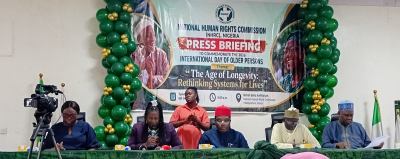
The Executive Secretary of the Commission, Dr Tony Ojukwu, SAN, made the call on Tuesday in Abuja at an event organised by the NHRC to commemorate the 2026 International Day of Older Persons, themed: “The Age of Longevity: Rethinking Systems for Longer Lives.”
Ojukwu said the theme was timely as increasing life expectancy required governments and societies to build systems capable of supporting people throughout the different stages of their lives.
He said longevity should be viewed as an achievement and an opportunity rather than a burden, noting that older persons possess knowledge, experience, skills and institutional memory that remain valuable to families, communities and the nation.
According to him, older persons are parents, grandparents, professionals, entrepreneurs, farmers, community leaders, caregivers, mentors and custodians of culture and traditions.
“Older persons are right holders and active members of our society, and their voices must be reflected in decisions and policies that affect their lives,” he said.
The NHRC boss stressed that the focus should not only be on how long people live but also on ensuring that their additional years are lived in good health, dignity, security, meaningful participation and equality.
He identified dignity, equality, healthcare, social security, adequate living conditions, family life, property, participation and access to justice as among the fundamental rights of older persons.
Ojukwu, however, expressed concern over the challenges confronting many older Nigerians, including poverty, inadequate income, limited access to healthcare, social isolation, delayed or inadequate pension benefits, age discrimination, neglect, abuse, exploitation and property dispossession.
He said older women were particularly vulnerable to challenges associated with widowhood, discriminatory cultural practices, inheritance disputes, poverty and gender-based discrimination.
The Executive Secretary added that older persons living with disabilities, those in rural communities, people living alone and those affected by displacement, poverty or humanitarian crises often face additional barriers.
“Ageing is not a single experience,” Ojukwu said, stressing that government policies must take into account differences in gender, disability, economic circumstances, location, health and social conditions.
He also advocated a dedicated international convention on the rights of older persons, saying ongoing discussions at the international level on the proposed instrument should be given greater attention.
“Why should older persons not have a Convention?” he asked, describing the absence of a dedicated global convention as a gap that needed to be addressed.
At the national level, Ojukwu said Nigeria already had legal and policy frameworks, including the Constitution, the National Human Rights Commission Act, the National Senior Citizens Centre Act and the National Policy on Ageing, which provide a foundation for protecting the rights of older persons.
He, however, stressed that stronger implementation was required to translate the existing frameworks into meaningful protection for older Nigerians.
Ojukwu said the Commission had continued to strengthen its interventions through advocacy, public enlightenment, monitoring, investigation of complaints, stakeholder engagement and capacity building.
He disclosed that the NHRC had established and trained older persons’ desk officers across its state offices to bring ageing and related human-rights issues closer to communities.
The NHRC boss also called for a change in societal attitudes that portray old age as synonymous with dependency, incapacity or lack of productivity.
“Growing older is a natural part of the human life cycle. The dignity of a person does not diminish because of age,” he said.
He urged government institutions, families, communities, employers and the media to challenge negative stereotypes and promote more positive representations of ageing.
Ojukwu particularly tasked the media with reporting the experiences of older persons responsibly, exposing abuse and neglect, creating public awareness and holding duty bearers accountable.
He urged journalists to highlight the contributions of older persons rather than portraying them solely as vulnerable or dependent people.
He further stressed the importance of allowing older persons to participate in decisions affecting their lives, urging families to consult elderly parents rather than automatically deciding what they believe is best for them.
In a goodwill message, the President of the Civil Society for the Rights of Older Persons in Nigeria (COSROPIN), Senator Eze Darlington Ajoku, called for stronger systems covering healthcare, social protection, housing, transportation, pensions and community support.
Ajoku said older persons should be regarded as “rights-holders, not recipients of charity alone,” noting that they had made significant contributions to families, communities and the country.
He called for greater investment in geriatric healthcare, caregiver support, lifelong learning, age-friendly communities and the meaningful participation of older persons in decision-making.
Also speaking, the Federal Commissioner of the National Commission for Refugees, Migrants and Internally Displaced Persons (NCFRMI), highlighted the additional vulnerabilities faced by older persons among displaced populations.
He said that as of September 1, 2026, Nigeria had 140,927 refugees and asylum seekers and 3,679,757 internally displaced persons, with older persons among those requiring targeted protection and age-friendly humanitarian support.
The Commissioner stressed that older displaced persons should be treated as rights holders rather than merely beneficiaries of humanitarian assistance.
The NHRC said it would continue to receive and investigate complaints, monitor situations affecting older persons, engage duty bearers and advocate stronger implementation of laws and policies.
The Commission also pledged to deepen partnerships with government institutions, civil society organisations, development partners, organisations of older persons, caregivers and the media.
Ojukwu urged stakeholders to make the 2026 commemoration more than a ceremonial event, but a renewed call to action to ensure that longer lives are accompanied by health, dignity, security, equality, participation and human rights.
He said the goal should be to build a Nigeria where everyone can “age with dignity, live with security, participate with purpose, and enjoy their human rights throughout their entire life course.”
Tighten the story for publication
Sharpen the headline around implementation
Reduce repeated rights references

