
By Clement Nwabuko
ABUJA (PRECISE POST) – The Executive Secretary of the National Human Rights Commission (NHRC), Dr Tony Ojukwu, has said that stronger collaboration between the commission and the judiciary will expand access to justice, particularly for indigent Nigerians who cannot afford the cost of the formal justice system.
Ojukwu said the partnership would ensure that the rights of every Nigerian are respected, protected and enforced, irrespective of their financial circumstances.
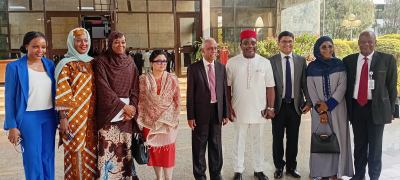
He spoke on Monday, November 9, 2026, when he led a high-level delegation of the National Human Rights Commission of India, headed by its Chairperson, Justice V. Ramasubramanian, on a courtesy visit to the Chief Justice of Nigeria (CJN), Justice Kudirat Motonmori Olatokunbo Kekere-Ekun, at the Supreme Court.
The Indian delegation included the commission’s Joint Secretary, Mr Samir Kumar.
According to Ojukwu, the visit underscored the complementary responsibilities of national human rights institutions and the judiciary in strengthening access to justice and advancing the protection of fundamental human rights.
He stressed that the NHRC provides free services to Nigerians, making its intervention particularly important to citizens who lack the financial capacity to pursue justice through conventional legal channels.
“The commission’s services are free. And so, our visit here today is a recognition of the fact that human rights institutions need to work hand-in-hand with the judiciary to make sure that everybody is able to have access to justice and their rights respected and enforced,” he said.
The NHRC boss disclosed that the Chief Justice of Nigeria had reaffirmed the judiciary’s commitment to working closely with the commission to ensure that Nigerians continued to benefit from the services of both institutions.
He said Justice Kekere-Ekun also emphasised that human rights-related cases ordinarily receive expedited attention in the courts, while appreciating the commission’s contributions to the promotion and protection of human rights.
Ojukwu added that the CJN encouraged the NHRC to sustain its interventions, noting that closer institutional cooperation would further strengthen the administration of justice in the country.
He further disclosed that the meeting provided an opportunity for Nigeria and India to exchange experiences and share best practices in human rights protection, public interest litigation and judicial processes.
According to him, the collaboration would enable both countries to draw from one another’s experiences in addressing human rights violations and improving access to justice.
Earlier, the Chairperson of the National Human Rights Commission of India, Justice V. Ramasubramanian, described the meeting with the CJN and other Supreme Court justices as fruitful.
Ramasubramanian, a former Justice of the Supreme Court of India, said discussions centred on the complementary role of national human rights institutions in supporting the judiciary in the discharge of its constitutional responsibilities.
He identified three major objectives of the proposed Nigeria-India partnership: promoting collaboration between the human rights institutions of both countries, strengthening their shared commitment to the protection and promotion of human rights, and enriching their operations through the exchange of experiences in tackling human rights violations.
He explained that the visit was part of preparations for the signing of a Memorandum of Understanding (MoU) between the National Human Rights Commission of Nigeria and its Indian counterpart, scheduled for Tuesday, November 10, 2026.
The proposed agreement is expected to deepen institutional cooperation, facilitate knowledge sharing and strengthen the capacity of both commissions to address human rights challenges.
Precise Post recalls that the visit highlights the growing recognition that effective human rights protection requires not only strong legal institutions but also accessible mechanisms through which ordinary citizens can seek redress and obtain justice.

