
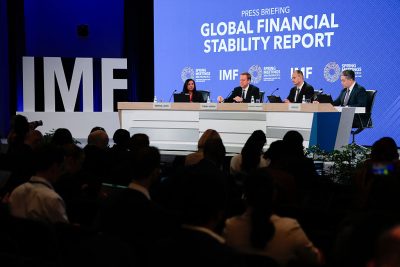
The Managing Director of the International Monetary Fund (IMF), Kristalina Georgieva, said this during her briefing on the global policy agenda in Washington on Wednesday.
Georgieva said that the conflict was inflicting heavy damage on infrastructure, while disrupting supply chains and slowing global growth from 3.4 per cent last year to 3.1 per cent in 2026, according to the latest global economic outlook.
She said that the prolonged hostilities and sustained high oil prices could worsen conditions significantly, forcing the global economy toward severe slowdown scenarios and compelling governments to prepare for difficult economic adjustments ahead.
She said that in worst case scenario, global growth may decline sharply to around two per cent, affecting all countries as rising energy costs transmit shocks across markets and strain economic resilience worldwide.
Georgieva, however, said that the burden of shocks remained uneven, with energy importing nations and low income or fragile economies facing the harshest consequences due to limited policy space and constrained financial resources.
She advised policy makers to prioritise macroeconomic and financial stability in the short term, while carefully designing support measures for households and businesses affected by external shocks to avoid unintended consequences.
Georgieva urged monetary authorities to adopt a cautious wait and see approach where conditions permit.
She said that some countries might require early tightening, while rising public debt continued to limit fiscal flexibility globally.
She said that global public debt was to exceed 100 per cent of GDP by 2029, underscoring cumulative impact of repeated shocks and highlighting urgent need for balanced policies that protect vulnerable populations.
Georgieva said that the IMF was ready to support member countries, with expected financing needs ranging between 20 billion dollars and 50 billion dollars through existing programmes and new arrangements globally.
She said that the IMF was strengthening collaboration with global partners while refining its policy tools, ensuring that countries can navigate uncertainty, implement reforms, rebuild fiscal space and enhance resilience against future economic shocks. (NAN)

