
By Clement Nwabuko
ABUJA (PRECISE POST) – The National Human Rights Commission (NHRC) has disclosed that it recorded 384,196 human rights complaints across its 38 offices nationwide in October 2026, representing a 14 per cent increase of more than 45,000 complaints compared with the figure recorded in September.
The Executive Secretary of the Commission, Dr Tony Ojukwu, disclosed this on Monday while presenting the October 2026 Human Rights Situation Dashboard in Abuja.
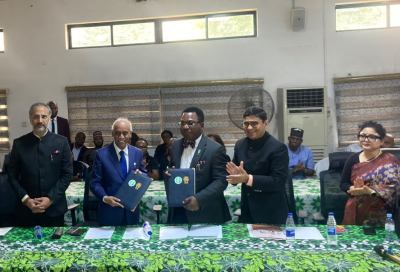
The event also featured the signing of a Memorandum of Understanding (MoU) between the NHRC and the National Human Rights Commission of India, as well as the official unveiling of the logo commemorating the Nigerian Commission’s 30th anniversary.
Ojukwu described the increase in complaints as a development requiring sustained attention, noting that while it could reflect growing public awareness of human rights and improved access to the Commission’s complaint mechanisms, it also exposed the persistent challenges confronting individuals and communities across the country.
He stressed that the dashboard was more than a statistical report, explaining that every complaint represented an individual, family or community whose rights and dignity required protection.
According to him, the Commission’s responsibility goes beyond documenting alleged violations to ensuring that the information gathered translates into effective interventions, appropriate remedies and stronger human rights protection.
Giving a breakdown of the October figures, Ojukwu said complaints relating to freedom from discrimination constituted the largest thematic category, with 217,243 cases.
He disclosed that 184,624 of the complaints were recorded under the protection of internally displaced persons (IDPs), underscoring the scale of protection challenges confronting displaced populations.
The NHRC boss said the figures reinforced the need to ensure that displacement did not deprive individuals and families of their dignity, security and access to fundamental rights.
On the country’s security situation, Ojukwu expressed concern over persistent killings, armed attacks and abductions across different parts of Nigeria.
He said the Commission’s Human Rights Observatory documented attacks involving farming communities, travellers, students, traditional rulers and security personnel, with particularly disturbing incidents of mass killings and abductions reported in parts of Taraba, Borno, Zamfara, Niger and Plateau states.
He noted that the incidents had far-reaching human rights implications, affecting the rights to life, liberty, dignity and security of persons, while disrupting livelihoods, restricting freedom of movement and exposing children and other vulnerable groups to further dangers.
Ojukwu urged security agencies to intensify efforts to protect affected communities, rescue abducted persons and ensure that perpetrators were brought to justice in accordance with the law.
The Executive Secretary also raised the alarm over the continued vulnerability of women and children to sexual and gender-based violence, exploitation and abuse.
He said the October Observatory documented disturbing cases of alleged rape and sexual abuse of children, human trafficking, domestic violence and other forms of abuse.
He added that reports of children subjected to severe physical violence, abandonment and neglect highlighted the urgent need to strengthen child protection mechanisms.
According to him, children must be protected in their homes, schools, religious institutions and communities through preventive measures, prompt investigations, survivor support and improved access to justice.
On alleged human rights violations by public authorities and security personnel, Ojukwu expressed concern over incidents involving restrictions on freedom of expression and civic space.
He maintained that democratic participation must be protected and that disagreements should never be resolved through violence or intimidation.
He consequently called for allegations of abuse by public officials to be investigated and addressed through appropriate accountability mechanisms.
Despite the challenges, the NHRC chief acknowledged developments during the period that demonstrated the continuing relevance of institutions and processes in advancing human rights protection.
He cited decisions of the ECOWAS Community Court of Justice in October, particularly those concerning the rights of persons in detention and the protection of communal land rights, as important contributions to access to justice and regional human rights accountability.
Ojukwu also highlighted the Commission’s advocacy for economic and social rights during Nigeria’s 66th Independence Anniversary and World Teachers’ Day celebrations.
He said the Commission had used the occasions to advocate rights-based development, equal justice, increased investment in teachers, improved schools and better learning facilities.
He emphasised that human rights progress should not be measured solely by the absence of violations but also by the extent to which institutions, laws, policies and public resources improve people’s lives and protect their dignity.
The Executive Secretary further disclosed that the Commission, in collaboration with the Centre for Human Rights, University of Pretoria, and BAOBAB for Women’s Rights, recently convened a two-day stakeholders’ engagement on Nigeria’s implementation of the Maputo Protocol on the Rights of Women in Africa.
The engagement, he said, brought together government representatives and civil society organisations to examine implementation challenges, government obligations and the role of civil society in monitoring, documentation and shadow reporting.
He particularly acknowledged the participation of the Special Rapporteur on the Rights of Women in Africa, Honourable Commissioner Janet Ramatoulie Sallah-Njie.
On the MoU with India’s National Human Rights Commission, Ojukwu described the agreement as a significant milestone in strengthening international cooperation and institutional capacity between the two human rights bodies.
He explained that the agreement would provide a framework for exchanging expertise and best practices, capacity building, joint research and publications, as well as engagement on regional and international human rights issues.
According to him, the partnership would enable both institutions to learn from each other’s experiences and strengthen their respective approaches to the promotion and protection of human rights.
He expressed optimism that the agreement would translate into practical programmes and sustained cooperation for the benefit of both institutions and the people they serve.
Turning to the forthcoming elections, Ojukwu warned against rising political intolerance and electoral violence, stressing that the right to political participation remained a cornerstone of Nigeria’s constitutional democracy.
He observed that the electoral process had yet to demonstrate the level of inclusiveness, peacefulness and fairness required to guarantee the full enjoyment of political rights.
With the elections scheduled for January next year approaching, he urged political actors to exercise restraint and conduct themselves in accordance with electoral laws and human rights principles.
The NHRC boss also called for the prosecution of individuals who had incited hateful and divisive speeches, warning that political disagreements must not be allowed to undermine citizens’ rights or threaten democratic stability.
He reaffirmed the Commission’s commitment to strengthening its monitoring and reporting mechanisms, improving complaint handling and resolution, and ensuring that documented violations informed policy decisions, institutional reforms and appropriate interventions.
Ojukwu maintained that the Commission’s ultimate objective was not merely to record violations after they occurred but to contribute to a system in which abuses were prevented, victims obtained justice and public institutions were held accountable.
He acknowledged the contributions of the Commission’s state coordinators and staff, development partners, civil society organisations, the media and other stakeholders in advancing its mandate.
He urged stakeholders to study the October dashboard findings and recommendations and identify practical measures to address the human rights concerns highlighted.
Precise Post recalls that the unveiling of the anniversary logo marks three decades of the NHRC’s commitment to promoting and protecting human rights in Nigeria, providing an opportunity to reflect on its achievements, institutional growth and continuing responsibility to safeguard the fundamental rights and dignity of Nigerians.

