
By Our Reporter
ABUJA (PRECISE POST) – The Director-General of the National Automotive Design and Development Council (NADDC), Joseph Oluwememan Oshanipa, has unveiled a renewed strategy to transform Nigeria’s automotive industry through aggressive local content development and a shift away from dependency on imported vehicles and components.
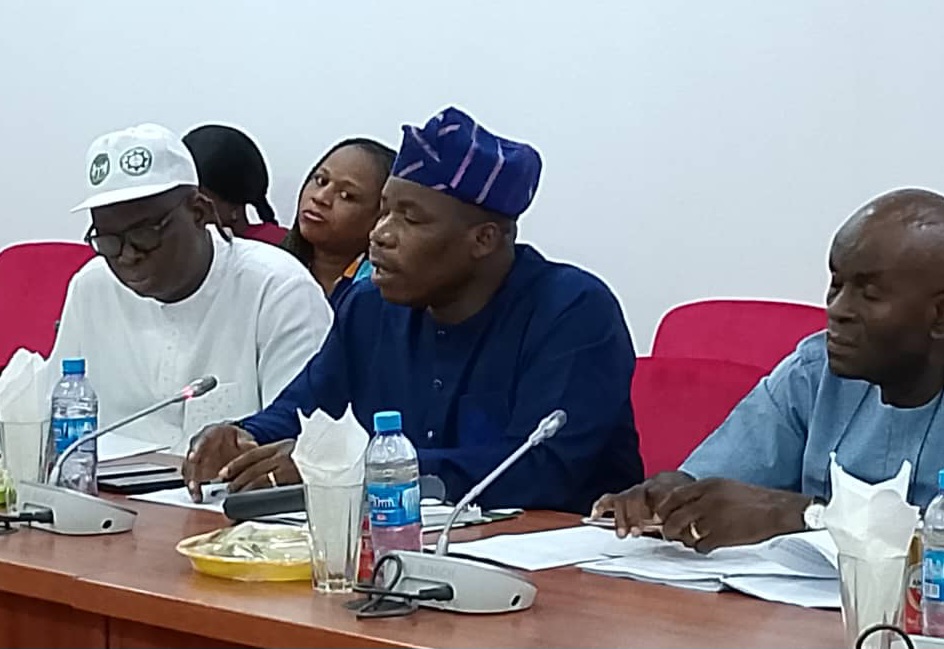
Speaking after a budget performance review with the Senate Committee on Industries, chaired by Senator Francis Fadahunsi, Oshanipa addressed lawmakers’ concerns over the Council’s revenue shortfall. He clarified that the discrepancies were due to misinterpretation of expenditure figures, not financial mismanagement. “What they saw was what we’ve actually spent, and after our explanations, they were satisfied,” he stated.
Despite fiscal challenges, Oshanipa laid out an ambitious plan to increase local automotive production through strategic partnerships with stakeholders such as the Association of Local Component Manufacturers (ARCMAN), the Manufacturers Association of Nigeria (MAN), and the National Automotive Manufacturers Association (NAMA).
“We’ve identified components that can easily be produced in Nigeria,” Oshanipa said. “Our goal is to ensure local manufacturers can meet the required volume for domestic use. Without capacity, the programme will fail—and we’re determined not to let that happen.”
While the Council projected ₦140.5 billion in revenue for 2025, actual collections remain far below target, with ₦25 billion generated in 2024. Members of the Senate Committee called for stricter revenue monitoring, enhanced coordination with Customs, and a well-defined roadmap for sustainable industry growth.
A key focus of the legislative discussions was the proposed ban on used car imports, which NADDC believes will protect domestic manufacturers and stimulate local vehicle assembly. To support this shift, the Council is advocating for credit schemes to make new vehicles more affordable, and sector-specific lending frameworks to provide financial backing for manufacturers.
In addition, a technical committee has been established to map out viable local production chains, particularly in the motorcycle and tricycle segments—markets with high demand and relatively simple component structures that are ideal for rapid localization.
“It’s not just about producing. we must produce competitively,” Oshanipa emphasized. “We’re working to provide the financial and technical support our manufacturers need to thrive.”
As Nigeria’s automotive industry faces a pivotal moment, the NADDC’s renewed push signals a potential turning point, one that prioritizes innovation, self-reliance, and sustainable economic growth over long-standing import dependency.
