
I have been thinking about a question that may make many Nigerians uncomfortable: Is Western liberal democracy really the best political system for Nigeria?
This is not an argument for dictatorship, nor an argument against freedom, participation, accountability or the right of citizens to choose their leaders. It is a question about whether we have become so attached to the form of democracy that we have forgotten to ask what it is supposed to deliver.
We have elections. We campaign, vote, announce results, challenge them, go to court, fight and, eventually, prepare for the next election. Meanwhile, public confidence in the process appears increasingly fragile. Yes, Nigeria has made improvements in electoral technology. The Bimodal Voter Accreditation System (BVAS) and other innovations have strengthened aspects of the voting process. But technology cannot fix a fundamentally political problem. We can have better technology and still have disputed elections. Plus, elections are not cheap.
Available data shows that the Independent National Electoral Commission (INEC) spent over N100 billion to conduct the 2015 elections, while the 2019 elections gulped over N140 billion approved by the National Assembly. The 2023 general elections reportedly cost over ₦300 billion. For 2026, INEC proposed ₦171 billion for its operations, while its projected requirement for the 2027 general elections is about ₦874 billion. There are slight variations of this data from different organisations but all are very hefty figures.
So we should ask: what exactly are we spending all this money to achieve? A successful liberal democracy requires much more than elections. It requires the rule of law, independent institutions, meaningful elections, protection of rights, strong political parties, an independent judiciary, a free press, an informed electorate and citizens who participate beyond election day. It also needs public officials who are truly working in the interest of the people.
Can Nigeria honestly say that these conditions exist? If not, are we truly working towards these? Perhaps, this is where our conversation needs to become more sophisticated. We have borrowed the architecture of Western liberal democracy, but have we built the institutional foundations that make it work?
Nigeria is not Britain, America or France. We have our own history, social structures, political culture and realities. Why should we be afraid to ask whether Western liberal democracy can be adapted to suit us or not?
Perhaps we need a Nigerian model that retains what should never be compromised, such as human dignity, fundamental rights, participation, accountability, the rule of law and peaceful transfer of power, while rethinking the structures through which these principles are delivered.
Furthermore, is Western democracy the only system capable of producing development? History suggests the answer is not that simple. Some countries have developed under authoritarian systems, while some democracies have remained poor and dysfunctional. But authoritarianism carries its own danger: when power is concentrated, citizens have fewer peaceful mechanisms for correcting bad leadership.
So perhaps the answer may be to build a political system that actually works for Nigeria. At the end of the day, I’m less interested in democracy as an ideological label than in what government produces.
Can our children get good education? Can hospitals function? Can businesses thrive? Can farmers produce and move their goods? Can young people find meaningful work as well as innovate, solve problems and produce? Can government solve problems?
What is the use of a democracy that cannot deliver? Elections are a mechanism. Political parties are mechanisms. Parliament is a mechanism. Government itself is a mechanism. The ultimate test is the outcome.
If we spend hundreds of billions conducting elections only to return to the same cycle of distrust, litigation, political violence and underdevelopment, perhaps our biggest problem is not that we are insufficiently democratic. Perhaps we have simply mistaken the process for the purpose.
Nigeria does not need democracy as theatre. Nigeria needs a system that delivers, and if the version we have imported is not working, perhaps it is time to stop asking how to become better imitators and start asking a more courageous question: what would a Nigerian political system designed to actually work, look like?
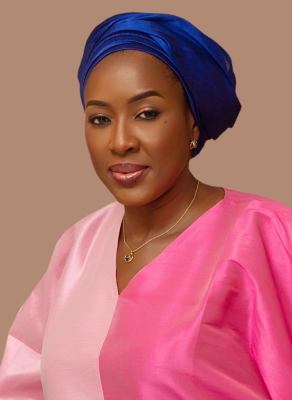
Dr. Ikokwu aspires to serve Idemili North and South Federal Constituency of Anambra State in the House of Representatives
#PoliticsforPublicGood
#TakeBackYourGovernment

