
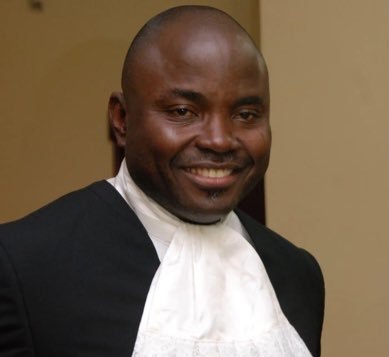
By Jibrin Okutepa SAN
It has been reported that the Hon Attorney General of Imo State has criticised the decision of NJC requesting the IMSJSC to include the name of the most senior judge of the state in the list of the judges to be recommended for appointment as the substantive CJ of Imo state. According to the report the Hon Attorney Gen of Imo State says NJC got no such power. With respect to the Honourable Attorney-General of Imo State, his objection to the National Judicial Council’s intervention in the appointment of a substantive Chief Judge is, in my view, misconceived.
The NJC’s published decision requested the inclusion of Hon. Justice Ijeoma Agugua, the State’s most senior High Court judge and Acting Chief Judge, among candidates for consideration. Inclusion affords her an opportunity to be assessed; it does not predetermine her appointment. The constitutional arrangement requires cooperation between institutions. Paragraph 6(a), Part II of the Third Schedule empowers the State Judicial Service Commission to advise the NJC on suitable candidates. Paragraph 21(c), Part I empowers the NJC to recommend a candidate from the names submitted. Under section 271(1), the Governor appoints on the NJC’s recommendation, subject to confirmation by the State House of Assembly.
Each institution must exercise its responsibility without frustrating the responsibilities of the others.
The Attorney-General reportedly relies on section 202 to argue that the Commission is independent of external direction. That provision deserves respect, but its precise language concerns the exercise of powers to make appointments and exercise disciplinary control. Advising the NJC on candidates for Chief Judge forms part of a shared constitutional process. In my considered view, section 202 cannot simply be treated as giving the Commission an unrestricted veto over meaningful consideration by the NJC.
The NJC’s published appointment guidelines expressly identify seniority at the Bar or Bench as a consideration, alongside professional competence, legal knowledge and other relevant criteria. Seniority therefore deserves serious consideration in an assessment based on merit. Where the most senior judge is omitted, the proper response should be a reasoned explanation supported by the applicable criteria. Institutional independence cannot justify arbitrary exclusion. Legal precision nevertheless matters. Section 271(4) expressly requires the most senior High Court judge to perform the functions of Chief Judge when the stipulated circumstances arise.
The provisions governing substantive appointment do not confer the same automatic entitlement. It would therefore overstate the law to say that the most senior judge can never lawfully be excluded, whatever the circumstances. The stronger argument is that no constitutional provision authorises exclusion merely to bypass seniority or prevent fair consideration. The Hon AG of Imo State did not cite any law that permits the Imo State Judicial service Commission to exclude the name of most senior judge in the list to be submitted to NJC.
On the published facts, I consider the NJC’s request a defensible measure to ensure a credible selection process. The Commission retains its responsibility to assess suitability and communicate any substantiated reservations. The NJC must equally exercise its own judgment before making a recommendation. The Honourable Attorney-General should support a transparent process in which Justice Agugua’s record can be considered alongside those of other eligible candidates. If there are lawful grounds against her suitability, let them be presented and fairly examined. The office of Chief Judge is a public trust, and its occupants must emerge through a process that commands confidence in the independence, integrity and fairness of the judiciary. The whimsical exclusion of her name has no support of law. NJC is right.

