



By Chibuike Nwabuko
ABUJA (PRECISE POST) – President Bola Ahmed Tinubu has approved a comprehensive payment plan to clear long-standing debts in Nigeria’s power sector, a move aimed at stabilising electricity generation and improving supply across the country.
The approval, announced by presidential spokesman Bayo Onanuga oj his X handle on Sunday, follows the final review of legacy debts accumulated under the Presidential Power Sector Financial Reforms Programme over more than a decade.
According to the statement, the debts, incurred between February 2015 and March 2025. have been verified, with ₦3.3 trillion agreed as a full and final settlement figure to ensure a transparent and equitable resolution.
Implementation of the repayment plan is already underway. So far, 15 power generation companies have signed settlement agreements amounting to ₦2.3 trillion. The Federal Government has raised ₦501 billion to fund the exercise, with ₦223 billion already disbursed and additional payments in progress.
The government said the intervention is expected to have a direct impact on electricity supply, as improved cash flow within the power value chain will support more stable generation and enhance overall reliability.
Special Adviser to the President on Energy, Olu Arowolo-Verheijen, explained that the initiative goes beyond debt clearance, describing it as a critical step toward rebuilding confidence in the sector.
She noted that ensuring timely payments to gas suppliers and power generation companies would help sustain operations and improve system performance.
Arowolo-Verheijen added that the programme aligns with broader reforms, including improved metering and the introduction of service-based tariffs designed to link electricity costs with quality of supply.
She further emphasised that the government is prioritising reliable power for businesses, industries, and small enterprises, given its importance to job creation and economic growth.
President Tinubu also commended stakeholders for their roles in resolving the sector’s long-standing financial challenges and confirmed that the next phase of the programme, known as Series II, will commence later this quarter.
The administration expressed optimism that the reforms would deliver more reliable electricity to households, strengthen support for businesses, and drive sustainable growth in Nigeria’s power sector.

By Our Reporter
ABUJA (PRECISE POST) – Socio-Economic Rights and Accountability Project (SERAP) has filed a lawsuit against the Code of Conduct Bureau (CCB) over “the failure to investigate the allegations thatcertain lawmakers improperly removed key sections on electronic transmission of election results from the Electoral Act (Amendment) Bill during plenary, and unlawfully altered some aspects of the tax reform bills.”
In the suit number FHC/ABJ/CS/634/2026 filed last week at the Federal High Court in Abuja, SERAP is seeking: “an order of mandamus to direct and compel the CCB to probe the allegations thatcertain lawmakers improperly removed key sections on electronic transmission of election results from the Electoral Act (Amendment) Bill.”
SERAP is seeking: “an order of mandamus to direct and compel the CCB to probe the allegations that certain lawmakers and officers of the executive branch unlawfully alteredsome aspects of the tax reform bills, which resulted in differences between the tax laws passed by lawmakers and the gazetted copy available to the public.”
SERAP is also seeking: “an order of mandamus to direct and compel the CCB to refer any substantiated violations of the Code of Conduct for Public Officers deriving from the outcome of its investigation to the Code of Conduct Tribunal for prosecution and to uphold the constitutional principle that public office is a public trust.”
In the suit, SERAP is arguing that, “Granting the reliefs sought would help address critical concerns relating to conflict of interest, abuse of office, non-disclosure of interests, and reinforce adherence to due process. It would serve to curb the erosion of the Code of Conduct for Public Officers in the exercise of legislative powers.”
SERAP is arguing that, “Where lawmaking is shaped by abuse of office and conflict of interest, it ceases to be a legitimate exercise of constitutional and fiduciary responsibility and becomes a legal and ethical infraction prohibited under the Code of Conduct for Public Officers.”
SERAP is also arguing that, “The Code of Conduct for Public Officers is a constitutional imperative designed to ensure probity, accountability and transparency in public life. This means that any credible allegation of breach must be promptly, thoroughly, transparently and effectively investigated by the CCB.”
According to SERAP, “Public officers hold their offices in trust for the people and must not deploy official power for personal or sectional advantage.”
The suit filed on behalf of SERAP by its lawyers Kolawole Oluwadare, Kehinde Oyewumi, and Andrew Nwankwo, read in part: “Public officers are bound by constitutional standards of conduct, and breach of such standards ought to attract constitutional consequences.”
“This principle applies with particular force to officers of the executive branch, as well as lawmakers whose constitutional mandate is to legislate for the peace, order, and good government of the Federation—not to advance personal or sectional interests.”
“Code of conduct obligations imposed by the Nigerian Constitution are enforceable against all public officers, including legislators and officers of the executive branch of government. No public officer is above the constitutional mechanisms established to enforce integrity in public office.”
“The processes leading to the passage of the Electoral Act amendment Bill by the Senate and the signing into law of the Tax Reform bills were allegedly marked by: a) alterations to bill provisions without debate and due process of law; b) alterations of the passed Tax Reform Bill without the approval of the National Assembly.”
“There are also allegations that certain amendments may have been removed or introduced to the Electoral Act Amendment Bill and the Tax Reform Laws to serve private or political interests rather than the public interest.”
“Paragraph 1 of the Fifth Schedule to the Nigerian Constitution 1999 [as amended prohibits public officers from placing themselves in situations where personal interests conflict with official duties.”
“This constitutional provision mandates integrity, ensuring that personal gain does not interfere with the objective performance of public functions.”
“Members of the National Assembly and officers of the executive branch of government are public officers within the meaning of Paragraph 19 of the Fifth Schedule to the Nigerian Constitution and are therefore bound by constitutional provisions on the Code of Conduct for Public Officers.”
“Section 15(5) of the Nigerian Constitution imposes the responsibility on public institutions to “abolish all corrupt practices and abuse of power including in the context of lawmaking.”
“According to paragraph 12 of the Code of Conduct for Public Officers contained in the Fifth Schedule, Part 1 to the Nigerian Constitution, ‘any allegation that a public officer has committed a breach of or has not complied with the provisions of this Code shall be made to the Code of Conduct Bureau.’”
“Paragraph 3 (e) of the Third Schedule Part 1 to the Constitution provides that, ‘the Bureau shall have power to receive complaints about non-compliance with or breach of the provisions of the Code of Conduct or any law in relation thereto, investigate the complaint and, where appropriate, refer such matters to the Code of Conduct Tribunal.’”
“Section 3(d) of the Code of Conduct Bureau and Tribunal Act provides that, ‘the functions of the Bureau shall be to receive complaints about non‐compliance with or breach of this Act and where the Bureau considers it necessary to do so, refer such complaints to the Code of Conduct Tribunal established by section 20 of this Act in accordance with the provisions of sections 20 to 25 of this Act.’”
“Section 16 of the Act also provides that, ‘any complaint that a public officer has committed a breach of or has not complied with the provisions of this Act shall be made to the Bureau.’”
“Certain members of the Senate allegedly removed the provisions on electronic transmission of election results from the Electoral Act (amendment) Bill during plenary after the majority of the senators had voted for the inclusion of the provisions and without any debate on the proposed removal of the said provisions.”
“Similarly, the National Assembly recently alleged that there are unlawful alterations and some material differences between the tax reform bills passed by the legislative body and the tax reform laws gazetted by the Federal Government.”
“A Sokoto lawmaker, Abdussamad Dasuki, raised the issue under a matter of privilege, drawing the attention of the House to the alleged discrepancies between the harmonised versions of the tax reform bills passed by both chambers of the National Assembly and the copies gazetted by the Federal Government.”
“The lawmaker said the alterations contained in the gazetted copies did not receive legislative approval. These alleged unlawful alterations raise questions over the legality and legitimacy of both the law-making processes and the versions of the tax laws circulated by the Federal Ministry of Information.”
No date has been fixed for the hearing of the suit.

As we celebrate this sacred season of Easter, may the resurrection of our Lord Jesus Christ bring renewed hope, unshakable faith, and divine restoration into our lives and our nation.
Easter reminds us that after every season of sacrifice comes victory, and after every cross, there is a crown. May this season awaken in us the courage to rebuild, the strength to lead with integrity, and the compassion to serve humanity selflessly.
In the words of renowned political thinker Edmund Burke, “The only thing necessary for the triumph of evil is for good men to do nothing.” This Easter, may we rise not just in spirit, but in action—standing for justice, unity, and truth.
Similarly, Nelson Mandela once said, “It always seems impossible until it is done.” The resurrection story is a testament that impossibility is only temporary where faith abides.
“He is not here: for He is risen, as He said.” — Matthew 28:6
“Blessed be the God and Father… which according to His abundant mercy hath begotten us again unto a lively hope by the resurrection of Jesus Christ.” — 1 Peter 1:3
As political leaders, scholars, and citizens alike reflect on this season, let us ask ourselves:
What kind of nation are we resurrecting through our actions?
Are we instruments of healing, or contributors to division?
How can leadership embody sacrifice, truth, and service as Christ exemplified?
May this Easter inspire a rebirth of vision in our governance, a renewal of trust among our people, and a revival of purpose in every heart.
Wishing you and your loved ones peace, good health, divine prosperity, and the courage to rise above every challenge.
Happy Easter! Christ is Risen!

In Nigeria, every act of political grubbiness sooner or later ends up before the courts. The kinds of things that come out of the courts in these disputes defy understanding. Colonial rule in Nigeria established a durable method of cleaning up dirty politics. It always found a judge or judicial order to give it the cover of law.
Since the onset of the administration of President Bola Ahmed Tinubu in May 2023, the playbook has become a familiar script, turning Nigerian judges into what has been described as “authors of confusion”. It usually begins with an orchestrated internal leadership dispute in an opposition political party. Then “one faction goes to court, the court issues a vague interim order dressed in Latin, total confusion erupts, INEC is paralysed, and the opposition party is crippled.” It’s the ruse of law.
As the country hurtles supposedly towards national elections in 2027, the judges have become very busy indeed. The latest object of their attentions is the African Democratic Congress, (ADC).
It all began with what looked like a routine playbook of diabolical political sorcery. By the middle of 2025, the former ruling party and then leading opposition platform, the Peoples Democratic Party, (PDP) had all but been hollowed out. The cause or actors in that will be the subject of separate treatment. Leading members of the party decided that it was no longer a viable vehicle for their ambitions. In a country where independent candidacy is precluded, control of a party is the lifeblood of political ambition.
Those of them who desired to quit the PDP had two options. One was to register a new party. For this, they needed the sanction of the Independent National Electoral Commission (INEC) but they knew that an INEC under the control of the ruling party was not going to register a new party capable to making the 2027 elections interesting. So, they settled for the second option of entryism into an existing party. For this project, it appears, they did a deal with the then existing leadership of the ADC.
On 2 July 2025, Ralph Nwosu, the founder and chairman of the ADC announced the resignation of the national executive of the party that he led and threw his support behind a new interim national leadership under former Senate President, David Mark and former Interior Minister, Rauf Aregbesola.
Four weeks later, Nafiu Bala Gombe, who ran on the platform of the party in 2023 as governorship candidate in the Gombe State, proclaimed himself new interim chairman of the ADC. Nafiu Bala claimed that he took that step in his capacity as the Deputy National Chairman under Ralph Nwosu. In a release around 1 August 2025, he dismissed as “entirely false, deceptive, malicious, and fake” a letter dated 18 July 2025, in which he is said to have resigned from the position of deputy national chairman of the party.
One month later, on 2 September 2025, Nafiu Bala initiated a court action at the Federal High Court in Abuja seeking to restrain INEC from recognizing the new leadership of David Mark and Rauf Aregbesola. The case was assigned to Emeka Nwite, a judge. Bala Nafiu followed up his case by applying to the judge to issue an order granting him the orders he sought without hearing the other parties sued. Those were Rauf Aregbesola, INEC, the ADC and Ralph Nwosu.
Very importantly, David Mark was not party to that court case and no one applied to join him. When the application came up for hearing around 4 September, the judge declined Bala Nafiu’s importuning and, instead, asked him to put all the defendants on notice to enable the court make an informed determination of the issues after granting all involved a hearing.
Thereafter, the wheels appeared to come off the facts.
Around 9 September 2025, INEC formally recognised David Mark and Rauf Aregbesola as the new leaders of the party. This is important because it gave them access to the INEC’s portal for the purpose of certifying candidates on the platform of the party in elections.
Thereafter, David Mark, who was not a party to the case at the High Court, lodged an appeal at the Court of Appeal in which he questioned the power of the court to issue the order inviting the parties to respond to Bala Nafiu’s case. My friends who think they know Nigerian law advise – and I verily believe them – that this had them all scratching their heads.
Now, because he was not party to the original case at the High Court, David Mark could not appeal against the decision except with permission of the court. He did not seek nor did he receive one. Having not done so, the conditions for a competent appeal did not exist and the Court of Appeal had no business hearing the appeal.
The only thing more inexplicable than the appeal itself is that it took the Court of Appeal over five months and nearly 60 pages to come to a decision on this case.
Three Justices of the Court of Appeal heard the case. On 12 March, they issued their decision. In a 40-page judgment, Uchechukwu Onyemenam, the senior Justice of Appeal, “dismissed” the appeal with costs assessed at two million Naira.
Thereafter, the judge took initiative to “protect the integrity of the proceedings” before Emeka Nwite at the Federal High Court and ordered the parties to “maintain the status quo ante-bellum” and “refrain taking any step or doing any act capable of foisting a fait accompli on the court or otherwise rendering nugatory the proceedings before the trial court.”
In his own judgment, Okon Abang, the junior Justice of Appeal on the panel whose text ran into 15 pages, initially said he concurred. In fact, he did not. He ruled that having not secured the permission required for him to appeal, David Mark’s appeal was incompetent. Indeed, Okon Abang described the case “a nullity”. That means there was in fact no appeal. It is difficult, therefore, to understand how he could have “dismissed” an appeal that did not as a matter of law exist.
The other Justice of Appeal on the panel was Mohammed Mustapha. To him belonged the privilege of the tie-breaker. But if he issued any judgment, it is yet to be found.
The parties to whom the Court of Appeal directed the order to respect the status quo ante-bellum included INEC. The Commission has a rich supply of senior lawyers on its payroll, both on staff and as external solicitors. Indeed, its chairman, Joash Amupitan, is both Senior Advocate of Nigeria (SAN) and professor of law.
The Commission took all of three weeks to parse this judgment and, at the end of that, sent a journalist, Mohammed Haruna, to announce that out of respect for the order of the Court of Appeal, it had decided to withdraw its recognition of David Mark and Rauf Aregbesola as Chairman and Secretary of the ADC.
The irony was lost on INEC and its leadership that it chose to issue this position on All Fools Day. Party primaries are to begin in three weeks. The parties must submit their membership register to INEC 21 days before their primaries. A party mired in manufactured court disputes cannot do either. That would disqualify it as a platform for the 2027 elections.
Chairman Amupitan knows what he is doing.
To drive that point home, he chose to shred the garb of a neutral umpire or the claim of respecting an order of the Court of Appeal that existed entirely in his imagination, threatening political Armageddon on the ADC if they proceed with a party congress. As if to confirm who the whisperer is, presidential spokesperson, Bayo Onanuga advised the ADC to “please listen to the INEC chairman. He is a professor of law.” Beneath the ruse of law, a malevolent design lurks in plain sight.
A lawyer and a teacher, Odinkalu can be reached at [email protected]

By Chibuike Nwabuko
ABUJA (PRECISE POST) – Former Vice President of Nigeria, Atiku Abubakar, has extended Easter greetings to Christians in Nigeria and around the world, while calling on the government to fulfil its constitutional responsibility of safeguarding lives and property.
In a statement issued by his media office in Abuja on Paul Ibe’s X handle Sunday morning, the chieftain of the African Democratic Congress described Easter as a season of solemn reflection, sacrifice, and divine love.
He urged Christians to use the period for introspection, repentance, and renewal of hope, emphasising the importance of embodying the values demonstrated by Jesus Christ.
“Atiku encourages all Christians to emulate the selflessness, forgiveness, and compassion of Jesus Christ in their daily lives. The essence of Easter is sacrifice and love. We must seize this opportunity to show genuine love and compassion to one another,” the statement read.
The former Vice President also reminded the government of its primary duty under the Constitution to ensure the security and welfare of all citizens and residents, stressing the need to create an enabling environment where Nigerians can thrive irrespective of ethnic or religious background.
He concluded by wishing Christian families a happy, peaceful, and joyous Easter celebration.

By Chibuike Nwabuko
ABUJA (PRECISE POST) – The Deputy Speaker of the House of Representatives, Benjamin Kalu, has called on Nigerians to embrace hope, unity, and a shared sense of humanity as Christians across the country celebrate the Easter season.
In his Easter message contained in a statement signed by Udora Orizu, Special Adviser on Press Affairs, Kalu described the occasion as a powerful reminder of sacrifice, renewal, and the triumph of hope over despair. He urged citizens to reflect on the enduring values symbolized by the death and resurrection of Jesus Christ.
The lawmaker encouraged Christians and all Nigerians to continue praying for the nation and for the administration of Bola Ahmed Tinubu, expressing confidence that the country will overcome its socio-economic challenges.
Kalu stressed the need for citizens to come together, transcending ethnic, religious, and political differences in the pursuit of peace, unity, and sustainable national development.
“Easter speaks to the resilience of the human spirit and the boundless power of hope. It calls on us to love one another, to stand united, and to uphold our shared humanity, especially in difficult times,” he said.
He also urged leaders at all levels to prioritise inclusive and people-focused policies, noting that true leadership must be rooted in compassion and service.
The Deputy Speaker further called on Nigerians to extend kindness to the less privileged and vulnerable, adding that small acts of compassion can help build a more caring and cohesive society.
Kalu reiterated the commitment of the National Assembly to legislative efforts aimed at strengthening national unity, promoting economic growth, and improving the well-being of citizens.
He wished Christians a peaceful and fulfilling Easter celebration, while praying for continued progress, unity, and stability in the country.

By Chido Nwakanma
In the crowded landscape of professional literature, most works on public relations (PR) concentrate on refining tactics or rebranding Western frameworks for new markets. It was a pleasant surprise, then, to review Efe Obiomah’s How to Build a Successful Public Relations Career in Nigeria (BrandSpark Limited, February 2026), a book that offers a definition of PR from the Nigerian practice perspective. That discovery led me to a far more ambitious initiative: a 2025 manifesto by Prof. E.S. Dandaura, the respected Vice-President of the Nigerian Institute of Public Relations (NIPR).
Titled ‘Redefining Public Relations for Greater Relevance’, this work is not merely a presentation but a philosophical reflection and a deliberate institutional call to action. It advocates for decolonising the profession, embedding it within indigenous wisdom, and repositioning its purpose around the most valuable and sensitive currency of our era: trust.
The Manifesto: A New Definition for a New Reality
Redefining Public Relations for Greater Relevance is a significant institutional initiative by the NIPR, Nigeria’s statutory authority that oversees PR practice. Presented as a slide presentation and officially endorsed by the NIPR Council on 22 July 2025, it introduces Africa’s first major locally developed definition of public relations.
“Public Relations is a strategic leadership role that builds trust, reputation, lasting relationships, and drives inclusive development through ethical, transparent, and culturally respectful communication.”
This definition’s significance is threefold:
1. Decolonial Intent: It openly rejects the wholesale importation of Western definitions (such as those from PRSA, CIPR, or the Mexican Statement) as culturally mismatched for African realities.
2. Professional Re-positioning: It elevates PR from a tactical function of “messaging” or “reputation polishing” to a strategic leadership and development role—directly confronting Africa’s core challenges of trust deficits, nation-building, and inclusive growth.
3. Institutional Weight: Backed by the NIPR’s legal charter (CAP N114, Laws of the Federation of Nigeria), this definition possesses immediate regulatory, educational, and ethical authority in Nigeria, with potential ripple effects across the continent through organisations such as the African Public Relations Association (APRA).
In the wider PR literature, this manifesto joins a small but expanding collection from the Global South that argues that communication professions should be culturally rooted rather than universally standardised.
The Core Argument: An African Reality Check
Dandaura’s central argument is that imported definitions fail because they overlook the continent’s unique communicative landscape—one shaped by oral traditions, the authority of chiefs, and communities that “read behaviour, not press releases.” He contends that Africa’s real crisis is not a lack of technology or messaging, but a profound deficit of trust.
The manifesto builds its case with conviction, making several powerful assertions:
• Definition as a Boundary: “Without a solid definition, PR becomes anything and everything, which is already why the field gets misused, misunderstood and abused.” A definition, he adds, “sets the boundaries of the profession, clarifies the role of the practitioner, and sets ethical expectations.”
• Definition as a Guide: A definition “guides policy, law, and professional regulation, ensures PR aligns with societal needs and protects the public.”
• Definition as a Foundation: “Definition shapes practice; practice shapes reputation and reputation shapes the future of the profession.” The right definition will enable PR to become what it is meant to be: “A leadership function that builds trust, strengthens society, and guides institutions with truth.”
Dandaura argues that Africa must redefine public relations because “trust, culture and truth matter more than ever. Trust is the main currency of African PR. Citizens trust influencers more than officials. They believe voice notes over press briefings. Credibility can’t be photoshopped.”
Crucially, he grounds this new definition in a deep historical legitimacy, arguing that “Africa practised PR before PR had a name.” He cites pre-colonial institutions as evidence:
• Griot – the first crisis communicator.
• Town crier – the first broadcaster.
• Storyteller – the first leadership coach.
• Masquerade – the first moral regulator, providing anonymous feedback “before burner accounts.”
“They all earned trust through truth and cultural wisdom,” he states.
Analysis: The Prose of Conviction and a Foundation for the Future
Style and Rhetoric
Dandaura’s writing style is a masterclass in persuasive oratory translated to the page. It is sharp, aphoristic, and designed to make an impact. Sentences like, “In Africa, people don’t just hear your words; they listen with their history,” and “Communication without conscience = manipulation,” function as memorable refrains that ground the reader in the text’s moral urgency.
The presentation’s visual structure—short paragraphs, bolded takeaways, and stark contrasts—mirrors the clarity it demands of the PR profession itself.
How the New Definition Departs
The new NIPR definition marks a decisive departure from Western models:
• Leadership, not spin: PR is positioned as a management advisory function, not a tactical or reactive discipline.
• Trust as the central outcome: Where earlier definitions emphasised relationships or reputation, the NIPR version places trust—a currency critically eroded in African public life—at the core.
• Inclusive development: The definition explicitly links PR to societal progress, reflecting the continent’s preoccupation with development communication.
• Cultural respect: By mandating “culturally respectful communication,” it acknowledges Africa’s diverse linguistic, ethnic, and traditional structures as essential to effective practice.
Strengths
• A Necessary Cultural Reclamation: The manifesto’s main strength is its bold challenge to the status quo. By emphasising indigenous communication systems, Dandaura offers profound historical and cultural legitimacy for the profession, positioning PR not as a Western import but as a contemporary expression of a timeless African tradition.
• Rigorous Comparative Framework: The work provides a clear, balanced analysis of dominant global definitions, explicitly highlighting their strengths and weaknesses in African contexts. It is scholarly, transparent, and offers a strong foundation for its argument.
• Contextual Depth: The “African Reality Check” is articulated with precision—history influences listening, intentions outweigh slogans, and trust is the genuine crisis. These are not slogans but reflections of lived socio-political dynamics.
• Forward-Looking Relevance: The manifesto explicitly addresses the “New African Public”—digitally armed, fact-checking, and merciless toward insincerity—making the definition fit for the social-media era.
Weaknesses and Unresolved Questions
• Limited Empirical Basis: While rhetorically compelling, the document provides no original data (e.g., surveys on public trust, case studies of failed Western-style campaigns) to support its assertions. It relies on conviction rather than evidence.
• Scope Narrowness: Despite the ambition to redefine “African” PR, the focus is almost exclusively on Nigeria. Pan-African variations, such as the Ubuntu philosophy in Southern Africa, are not explored in depth.
• Potential Over-Idealisation: Traditional African communication is presented as inherently ethical. The manifesto does not grapple with historical counter-examples of how oratory and rumour have been used to divide or support authoritarian control.
• Implementation Gap: The work is an excellent diagnosis and a compelling philosophical argument, but it offers no practical plan for implementation. It does not specify curriculum changes, accreditation standards, or how practitioners will be trained to operationalise concepts such as “culturally respectful communication” or to measure “inclusive development.” For a practitioner facing a client who demands “spin,” the text provides the moral justification for refusal but not the tactical playbook.
• Two definitions? The author argues that proper definitions would enable PR to become what it is meant to be. The text then presents what appears to be a second or alternative definition. It states that PR is “A leadership function that builds trust, strengthens society, and guides institutions with truth.”
The Broader Context: Nigerian and African PR Literature
Public relations lacks a single universal definition, with over 600 identified globally. In Nigerian and broader African contexts, the literature reveals a trajectory from uncritical adoption of Western frameworks toward emerging efforts to indigenise the profession.
Nigerian scholar the late Ikechukwu E. Nwosu’s taxonomy of definitions—classifying them as non-sensical, commonsensical, and technical/professional—remains influential.
Other Nigerian contributions have laid the groundwork for the NIPR’s 2025 definition, including Asemah, Kente, and Nkwam-Uwaoma’s (2021) purpose-driven, relational view of PR, and Nwosu’s own theories on applying PR to conflict management and nation-building and Abigail Ogwezzy-Ndisika on African Communication Systems.
Across Africa, there is a growing demand for definitions that reflect the continent’s realities. In South Africa, scholars like Rensburg (2010) have called for the inclusion of ubuntu within the ethical framework of PR. Research in Kenya shows practitioners informally prioritising “community consent” and “elder mediation.” A key theme in the literature is the “definition–practice gap”: while African practitioners often operate with a culturally attuned understanding, official definitions tend to be derivative.
The 2025 NIPR definition directly addresses this disconnect by formalising an African-centred conception. It stands as the most comprehensive statement of this shift, integrating leadership, trust, development, and cultural respect.
Contributions to Global PR Literature
This manifesto makes several significant contributions:
1. Indigenisation of Theory: It adds a fourth major definitional pole—alongside the PRSA’s relationship focus, CIPR’s reputation focus, and the Mexican Statement’s strategic focus—that is explicitly leadership-driven, developmental, and culturally respectful.
2. Decolonisation of PR Education: Critiquing the dominance of Western textbooks gives African universities and professional bodies a legitimate intellectual basis to revise curricula.
3. Ethical and Developmental Turn: By linking PR directly to “inclusive development,” the profession aligns with the UN Sustainable Development Goals and the African Union Agenda 2063.
4. Historical Recovery: By documenting Africa’s pre-colonial PR equivalents, it counters the narrative that PR is a purely Western import and contributes to a growing literature on indigenous communication systems.
Biography
Emmanuel Dandaura is a Professor at Nassarawa State University, Keffi, Vice President of the Nigerian Institute of Public Relations (NIPR), and a Senior Cultural Expert for the AU.
He is a Specialist in development communication, cultural restitution, and strategic communication. He recently led the African Union’s cultural restitution talks at UNESCO Mondiacult 2025 and is overseeing NIPR’s 2026 infrastructure development.
He will interrogate a critical subject in his inaugural lecture on 15 April. The title is “When Applause Lies: Communication, Power, and the War Between Reputation and Perception in Nigeria”.
Conclusion: An Essential Foundation
Redefining Public Relations for Greater Relevance is an important and timely publication. It is not a book offering simple solutions but a foundational work that raises essential questions. For PR students, it offers a valuable lens for critically examining their curriculum. For practitioners, it provides a solid ethical framework to guide their work. For leaders, it shows that in an era of fractured trust, a well-defined, ethically practised public relations is not a peripheral expense but a vital pillar of development and good governance.
The next volume in this conversation must focus on the “how”—how to train practitioners, how to evaluate new outcomes, and how to embed these principles within organisations resistant to change. But as a starting point, Prof. Dandaura and the NIPR have not simply rewritten a definition; they have posed a challenge: to build a profession that ceases polishing images and begins shaping behaviour.
Verdict: Essential reading for every African communications professional and a powerful case study for anyone, anywhere, who believes that PR should be more than just a corporate megaphone.

By Chibuike Nwabuko
ABUJA (PRECISE POST) – The media office of former Vice President Atiku Abubakar has strongly condemned comments made by the Minister of the Federal Capital Territory, Nyesom Wike, describing them as dangerous and indicative of growing intolerance within the current administration.
In a statement issued in Abuja on his Facebook page on Saturday, spokesperson Paul Ibe criticized Wike for remarks directed at journalist Seun Okinbaloye, in which the minister suggested he could respond to a professional opinion with violence.
The Atiku Media Office said the comment, made during a live television appearance, was not a joke but a direct and troubling threat that reflects a broader climate of hostility toward dissenting voices.
According to the statement, such rhetoric from a serving cabinet member sends a “chilling signal” about the state of governance and respect for press freedom in Nigeria. It warned that when public officials adopt violent language against journalists, it poses a serious risk to democratic principles.
The group further linked the incident to what it described as a pattern under President Bola Ahmed Tinubu’s administration, alleging increasing intolerance for criticism and a tendency to respond to dissent with intimidation.
It argued that in established democracies, remarks of such gravity would typically result in resignation or dismissal, but warned that similar incidents are becoming increasingly common in Nigeria.
The statement questioned the basis of the minister’s reaction, noting that Okinbaloye had merely expressed concerns about political developments during his professional duties as a broadcaster.
Raising broader concerns, the Atiku Media Office warned that normalising threats against journalists could erode democratic institutions and create fear among citizens. It asked what level of protection ordinary Nigerians could expect if prominent media figures could be openly threatened.
The group called for an immediate and unconditional apology from Wike to Okinbaloye and the Nigerian media, as well as a clear condemnation of the remarks by the federal government. It also demanded concrete measures to guarantee the safety of journalists across the country.
The statement concluded with a warning that failure to act decisively would reinforce fears that the government is becoming increasingly repressive, while insisting that the media and the public would not be silenced by intimidation.

ABUJA (PRECISE POST) – The Delta State Government has evacuated its indigenes studying at the University of Jos following the worsening security situation in Plateau State, underscoring its commitment to the safety and welfare of students.
The evacuated students were received by government officials, with the State Director of Protocol, Sunday Onoriode, praising what he described as a swift and decisive intervention by Governor Sheriff Oborevwori.
Onoriode explained that the evacuation became necessary after the university was shut down in response to the escalating crisis in the state. He noted that the operation was approved by the governor and coordinated by the Executive Assistant on Students Affairs, Ezekiel Okoh.
According to him, the immediate priority of the government was to ensure the safety of the affected students, many of whom were caught in the uncertainty triggered by the unrest.
He reassured the students of the state government’s continued support, expressing optimism that they would return to complete their academic programmes once peace is restored. He added that the disruption to their studies is only temporary and that their educational goals remain intact.
The Delta State Government reiterated that the evacuation aligns with its broader commitment under the MORE Agenda to protect citizens and invest in their future, especially during periods of crisis.

By Chibuike Nwabuko
ABUJA (PRECISE POST) – Former Kaduna Central Senator, Shehu Sani, has drawn attention to what he described as a troubling development in Nigeria’s political landscape, alleging that several political parties continue to operate despite being effectively deregistered under the law.
Sani made the observation while reflecting on the aftermath of the 2023 general elections on his X handle on Saturday, noting that a number of parties, either knowingly or unknowingly, no longer meet the legal requirements to retain their status as registered political entities.
According to him, provisions of the Electoral Act clearly stipulate that political parties must secure a minimum threshold of votes or win elective seats to remain recognized. Failure to meet these criteria, he said, automatically triggers deregistration, raising concerns about the legitimacy of some parties still presenting themselves to the public as active contenders.
The former lawmaker lamented that the issue has not received the level of scrutiny it deserves, warning that the continued existence of such parties could mislead citizens and undermine the integrity of Nigeria’s democratic system.
Sani’s remarks have reignited discussions around the enforcement of electoral laws and the role of the Independent National Electoral Commission in ensuring compliance. Observers say stricter oversight may be required to clarify the status of political parties and prevent confusion ahead of future elections.
Precise Post recalls that the development also raises broader questions about political accountability and the need for continuous voter education, particularly as Nigeria seeks to strengthen its democratic institutions and processes.

By Chibuike Nwabuko
ABUJA (PRECISE POST) – President Bola Ahmed Tinubu has praised the pace of development in Ogun State, declaring that the projects unveiled in Iperu reflect the kind of tangible progress Nigeria must pursue nationwide.
Speaking during a visit to the state, Tinubu said he returned “with a full heart” after witnessing what he described as deliberate and sustainable development, anchored on long-term planning and discipline.He disclosed this on Saturday via his X account.
At the center of the president’s commendation was the Gateway Cargo Airport in Iperu, which he said stands as a symbol of what is achievable when vision aligns with execution.
According to him, investments in infrastructure must ultimately serve the people and lay the foundation for future prosperity.
The president also acknowledged the efforts of Ogun State Governor, Dapo Abiodun, praising his consistency and focus on impactful governance. Tinubu stressed that meaningful development goes beyond rhetoric, emphasizing decisions that directly improve citizens’ lives.

Highlighting newly launched assets, including aircraft, electric bikes, tractors, and security equipment, the president said such initiatives represent practical and visible progress. He noted that development must cut across all levels of society, adding that Ogun State appears to be implementing that principle effectively.
Tinubu further linked the state’s achievements to his administration’s “Renewed Hope” agenda, stating that recent reforms have increased resources available to states and created room for sub-national governments to deliver results. He observed that several states, including Ogun, are rising to meet these opportunities.
Reaffirming his administration’s direction, the president pledged to remain committed to policies that prioritize people-centered growth and national prosperity.
Adopting a local expression to conclude his remarks, Tinubu declared, “Ìṣẹ̀ ń lọ”—a Yoruba phrase meaning “the work continues”—signaling his government’s resolve to sustain ongoing development efforts.

By Chibuike Nwabuko
ABUJA (PRECISE POST) – Amnesty International has strongly condemned recent comments made by the Minister of the Federal Capital Territory, Nyesom Wike, describing his remarks as dangerous, inflammatory, and a threat to press freedom in Nigeria.
In a statement reacting to Wike’s appearance on live television released on its X handle on Saturday, the rights group criticized the minister’s use of violent language after he suggested he could respond to a journalist’s comments with force. During the broadcast, Wike had said, “If there’s any way to break the screen, I would have shot him,” a remark that has since sparked widespread concern.
Amnesty International said such rhetoric from a high-ranking government official risks normalizing violence and could embolden attacks on journalists. The organization warned that statements of this nature create a hostile environment for media practitioners who are simply carrying out their professional duties.
According to the group, the minister’s comments not only raise ethical concerns but may also breach Nigeria’s broadcasting regulations. It pointed to the role of the Nigerian Broadcasting Commission (NBC), which is responsible for enforcing standards that prohibit the promotion of violence on air.
“This level of violent expression from a member of the federal cabinet is both unlawful and unacceptable,” Amnesty International said, stressing that public officials have a duty to uphold democratic values, including respect for freedom of expression and the safety of journalists.
The organization called on Wike to immediately retract his statement and issue a public apology, urging Nigerian authorities to take a firm stance against rhetoric that could endanger lives or undermine press freedom.
The controversy has further intensified ongoing debates about the relationship between political power and media independence in Nigeria, with observers warning that unchecked hostility toward journalists could erode democratic accountability.
Precise Post recalls that Wike had earlier, through his Senior Special Assistant on Public Communications and Social Media, Lere Olayinka, clarified the controversial remarks made by the minister during a recent media chat, insisting they were not intended as a threat.
In a statement issued on Saturday, Lere Olayinka, stressed that Wike’s comment directed at Seun Okinbaloye of Channels Television was made in a figurative context and should not be taken literally.
According to Olayinka, the minister did not mean he would harm the television anchor, explaining that the remark was an expression of frustration. He said Wike was displeased with what he perceived as Okinbaloye’s shift from professional journalism into political commentary during the interview.
By Chibuike Nwabuko
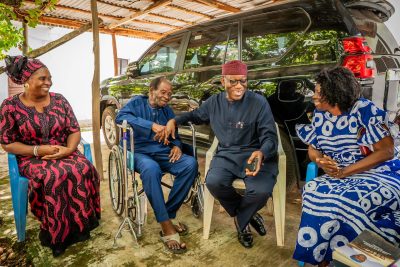
ABUJA (PRECISE POST) – Former Governor of Ekiti State, Kayode Fayemi, has shared heartfelt reflections following a recent visit to renowned elder statesman, Pa Deji Fasuan, describing the encounter as both enlightening and deeply humbling.

Fayemi, who spent time with the respected development economist during his visit to Ekiti State, said the interaction offered him yet another opportunity to draw from Fasuan’s wealth of experience and lifelong contributions to public service and national development.
The former governor who took to his X handle on Saturday to disclise this, informed that his conversations with Pa Fasuan went beyond pleasantries, delving into significant moments in Nigeria’s history, particularly the long and often challenging struggle for the creation of Ekiti State. Fasuan, who once chaired the committee that championed the agitation, played a pivotal role in the realization of that dream in 1996.
Fayemi noted that revisiting the “ups and downs” of that historic campaign served as a reminder of the resilience, determination, and collective effort that ultimately led to the birth of the state. He emphasized that such reflections are crucial in preserving institutional memory and inspiring future generations.
Describing Pa Fasuan as a symbol of wisdom and integrity, Fayemi said every moment spent with the elder statesman is a lesson in humility, leadership, and history. He expressed deep appreciation for Fasuan’s enduring influence and the example he continues to set for leaders and citizens alike.
The visit, Fayemi added, underscores the importance of honouring those whose sacrifices and vision helped shape Ekiti State, reaffirming his commitment to upholding the values they stood for.
By Chibuike Nwabuko
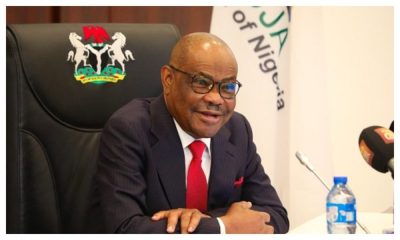
ABUJA (PRECISE POST) – A media aide to Nyesom Wike, Minister of the Federal Capital Territory (FCT), has clarified controversial remarks made by the minister during a recent media chat, insisting they were not intended as a threat.
In a statement issued on Saturday, Lere Olayinka, Senior Special Assistant on Public Communications and Social Media, said Wike’s comment directed at Seun Okinbaloye of Channels Television was made in a figurative context and should not be taken literally.
According to Olayinka, the minister did not mean he would harm the television anchor, explaining that the remark was an expression of frustration. He said Wike was displeased with what he perceived as Okinbaloye’s shift from professional journalism into political commentary during the interview.
“The statement was made in a hyperbolic context, using exaggeration to drive home a point,” Olayinka said, adding that the minister holds the journalist in high regard despite the disagreement.
He further disclosed that both men had since spoken by phone, with Okinbaloye reportedly understanding the minister’s intent.
Olayinka also noted that during the live broadcast, which featured other journalists including Chamberlain Uzor, the remark was clarified immediately and elicited laughter from those present.
The aide cautioned against taking the comment out of context, describing attempts to portray it otherwise as “a hatchet job” aimed at misrepresentation for political gain.
He urged the public to disregard what he called efforts to use the remark as a tool for blackmail or propaganda.

