
ABUJA – The ECOWAS Parliament has urged member states to allocate at least five per cent of their annual national budgets to renewable energy and rural development projects to tackle the region’s persistent electricity deficit.
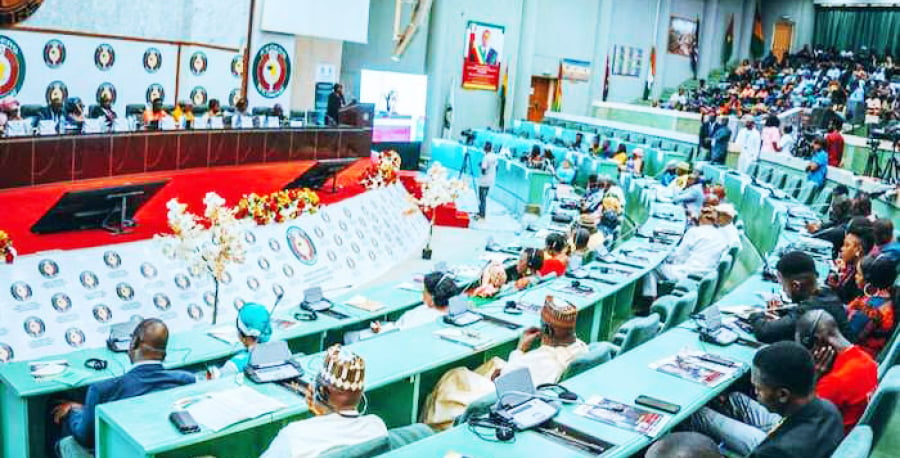
The call was made by Sen. Ali Ndume, Chairman of the ECOWAS Parliament Committee on Agriculture, during the ongoing delocalised meeting of the parliament’s joint committee on Thursday, in Dakar, Senegal.
Reports that lawmakers and energy experts are meeting to explore innovative financing mechanisms for renewable energy aimed at expanding electricity access across West Africa.
Ndume said that expanding renewable energy infrastructure in rural communities would boost agricultural productivity, improve security, stimulate local economies and curb rural-to-urban migration.
According to him, dedicating at least five per cent of national budgets to renewable energy and rural development is within the financial capacity of ECOWAS member states.
“For less than one million dollars, you can modernise a rural community. Once that is done, you bring development, improve security and strengthen agriculture.
“People will have fewer reasons to leave their communities because development will come to them,” he said.
Also speaking, Mr Diouma Kobor, Director-General of Senegal’s National Agency for Renewable Energy, identified rising electricity demand, dependence on imported fossil fuels, grid instability and unequal access to power as major drivers of the region’s energy crisis.
Presenting a paper titled “Innovative High-Impact Financing Models for Renewable Energy: What Strategic Choices Should Be Made in Response to the Energy Crisis? — Case Study: Senegal,” Kobor advocated the integration of solar, wind, gas, energy storage and energy-efficiency solutions.
He also recommended leveraging ECOWAS and West African Power Pool frameworks to develop regional energy corridors and strengthen electricity supply across the sub-region.
Kobor called for a new financing framework based on blended finance models combining grants, concessional loans, commercial debt and private equity to reduce investment risks and lower electricity costs.
He said Senegal aimed to generate 40 per cent of its electricity from renewable sources by 2030, supported by a 2.5 billion euro facility under the country’s Just Energy Transition Partnership.
“West Africa must move beyond isolated energy projects and develop bankable, interconnected portfolios capable of attracting private-sector investment into smart energy corridors linking transport, agriculture and energy infrastructure,” he said.
In her presentation on “Financing Renewable Energy in Rural Areas: Challenges and Opportunities,” Ms Maimouna Sidibe of the ECOWAS Bank for Investment and Development (EBID) said renewable energy currently accounted for only four per cent of the bank’s energy portfolio in spite of growing demand in rural communities.
“The challenge is not the absence of opportunities but making projects financeable and bankable,” she said.
Sidibe identified weak project preparation, poor bankability, small project sizes, regulatory bottlenecks and limited access to guarantees as key barriers to investment in rural energy projects.
She said EBID’s 2026–2030 strategy would expand support for solar mini-grids, off-grid systems, hybrid power plants, small hydropower projects and productive energy solutions to drive rural economic growth.
According to her, blended finance mechanisms and the ECOWAS Renewable Energy and Energy Efficiency Facility would help attract private investment and improve electricity access in underserved communities.
Also contributing, MP Ahmed Munir, Vice-Chairman of the ECOWAS Parliament Committee on Infrastructure, called for sustainable climate financing to support industrial development across the sub-region.
Munir urged member states to negotiate strategically with development partners to ensure that climate financing contributes to local value addition, technology transfer and sustainable economic growth.
Reports that participants at the meeting called for stronger regional cooperation, innovative financing mechanisms and sustained political commitment to achieve universal energy access and accelerate economic development across the ECOWAS region. (NAN)

