
By Clement Nwabuko
ABUJA (PRECISE POST) – The National Human Rights Commission (NHRC) has raised concerns over the growing cases of gender-based violence, child sexual abuse, forced marriage and human trafficking in Nigeria, disclosing that it recorded more than 2.5 million human rights complaints between January and October 2026.
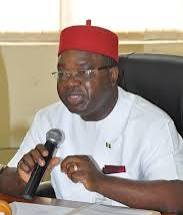
The Executive Secretary of the Commission, Chief Tony Ojukwu, SAN, disclosed this on Wednesday during the flag-off of the 2026 16 Days of Activism Against Gender-Based Violence campaign.
Ojukwu, who said the campaign was being observed globally under the theme, “UNITE to End Violence Against Women and Girls: Ensure Justice, Protect Survivors, End Impunity,” described violence against women and girls as a violation of fundamental human rights rather than merely a social problem.
He stressed that gender-based violence undermines the rights to dignity, equality and fundamental freedoms, insisting that addressing the menace requires effective access to justice, survivor-centred protection, responsive institutions and accountability for perpetrators.
According to him, the NHRC’s Monthly Human Rights Situation Dashboard recorded alarming figures in October alone, including 1,873 complaints of domestic violence, 376 cases of forced marriage, 339 cases of trafficking involving women and 632 cases of women being denied access to their children.
The Commission also recorded 2,141 cases of child sexual abuse, 2,093 cases of child forced marriage, 2,581 cases of denial of children’s access to education and 1,681 cases of child trafficking within the same period.
Ojukwu said the figures represented serious violations of fundamental rights and underscored the urgent need to strengthen prevention, protection, access to justice and accountability mechanisms across the country.
Highlighting the Commission’s interventions in 2026, the NHRC boss said it had intensified grassroots advocacy, legislative engagement, institutional reforms and partnerships to improve the protection of women, children and other vulnerable groups.
He disclosed that the Commission conducted community sensitisation programmes on women’s rights, sexual and gender-based violence and children’s rights in Bwari and the six Area Councils of the Federal Capital Territory, as well as across its offices in the 36 states.
He added that the NHRC participated in the review and amendment of the Child Rights Act, 2003, while supporting stakeholder engagements on Nigeria’s implementation and domestication of the Maputo Protocol on Women’s Rights in Africa.
According to him, the Commission also reviewed its Standing Orders and Rules of Procedure in partnership with International IDEA under an European Union-supported programme aimed at ending sexual and gender-based violence.
Ojukwu further disclosed that the NHRC developed and adopted a child safeguarding policy in collaboration with SOS Children’s Villages Nigeria, as well as a workplace sexual harassment policy with other stakeholders.
He said the Commission also inaugurated a Child and Youth Ombuds Desk, with support from the European Union, to provide children with a child-friendly platform to report rights violations and seek redress.
On interventions involving displaced persons, the Executive Secretary said the Commission documented 180 cases of sexual and gender-based violence among internally displaced persons between May and June 2026, drawing attention to the protection challenges confronting vulnerable populations.
He listed other interventions to include securing the release of 12 detained youths in Benue State, preventing the forced marriage of a 14-year-old girl in Adamawa State and facilitating the prosecution of individuals accused of sexually abusing children in Plateau and Kaduna states.
The Commission, he added, also rescued children from hawking and child labour in Cross River and Adamawa states and reached more than 56,000 people through human rights education and gender-based violence prevention campaigns.
Ojukwu said the NHRC headquarters had equally undertaken several direct interventions, including reuniting estranged families, providing temporary shelter for survivors of domestic violence, rescuing abused children and facilitating their reunification with family members.
He noted that the Commission had strengthened partnerships with organisations, including BAOBAB for Women’s Human Rights, the University of Pretoria and the National Institute for Legislative and Democratic Studies, while signing a Memorandum of Understanding with the National Human Rights Commission of India to promote capacity building, research and exchange of expertise in addressing human rights violations.
Speaking on the 2026 campaign, Ojukwu said the Commission had developed a nationwide programme of activities across its 36 state offices and the FCT to move beyond public awareness towards practical interventions and institutional accountability.
He said the activities would include advocacy roadshows, engagements with traditional and religious leaders, consultations with women and youth groups, judicial and legislative advocacy, school-based human rights education and visits to health facilities to assess their capacity to provide medical and other essential services to survivors of sexual and gender-based violence.
The programme would also involve engagements with the media, the Nigerian Bar Association, the International Federation of Women Lawyers (FIDA), civil society organisations and other stakeholders to strengthen public awareness of reporting and redress mechanisms.
The NHRC boss said findings from the nationwide engagements would be consolidated into a national communiqué, alongside activities to commemorate International Human Rights Day on December 10.
On the Commission’s priorities for 2027, he said the NHRC would focus on strengthening data collection and monitoring, expanding state-level interventions, advancing legislative implementation, protecting displaced and vulnerable populations, improving survivor-centred services and building institutional capacity.
He also identified promoting accountability and ending impunity as critical components of the Commission’s efforts to address gender-based violence.
Calling for collective action, Ojukwu said ending violence against women and girls required the commitment of government institutions, families, traditional and religious leaders, schools, the media, law enforcement agencies, the judiciary and civil society organisations.
He urged Nigerians to challenge harmful cultural practices, reject victim-blaming, educate boys, empower girls and create an environment where survivors could report violations without fear, stigma or discrimination.
He subsequently declared the 2026 nationwide activities of the NHRC and its partners across the 36 states and the FCT formally open.

