
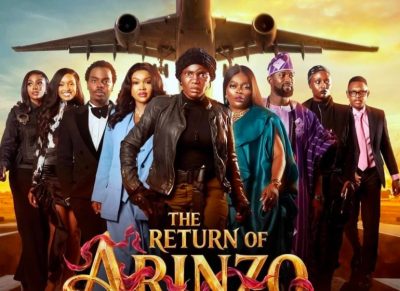
‘Return of Arinzo,’ the sequel to filmmaker Iyabo Ojo’s 2013 film ‘Arinzo,’ was released in cinemas on April 3.
The original Arinzo was a popular thriller with depth, a straightforward storyline, and a satisfying ending, which made me question what this sequel truly had to offer. After watching it, Return of Arinzo clearly tries to go bigger, adding political and romantic subplots alongside a cross-country setting, but it doesn’t quite land.
It lacks the depth and emotional weight expected from a revenge story about a returning robbery gang leader. In the end, it only reinforces my doubts about the need for a sequel.
SYNOPSIS
A rising actor returns home with his fiancée to support his father’s presidential campaign, but her arrival reignites a long-buried scandal tied to a powerful political figure.
THE STRONG POINTS OF THE FILM
One of the film’s standout strengths is its effort to connect the original to the sequel in a way that keeps the story coherent. The use of clips from the first film as narrative callbacks, alongside dialogue that explains why certain events unfold the way they do, shows a clear attempt to bridge both stories. This approach helps maintain continuity and reduces confusion, making the transition between the two films feel more intentional and reflecting a thoughtful effort to tie the narrative together.
The cinematography also shows clear intention, with well-composed shots and thoughtful framing. One of its strongest moments is the use of aerial shots to capture Lagos with a sense of scale and clarity. The campaign rally scene stands out in particular, clean, colourful, and grounded in the chaos of a busy environment; it reflects a realistic portrayal of a Nigerian political setting. Overall, the film’s visual quality holds up well and adds to its strengths.
The costumes also stand out, with their colour and attention to detail. Mercy Aigbe’s wardrobe, in particular, fits her role as the wife of a presidential candidate. Beyond that, the overall costume design complements the various characters and settings, enhancing the film’s visual appeal.
The acting is also commendable, even if it feels like a mixed bag. Mercy Aigbe, Funke Akindele and Enioluwa Adeoluwa stand out. Aigbe brings energy and relatability to her role, while Akindele leans into a familiar character, delivering a natural performance that provides comic relief without overdoing it. Adeoluwa shows noticeable growth, with more range on display; his confrontation scene with Aigbe is particularly impressive. Others, including Bimbo Akintola, hold their own, although some performances do not quite land.
THE WEAK POINTS OF THE FILM
The film’s biggest weakness lies in its storytelling. The original ‘Arinzo’ had a satisfying and well-rounded ending, so the need for a sequel never feels fully justified. Instead, ‘Return of Arinzo’ comes across as built on a convenient premise rather than a carefully developed continuation. The narrative lacks focus, weighed down by multiple subplots that make the story feel scattered rather than cohesive. Although it is positioned as a revenge-driven film, the motivation behind the revenge and how it unfolds are not fully developed, which weakens the emotional impact.
The film also struggles with identity. It tries to juggle too many elements: a crime thriller, a romantic angle, a political storyline, and even a cross-country narrative, but ends up not doing justice to any of them. This overload contributes to its pacing issues. With a runtime of over two hours, the film feels stretched, with several scenes dragging on longer than necessary and others adding little to the overall story. Some subplots feel particularly unnecessary, such as the Tanzania storyline involving Jali, which is introduced without a clear purpose and eventually fades out without resolution. Moments like this make the film feel unfocused and raise questions about its narrative direction.
The acting performance is also a mixed bag, with some cast members failing to fully deliver on their roles. While a few performances stand out, others feel underdeveloped, lack conviction, or come across as unnecessary to the overall story. The casting itself raises questions, at times giving the impression that choices were influenced more by familiarity than by fit for the roles.
The dialogue doesn’t always help matters. Much of it feels unnatural, with lines that sound rehearsed and stiff, which takes away from the film’s emotional impact and overall believability.
The revenge at the centre of the story doesn’t feel clearly morally grounded. In the original Arinzo, Iyabo Ojo’s character kills Mercy Aigbe’s innocent friend, and in response, Aigbe’s character takes revenge by killing Ojo.
Because of that, the cycle of retaliation already feels completed in the prequel, which makes the motivation for the revenge being pursued in this sequel feel less clear. It raises questions about exactly what remains to be avenged, especially when the original conflict was already built on a chain of injustice and retaliation.
FINAL VERDICT
‘Return Of Arinzo’ gets a 5/10

