
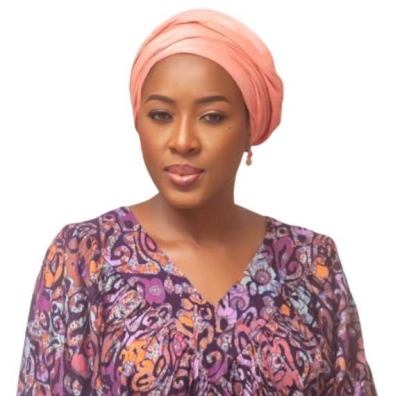
By Dr. Chiogo Constance Ikokwu (Ugonechora)
These days, I think a lot about food security, the skyrocketing cost of food in Nigeria and what this means for us all. We need to start taking our farmers seriously, because if our farmers disappear, we are finished.
It is easy to take food for granted when you live in Abuja and can walk into a market and find fresh fruits, vegetables and other food. But imagine these quietly disappearing because the farms producing them are disappearing. That is not science fiction. It is already happening.
Insecurity has continued to push farmers away from their land. We’ve spoken about this for years but it’s still going on. In Benue and other parts of the North Central and North West, millions have been displaced by conflict, including farmer-herder violence, criminal and terrorist attacks. In the North-East alone, the International Organisation for Migration (IOM) recorded 2.33 million internally displaced people in 2025, with about 913,000 still living in camps and camp-like settings.
Those of us from the South should not think this is someone else’s problem, or that it’s just a problem of the North. It may gradually become ours. What affects one part of the country eventually affects the whole.
In the East, farmland is also disappearing, not necessarily because of conflict, but because of rapid urbanisation and semi-urbanisation. Agricultural land is being swallowed by houses, estates, shops and other development. We may build taller buildings and more beautiful estates. But if we cannot feed ourselves, all those buildings will mean very little.
Nigeria is already facing a frightening food security crisis. The Food and Agriculture Organisation (FAO) and World Food Programme (WFP) had projected that 34.8 million Nigerians could face acute food insecurity between June and August 2026, including 1.8 million at Emergency levels and about 15,000 at Catastrophe levels in Borno.
This is why agriculture is not simply an economic sector. It is national security.
A hungry population is vulnerable, desperate and unstable. A country that cannot feed itself becomes dependent on others, and that dependence can become a strategic vulnerability.
We also need to change how we think about farming. In many developed countries, farming is big business, often a generational family enterprise supported by technology, finance, insurance, research and infrastructure. We should encourage more Nigerians, especially young people, to enter farming if they want to, and then support them properly. Farming should be a viable profession and a business that can be built and passed to the next generation.
Then there are our seeds.
We must protect indigenous varieties and farmer-managed seed systems. FAO notes that roughly 80–90% of seed accessed by small farmers comes through local seed systems, while newer African research puts farmer-managed systems at 80–95% across Africa South of the Sahara. We should not allow a future in which we will have to depend on international companies to buy the seeds needed to feed ourselves.
So who is thinking about the farmer? Who is protecting farmland from insecurity and uncontrolled urbanisation? Who is protecting our seeds? Who is thinking about what Nigeria’s food system will look like in 10, 20, 30, 40 or 50 years?
Save the farmers. Protect the farms. Save the seeds. Food security is national security, and a hungry nation is not a secure nation.
Dr. Ikokwu aspires to serve Idemili North and South Federal Constituency of Anambra State in the House of Representatives
#PoliticsforPublicGood
#TakeBackYourGovernment

