
By Chibuike Nwabuko
ABUJA (PRECISE POST) – The Senate on Wednesday opened a sweeping investigation into the Safe School Initiative (SSI), voicing strong dissatisfaction over the programme’s inability to stem relentless attacks and mass abductions in schools despite years of substantial funding and policy commitments.
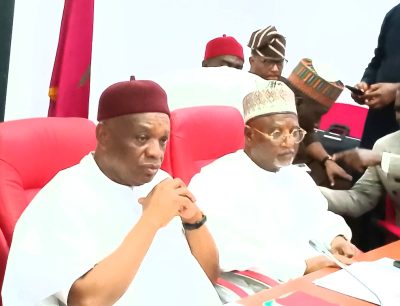
At the inaugural sitting of the 18-member ad-hoc committee, Chairman and former Abia State Governor, Senator Orji Uzor Kalu, vowed that the Senate would “track every naira and every dollar” spent on the initiative and uncover why Nigerian schools remain “soft targets” for terrorists.
Kalu, citing data from 2014 to date, lamented that more than 1,680 schoolchildren have been kidnapped and at least 180 educational institutions attacked.
“It is unacceptable for a nation committed to educational development and child safety,” he said.
He assured the public that the probe is not a witch-hunt but a comprehensive accountability exercise aimed at securing schools.
“We owe Nigerian parents the responsibility to guarantee that their children can pursue education without fear. We will not rest until we get answers.”
KEY FOCUS AREAS OF THE PROBE:
- Utilisation of SSI funds since 2014
- Deployment and effectiveness of security personnel in schools
- Early warning and emergency response systems
- Infrastructure upgrades in high-risk schools
- Partnerships with international donors and private-sector contributors
The investigation was triggered by fresh national outrage following last week’s abduction of 25 female students from Government Girls Comprehensive Secondary School, Maga, in Kebbi State, where bandits also killed the school’s vice principal.
During plenary, Senator Yahaya Abdullahi (APC, Kebbi North), who raised an urgent motion on the matter, described the attack as “a dirty slap on the face of the nation.”
“A nation that cannot secure its children is not worth living in. This is a wake-up call,” he warned.
Former Senate President and Defence Committee Chairman, Dr Ahmad Lawan, also demanded a full audit of SSI expenditures.
“Since schools are still not safe for our pupils, we must investigate the funds released and how they were utilised,” he said.
The committee, constituted by Senate President Godswill Akpabio, includes Senators Tony Nwoye, Yemi Adaramodu, Harry Ipalibo, Ede Dafinone, Mustapha Saliu, Diket Plang, Binus Yaroe, Kaka Shehu and Musa Garba Maidoki, among others. It has four weeks to submit a detailed report and far-reaching recommendations.
Launched in May 2014 after the Chibok abduction, the Safe School Initiative was conceived as a government-UN-private sector partnership to fortify schools in high-risk areas. Initial funding totaled $10 million, with more than $30 million mobilised between 2014 and 2021, and a federal allocation of ₦144 billion projected between 2023 and 2026.
Despite these investments, school-targeted insecurity has worsened, prompting renewed scrutiny.
Senator Kalu pledged that the Senate would “re-engineer” the programme.
“Our goal is simple: to make Nigerian schools safe, secure and conducive for learning. Nothing short of genuine accountability will suffice,” he said.
The Senate’s findings are expected to significantly influence Nigeria’s security strategy for the education sector.

