By Chibuike Nwabuko
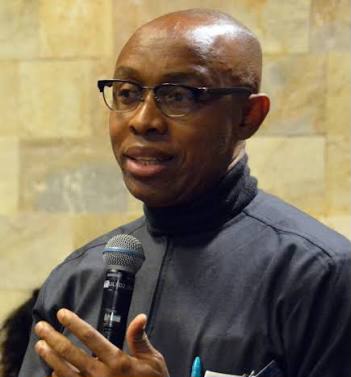
ABUJA (PRECISE POST) – Human rights lawyer and public affairs commentator, Chidi Odinkalu, has warned that democracy is facing an unprecedented threat across Africa, arguing that an increasing number of political leaders are abandoning the principles of constitutional governance in favour of governance models that weaken the will of the people.
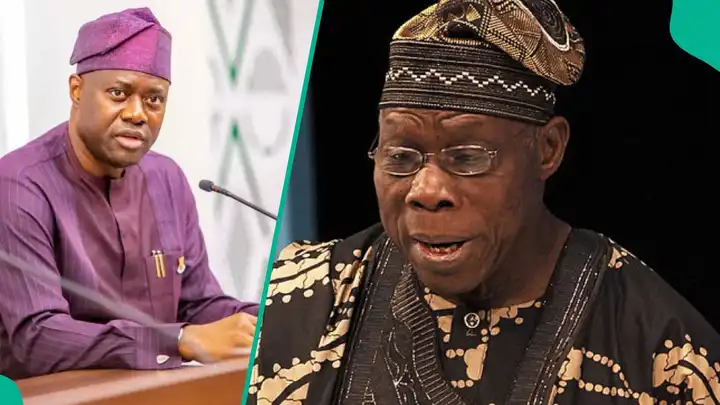
In remarks posted on his X handle on Sunday, Odinkalu linked the emerging trend to comments made by former Nigerian President, Chief Olusegun Obasanjo, nearly three years ago.
In November 2023, Obasanjo argued that the Western model of democracy was imposed on Africa and was ill-suited to the continent’s peculiar realities, although he stopped short of proposing a clearly defined alternative system.
Odinkalu noted that the former Nigerian leader, who himself unsuccessfully sought a constitutional amendment to secure a third presidential term in 2006, questioned the suitability of liberal democracy for Africa without articulating what should replace it.
According to him, leaders across different political traditions on the continent now appear to be conducting “experiments” that are gradually eroding democratic governance under the guise of finding alternatives to the Western democratic model.
He said the signs are becoming increasingly evident across Africa, where constitutional institutions are being weakened, opposition voices suppressed, elections manipulated, and constitutional term limits altered or ignored to keep incumbents in power.
Recent developments across the continent appear to reinforce Odinkalu’s concerns. In Tunisia, President Kais Saied has been accused of dismantling democratic institutions after dissolving parliament, rewriting the constitution and expanding presidential powers following the country’s democratic transition after the Arab Spring.
In Uganda, President Yoweri Museveni has remained in office since 1986 after constitutional amendments removed presidential age limits and term restrictions, while opposition politicians continue to allege harassment and electoral irregularities.
Similarly, Rwanda amended its constitution in 2015, enabling President Paul Kagame to potentially remain in office until 2034, a move criticised by democracy advocates despite strong domestic support for his administration.
In Togo, constitutional changes have enabled President Faure Gnassingbé, whose family has ruled the country for decades, to further consolidate power under a restructured political system that opposition groups argue undermines democratic accountability.
The situation has also deteriorated in parts of West Africa where military coups have interrupted constitutional rule. Mali, Burkina Faso, and Niger are currently under military governments following coups between 2020 and 2023. In each case, the juntas justified their takeovers by citing insecurity, corruption and poor governance, but democratic transitions have either been delayed or remain uncertain.
In Guinea, the military seized power in 2021, suspended the constitution and dissolved democratic institutions, while elections promised by the junta have yet to restore civilian rule.
Elsewhere, political tensions have continued to mount in countries such as Zimbabwe, where opposition parties have repeatedly questioned the credibility of elections, and South Sudan, where repeated postponements of elections have prolonged a fragile transitional government.
Odinkalu argued that these developments reflect a broader continental trend in which governments increasingly concentrate power while weakening institutions meant to guarantee accountability, transparency and the rule of law.
“Wherever you look around the continent today, a government of the people, for the people and by the people is beleaguered and troubled,” he stated.
Political analysts note that Africa’s democratic journey has become increasingly fragile in recent years, with military coups, constitutional amendments extending presidential tenures, shrinking civic space, restrictions on media freedom and judicial interference becoming recurring features in several countries.
Precise Post recalls that Odinkalu’s intervention comes amid renewed debate over the future of democracy in Africa, as scholars and policymakers continue to grapple with whether the challenge lies with the democratic model itself or with the failure of political leaders to faithfully implement its principles.
He warned that unless African leaders recommit themselves to constitutionalism, credible elections, respect for term limits, judicial independence and accountable governance, the continent risks further democratic backsliding, with profound consequences for political stability, human rights, economic development and public trust in government.