
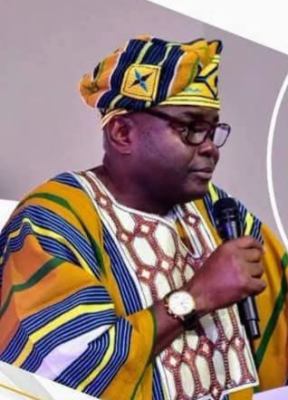
By Chief J.S.Okutepa, SAN
Nigeria’s greatest political tragedy may not be the absence of democracy, nor even the prevalence of corruption. It is the gradual transformation of democracy from a system of public accountability and collective development into a marketplace of immediate personal survival. In such a political environment, the question is no longer, “What have you done with our commonwealth?” but rather, “What have you done for me?”. The most accessible politician may not be the most accountable politician. We must note this.
That subtle change in the political psychology of the Nigerian citizen has profound consequences. It has created what may appropriately be described as “bread and butter politics”—a politics in which the immediate material needs of the citizen become the currency with which political loyalty is purchased. The politician gives a bag of rice, a small amount of money, a job for one relative, a contract for another, school fees for a constituent, or assistance with a hospital bill. The beneficiary, understandably grateful, becomes reluctant to ask the more fundamental question: What happened to the billions of naira entrusted to the government for the benefit of the entire community?
That is where accountability begins to die.
The Politics of Survival: We must, however, be fair to the Nigerian citizen. A hungry man cannot be expected to behave like a political philosopher. A person who cannot afford food, medicine, school fees or transportation may understandably value the ₦10,000 placed in his hand today more than an elaborate promise of a better society five years from now. This is not necessarily because the Nigerian citizen is ignorant. It is often because poverty has shortened his political horizon. When survival becomes the principal concern of the citizen, politics inevitably becomes transactional. The citizen says: “Give me something now, and I will support you.” The politician understands the bargain: “Give me your vote, and I will give you something.”
The tragedy is that both sides may lose sight of the public interest.The citizen receives crumbs from the table while the politician controls the entire kitchen. And therein lies the danger. From Citizens to Clients.
Democracy is supposed to transform subjects into citizens. A citizen does not merely receive favours from government. A citizen has a right to demand accountability, transparency, security, education, healthcare, infrastructure, employment and justice.
But bread-and-butter politics transforms the citizen into a client. The politician becomes the patron; the citizen becomes the beneficiary. Instead of demanding institutions that work for everyone, people begin to seek personal access to the politician. Instead of asking: “Where is the road?” the question becomes:
“Can you help me get a job?” Instead of asking:
“Why has our hospital deteriorated?” the question becomes: “Can you pay my hospital bill?” Instead of asking: “Where is the money appropriated for education?” the question becomes: “Can you pay my child’s school fees?”
The difference may appear insignificant, but it is fundamental.The first set of questions is about rights and accountability. The second is about patronage and favour. A functioning democracy should institutionalise the first, not encourage dependence on the second.
The Politician Who Becomes a Benefactor. Bread-and-butter politics also changes the character of political leadership. The elected representative gradually ceases to see himself as a trustee of public resources and begins to see himself as a personal benefactor.He distributes personal gifts and expects political loyalty in return.The danger is that the politician may then regard public resources as instruments of political generosity. A constituency project becomes a favour. A government appointment becomes a reward. A contract becomes political patronage. A social intervention becomes campaign material. A public office becomes an instrument for maintaining political loyalty.
The World Bank’s recent analysis of Nigerian fiscal governance makes a similar point from an institutional perspective: transparency and accountability reforms can threaten entrenched patronage networks because they reduce the discretion through which political actors distribute public resources. This is why accountability reforms can be politically difficult. Accountability closes the tap through which patronage flows.Why the Poor Sometimes Protect the Powerful
There is a painful paradox here. The people who suffer most from bad governance can sometimes become the strongest defenders of those responsible for it. Why? Because the politician has succeeded in converting public entitlement into personal gratitude.
A road constructed with public money becomes “the governor’s road.” A school built from the public treasury becomes “the senator’s school.” A social intervention funded by taxpayers becomes “the honourable member’s generosity.” The citizen forgets that the politician did not build these things with his private money. Public money is not political philanthropy. It belongs to the people. The politician is merely a trustee.Once citizens understand this distinction, political accountability becomes possible.
BREAD TODAY, POVERTY TOMORROW:
The most dangerous feature of bread-and-butter politics is that it can perpetuate the very poverty upon which it feeds. Consider the cycle. Poverty makes citizens vulnerable. Vulnerable citizens become dependent on politicians.
Politicians distribute patronage. Patronage creates political loyalty. Political loyalty discourages scrutiny. Lack of scrutiny permits misuse of public resources. Misuse of public resources weakens public services. Weak public services deepen poverty. And deeper poverty produces an even larger population vulnerable to political patronage. The circle is complete.
This is why corruption is not merely a financial crime. It is a developmental crime. The World Bank has repeatedly emphasized that corruption harms poor and vulnerable people disproportionately because it makes essential services—including healthcare, education and social programmes—more expensive or less accessible and undermines public trust.
THE CULTURE OF “MY OWN”
Another dimension of bread-and-butter politics is the culture of “my own.” A politician is judged not by the quality of governance he provides but by how much he distributes to his political supporters. If he gives employment to twenty people from his village, he is praised. If he gives contracts to his political associates, he is called generous. If he distributes money during a political gathering, he is celebrated. But the question should be: What did he do for the other 200,000 people who have no personal access to him? Democracy cannot survive as a system of private favours. Government must operate on the principle of public goods rather than private benefits.
THE VICIOUS CYCLE OF ELECTORAL POLITICS:
Bread-and-butter politics has also profoundly affected elections. Where poverty is widespread, elections become vulnerable to vote buying and transactional politics. The voter is tempted to ask: “What will I get if I vote for you?” rather than: “What kind of country will you build if I vote for you?” That is the tragedy. Election campaigns become competitions in generosity rather than competitions in ideas.The candidate who has the greatest financial capacity can acquire greater political influence. Political office then becomes extremely expensive. And once political office becomes expensive, the temptation to recover political investment through control of public resources becomes greater
Recent scholarship on Nigerian political parties similarly identifies patronage, rent-seeking and monetised politics as factors that weaken democratic accountability and turn control of state resources into a major prize of electoral competition. Thus, the cost of elections can become the beginning of the cost of governance.Where Are the Institutions.
Bread-and-butter politics flourishes where institutions are weak. Strong institutions make political patronage less powerful. An independent legislature scrutinises government expenditure. An independent judiciary enforces legal accountability. An independent audit system examines public finances. A free press exposes wrongdoing. An active civil society asks uncomfortable questions. An informed electorate rewards performance rather than patronage.
A professional public service protects institutions from political interference.
Accountability therefore cannot depend exclusively upon the moral character of individual politicians. A good system must be designed to restrain even a bad politician. The World Bank’s governance framework similarly treats voice and accountability, government effectiveness, rule of law and control of corruption as central dimensions of good governance. The Nigerian Citizen Must Change the Question. The ultimate solution therefore lies partly in changing the political question – instead of asking: “What can you give me?”
we must begin asking: “What will you do with our commonwealth?” Instead of celebrating politicians for giving individuals money, we should demand institutions that make such personal intervention unnecessary.
A functioning health system should make it unnecessary for a senator to pay an individual’s hospital bill. A functioning education system should make it unnecessary for a politician to pay school fees for selected children. A functioning economy should create jobs without citizens having to know a politician. A functioning justice system should protect citizens without requiring political connections. That is the difference between governance and patronage.
From Beneficiaries to Rights-Bearing Citizens.
Nigeria must therefore move from a culture of beneficiaries to a culture of rights-bearing citizens. Citizens must understand that: A road is not a politician’s gift. A school is not a politician’s personal property. A hospital is not political charity. A government appointment is not a personal favour. A constituency project is not an act of benevolence. Public money is not private money. Political office is not personal inheritance. The politician is a trustee. The citizen is the principal. The public treasury is held in trust. And the Constitution, laws and institutions are the mechanisms through which that trust must be enforced.
ACCOUNTABILITY MUST BECOME MORE VALUABLE THAN PATRONAGE:
Nigeria does not lack laws against corruption. Indeed, the problem is frequently not the absence of rules but the weakness or inconsistency of their enforcement. Recent fiscal-governance reforms have shown that transparency can improve, but sustaining accountability becomes much harder where vested interests and patronage networks remain powerful.
The real battle, therefore, is not merely to enact another anti-corruption law. It is to create a political culture in which accountability becomes politically rewarding and impunity becomes politically costly.
The politician who publishes his expenditure should be respected. The legislator who demands accountability from the executive should be celebrated. The civil servant who protects public funds should be honoured.
The journalist who exposes corruption should be protected. The whistleblower who reveals wrongdoing should not be persecuted. And the voter who rejects money in exchange for his vote should be regarded as a patriot, not a fool.
CONCLUSION:
We Must Stop Eating the Seed
Bread-and-butter politics is ultimately about the difference between eating the seed and planting the seed.A politician who gives a hungry citizen bread today may win his gratitude. But a government that creates jobs, secures the economy, provides quality education, builds functional healthcare and protects public resources gives that citizen something far more valuable: the dignity of self-reliance. Nigeria cannot build a prosperous nation by continually distributing crumbs from a shrinking table. We must build a larger table.
We must move from politics of survival to politics of development; from patronage to citizenship; from personal loyalty to institutional loyalty; from political gifts to constitutional rights; and from secrecy to accountability. The Nigerian citizen must ultimately understand that the politician who gives him ₦10,000 from his own pocket may be generous, but the politician who ensures that ₦10 billion of public money is properly spent for the benefit of millions of citizens is performing his constitutional duty. That distinction is the beginning of political maturity. And until Nigerians begin to demand performance rather than patronage, institutions rather than individuals, rights rather than favours, and accountability rather than bread and butter, our democracy will continue to reproduce the poverty and inequality from which bread-and-butter politics derives its power. Nigeria does not need more political benefactors. Nigeria needs accountable trustees. The future of Nigerian democracy depends on transforming the Nigerian voter from a client into a citizen—and the Nigerian politician from a patron into a trustee of the people’s mandate.

