
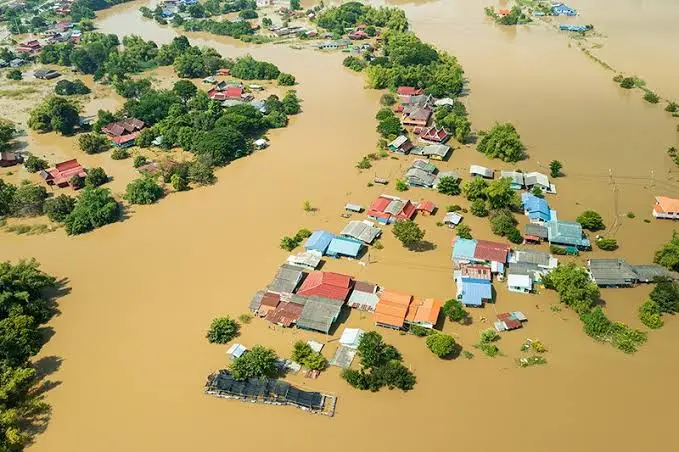
BAUCHI – The Jigawa government has deployed 20 speed boats to enhance evacuation and emergency response services in flood prone areas in the state.
Mr Hamza Muhammad, Special Adviser to Gov. Umar Namadi on Environment, said this in an interview with newsmen in Dutse.
He said the measure would ensure prompt evacuation of victims trapped in flood prone communities.
Muhammad, who is the Co-Chair, Technical Committee on Flood Mitigation, Hadejia Jama’are River Basin Development Authority (HJRBDA), said the state adopted proactive measures to mitigate the disaster.
He said the move was part of deliberate efforts to respond to the climate seasonal predictions by the Nigerian Metrological Agency (NiMET), and Nigerian Hydrological Service Agency (NHSA).
“We’re not taking the information for granted because we’re committed to ensure the safety of lives and property of our citizens.
“The state governor directed the technical working committee on flooding, to take actions through proactive and preventing measures, especially in flood prone communities.
“We have been working tirelessly since February this year, to reduce the impact of flooding as predicted by the agencies,” he said.
He said the government also embarked on a comprehensive erosion control programme through massive tree planting, reclamation of eroded lands, shelter belts, water sheds and desilt exercise to prevent river overflowing.
According to Muhammad, the committee is collaborating with water related agencies in Kano and neighbouring states; NHSA, NiMET, National Water Research Agency, NEMA, UNICEF and Red Cross Nigeria, to provide a contingency plan to reduce the effect of the disaster.
Also, Hannafi Yakubu, Executive Secretary, SEMA, said the agency has conducted sensitisation activities to create awareness on the dangers and safety tips of the disaster.
Yakubu said the 2026 seasonal prediction indicated that flood would affect 11 local government areas of the state.
He listed the affected areas to include Ringim; Taura, Jahun, Miga, Malam Madori, Kaugama, Kafin Hausa, Auyo, Hadejia, Guri and Kiri Kasamma.
“Speed boats will be deploy to deep waters, while the canoes will be used in areas with shallow waters for the rescue mission.
“The agency also procured food and non-food items for emergency response in case of displacement caused by flooding,” Yakubu said.
In Bauchi, the government has initiated a N29 billion project to control erosion and flooding in the state.
Gov. Bala Mohammed, who inaugurated the project, said it aims to protect lives, restore degraded environment and stimulate economic activities.
He said the project is designed to restore 9,842 hectares of degraded lands, provide relief to 213,000 people, and channel over 14 million cubic metres of water annually for irrigation and other economic activities.
Mohammed said erosion control would be executed at Shagbungara, Unguwar Jidadi, Abubakar Tatari Ali Housing Estate and Gwallagan Mayaka in Bauchi metropolis, while flood control would cover downstream communities across the state.
“Unmanaged erosion and poor drainage systems has created serious public health concerns, including increased malaria and water-related diseases caused by stagnant water.
“This project is not merely an engineering intervention; it is a public health intervention, a social protection intervention and a long-term investment in human dignity and community well-being,” he said.
According to Mohammed, restoring the affected areas will improve security by reclaiming abandoned erosion corridors and enhancing accessibility within communities.
Mohammed highlighted that restoration of the wetlands and improved water management systems would support dry-season agriculture, landscaping and small scale enterprises capable of strengthening household incomes and food security.
“Environmental restoration can serve as a catalyst for economic growth, job creation and poverty reduction,” he said.
Similarly, Adamu Nayola, Director Relief and Rehabilitation, SEMA, said plans had been concluded to strengthen the capacity of 20 Local Government Emergency Committees (LGECs), to enhance disaster preparedness and response services in the state.
He said the agency had sensitised farming communities on how to mitigate the impacts of flooding on farmlands.
“We are advising residents and farmers to move to higher grounds as a safety measure to avert loss of lives and property,” he said.
In the same vein; the Gombe government has executed over 200 erosion control projects via its Gombe Goes Green (3G) programme.
Dr Sani Jauri, Director of Environment, Ministry of Water Resources, Environment and Forest Resources, said the state had reclaimed degraded sites through strategic environmental and infrastructure interventions.
Jauri, who is also the Coordinator, Agro-Climatic Resilience in Semi-Arid Landscapes (ACReSAL) project, the state government adopted practical measures to address environmental challenges in vulnerable communities.
He said the erosion control initiative was a continuous intervention being supported by the World Bank since 2016.
The coordinator recalled that implementation at the initial stage suffered delays due to the inability of the state to meet counterpart funding obligations required to access full project support.
Jauri said that Gov. Inuwa Yahaya had remobilised the programme with a N500 milloncounterpart contribution, which facilitated smooth implementation of the project.
“Through these interventions, significant progress had been achieved in addressing environmental degradation and erosion related challenges affecting communities across the state,” he said.
He revealed that one of the major erosion control projects executed covered approximately 7.9 kilometres, including remediation works along the left side of the Goshi axis.
Jauri said the intervention significantly reduced the impact of erosion, restored environmental stability, and improved living condition for the affected people.
He said the government also implemented a 22-kilometre flood and erosion control corridor extending to the Liji Hill, spanning more than nine communities.
The project, he said, incorporated complementary activities aimed at environmental restoration and sustainable community development within the affected catchment areas.
Jauri urged for increased investment in green infrastructure and environmental sustainability, warning that inadequate vegetation cover and the exposure of soil surfaces have weakened the natural capacity of the land to absorb rainfall, thereby increasing the risks of flooding, gully erosion, and land degradation.
He highlighted that tree planting, environmental restoration, and sustainable land management practices are critical toward strengthening climate resilience and protecting vulnerable communities.
Haruna Abdullahi, Executive Secretary, SEMA, said the agency has engaged local divers to enhance emergency response.
He, however, lamented that some residents of Shadamansur community in Funakaye LGA, had refused to relocate in spite of notice issued by the state government.
The secretary said that the agency had predicted flooding in Funakaye, Shongom, Yamaltu/Deba, Dukku, and Kwami LGAs. (NAN)

