
By Chibuike Nwabuko
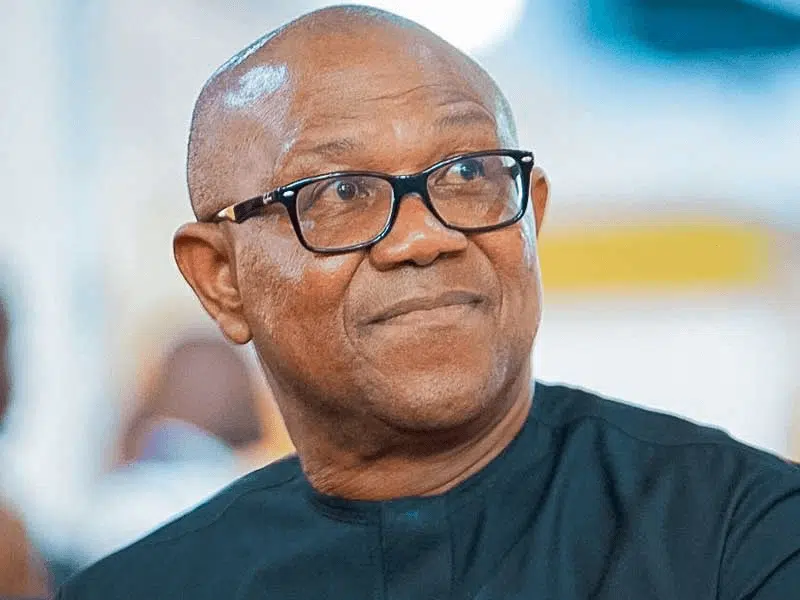
ABUJA (PRECISE POST) – Presidential Candidate of Nigeria Democratic Congress (NDC) and former Anambra State Governor, Peter Obi, has faulted the Anambra State Government’s description of about $123.77 million in multilateral development financing as “loans left by Peter Obi,” describing the position as an incorrect application of public-sector accounting.
Obi made the clarification in a statement posted on his official X handle on Friday, against the backdrop of recent claims by the state government concerning debts allegedly inherited from his administration.
He said the government had wrongly lumped together the total amount approved for various multiyear development programmes, the amount actually drawn by Anambra during his tenure and the outstanding funding balance at the time he handed over on March 17, 2014.
“The government has combined these distinct categories, added them together, and described the resulting US$123.77 million as ‘loans left by Peter Obi.’ That is an incorrect application of public-sector accounting,” Obi stated.
According to him, the eight facilities cited by the state government were primarily World Bank and International Fund for Agricultural Development (IFAD) development programmes negotiated by the Federal Government, with participating states accessing the funds through subsidiary arrangements.
He stressed that they were not conventional commercial loans personally secured by him during his tenure as governor.
Obi, however, acknowledged that Anambra had repayment responsibilities under the facilities, saying each one should be assessed based on its approval, effectiveness, drawdown and repayment records.
He also challenged the state government’s figures, saying the government claimed that the original facilities amounted to about $123.77 million, with $92.35 million outstanding as of June 2026.
He contrasted this with Debt Management Office records, which he said showed Anambra’s total external debt at about $18 million when he assumed office in March 2006, approximately $30 million when he left in March 2014, and about $45.15 million as of December 31, 2014.
“The Anambra State Government must therefore clarify how a state whose recorded external debt was about US$30 million in March 2014 and US$45.15 million in December 2014 could supposedly have inherited US$123.77 million from Peter Obi, who left office in March of that same year,” he said.
The former governor also rejected suggestions that he personally borrowed funds or issued bonds on behalf of Anambra State during his tenure.
He recalled that at his farewell ceremony, the then Director-General of the DMO, Abraham Nwankwo, had described him as the only state governor during his 10-year tenure who had not approached the agency for a loan facility.
Obi further said he left office without unpaid salaries, gratuities or pensions, and without outstanding obligations to contractors or suppliers whose completed works had been verified and certified.
He disclosed that he also left more than $150 million as the dollar component of his investments in the state, which, according to him, could have generated about $10 million annually if retained.
He argued that even if the state’s claim of a $123 million debt were correct, the annual income from those funds over 13 years would have been sufficient to substantially address the alleged liability.
Obi said retaining the funds, including compound interest and additional income, would have put their present value at approximately $335 million, adding that after settling the claimed $92.35 million outstanding funding, about $242 million could have remained for reinvestment.
The former governor said his response was not motivated by a disagreement with Governor Chukwuma Soludo, whom he described as his “dear elder brother,” insisting that he had no intention of seeking the governorship of any state again.
He urged governors to allow presidential candidates and other political contenders to campaign freely in their states, regardless of their political affiliations.
Obi said his focus would now return to what he described as the challenges facing suffering Nigerians, which he said remained the reason for his presidential ambition. “A new Nigeria is POssible,” he added.
