
By Our Reporter
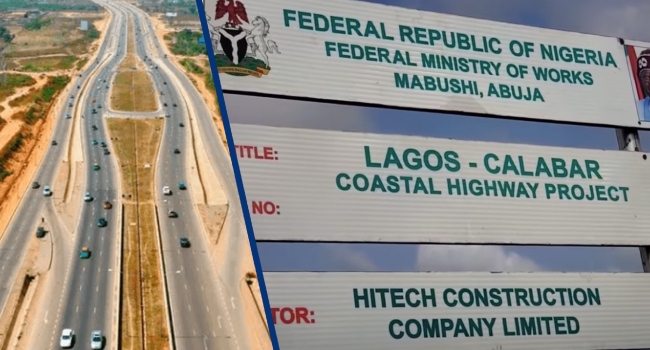
ABUJA (PRECISE POST) – The Federal Government and the Lagos State Government have reaffirmed their commitment to strengthening collaboration for the successful delivery and long-term sustainability of the Lagos-Calabar Coastal Highway Project, with a strong emphasis on protecting the project’s Right-of-Way and adopting international engineering standards.
The resolution was reached on Monday during a courtesy visit by the Minister of Works, David Umahi, to the Lagos House, where he led members of the National Assembly Committees on Works and officials of the Federal Ministry of Works to meet with Lagos State Governor, .
The visit followed the minister’s earlier engagement with the Chairman of the Dangote Group and focused on deepening cooperation between the Federal and Lagos State Governments on the implementation of the landmark highway project.
According to a statement issued after the meeting, discussions centred on the proposed concession framework for the Lagos-Calabar Coastal Highway and strategies to preserve the integrity of the corridor in line with global best practices.
Umahi stressed that the Lagos-Calabar Coastal Highway is being developed as a world-class coastal transport corridor that must comply with internationally accepted engineering standards.
He explained that safeguarding the Right-of-Way is critical to the project’s success, noting that the highway would incorporate dedicated service roads, service lanes, pedestrian walkways, utility corridors, modern drainage infrastructure and adequate setbacks to protect the road network and enhance public safety.
The minister said the supporting infrastructure would not only improve the lifespan of the highway but also ensure safer and more efficient movement of people, goods and services.
Speaking during the meeting, Governor Sanwo-Olu commended Umahi for what he described as his exceptional dedication, professionalism and commitment to delivering strategic infrastructure projects across the country.
He also praised the National Assembly for providing the necessary legislative support, budgetary approvals, project assessments and oversight that have contributed to the implementation of the Renewed Hope infrastructure agenda of President .
Sanwo-Olu described Lagos State as one of the biggest beneficiaries of the Lagos-Calabar Coastal Highway but noted that the project’s economic impact would extend beyond Lagos to Ogun, Ondo, Delta, Bayelsa, Rivers, Akwa Ibom and Cross River states.
According to the governor, the highway will improve regional connectivity, facilitate trade and logistics, lower transportation costs, promote tourism, attract private investment, create jobs and open up new economic corridors capable of driving growth across southern Nigeria.
Addressing concerns over recurring flooding in Lagos, the governor explained that the state’s relatively small landmass, combined with its large population and coastal location along the Atlantic Ocean, makes it particularly vulnerable to flooding, rising sea levels and other climate-related challenges.
He observed that similar environmental challenges are being experienced in many developed countries due to the increasing effects of global climate change.
Sanwo-Olu, however, maintained that indiscriminate dumping of refuse into drains, canals and waterways by residents remains a major factor worsening flooding in Lagos.
He reiterated the state’s zero-tolerance policy on environmental violations and pledged continued enforcement to protect drainage infrastructure and public assets.
The governor further stressed that effective flood mitigation along the Lagos-Calabar Coastal Highway corridor would depend on the strict protection of the Right-of-Way and the construction of service roads, pedestrian walkways and properly engineered drainage systems.
He called on property owners and developers along the corridor to cooperate with government by allowing sufficient space for critical infrastructure to be developed in accordance with approved engineering standards.