
The Federal Government, in collaboration with the European Union (EU), has inaugurated a National Programme Steering Committee to oversee the €40 million Education and Youth Empowerment in Northwest Nigeria (EYEPINN) project.
The programme, which targets Jigawa, Kano, and Sokoto States, aims to reduce the number of out-of-school children, strengthen teacher capacity, and promote youth skill development in the region.
The committee — chaired by the Minister of Education, Dr. Tunji Alausa, and co-chaired by the Minister of Budget and Economic Planning, Senator Atiku Bagudu — will meet annually to provide policy direction, while a secretariat managed by the EU Technical Assistance Team will handle daily coordination. Quarterly technical meetings will also be held to monitor implementation progress.
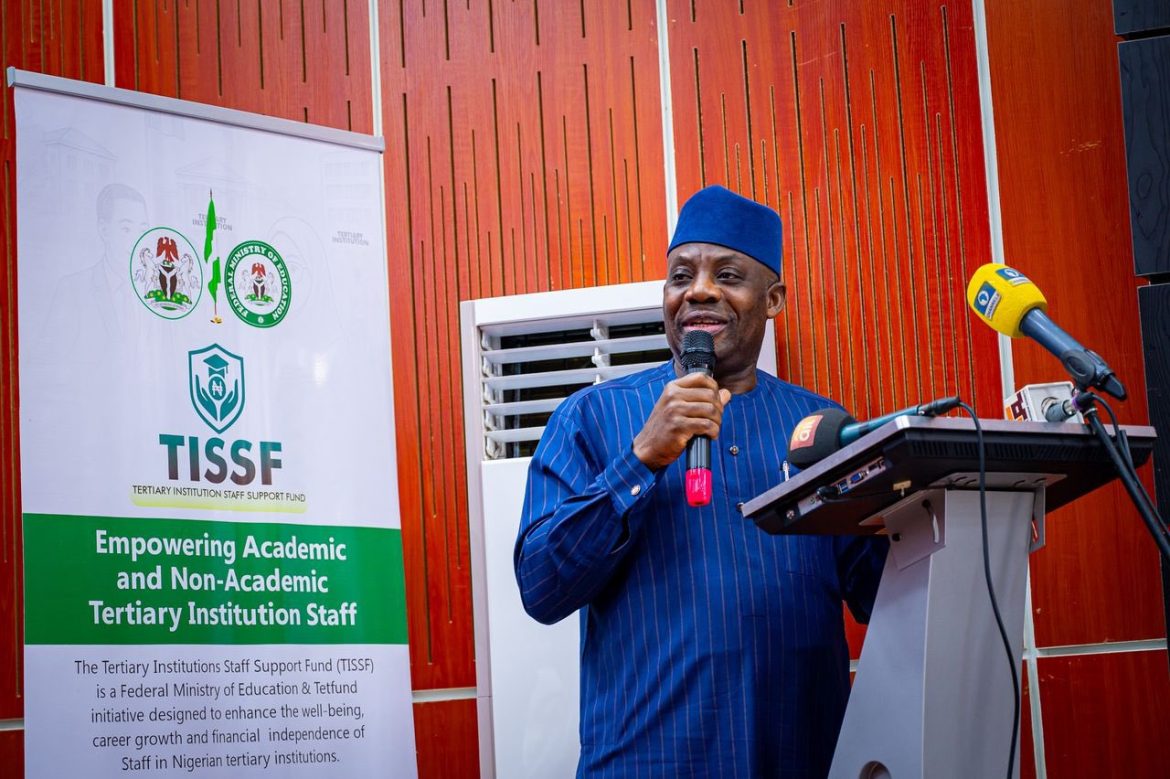
Speaking at the inauguration in Abuja, the Permanent Secretary, Federal Ministry of Education, Abel Enitan, commended the EU for its continuous support and investment in Nigeria’s education sector, noting that the partnership has contributed significantly to improving access, equity, quality, and system resilience.
Represented by the Director of Polytechnic Education and Allied Institutions, Dr. Usman Ejeh, Enitan said:
“The EYEPINN project is a strategic intervention designed to tackle pressing challenges such as out-of-school children, inadequate teacher capacity, unsafe learning environments, and limited youth empowerment opportunities in the Northwest region.”
He added that the committee would ensure accountability and alignment of project outcomes with national education policies.
“Every Euro invested must translate into tangible impact — improved learning outcomes, better-trained teachers, safer schools, and a more resilient education system that leaves no child behind,” he emphasized.
The EU Delegation’s Team Leader for Human Development, Leila Ben Amor Mathieu, described the initiative as the EU’s first standalone education project in Nigeria.
“We designed this programme closely with the Nigerian Ministry of Education to address the real needs of the people,” she said.
She further noted that the EU had committed about €800 million to national programmes between 2021 and 2027, excluding regional initiatives that also benefit Nigeria.
Mathieu explained that the EYEPINN project, implemented through UNICEF, Plan International, DIME, and other technical partners, focuses primarily on basic education, especially for out-of-school and nomadic children.
“We’re confident that this project will start delivering measurable results soon, with the World Bank also assessing its impact,” she added.
UNICEF’s Chief of Education, Vanessa Lee, said the project aligns with Nigeria’s education reform efforts.
“This programme comes at a critical time to support both federal and state education agencies in transforming the system,” she said.
UNICEF, she added, remains committed to reducing the number of out-of-school children through digital learning, data-driven planning, and enhanced teacher training initiatives.
Similarly, the Country Director of Plan International, Dr. Charles Usie, praised the EU’s continued support across various development sectors, describing the initiative as “a source of hope for children who might otherwise be left behind.”
Country Director of Save the Children International, Duncan Harvey, also emphasized the importance of the programme.
“Every child — regardless of background, gender, or ability — deserves access to quality education,” he said.
The Northwest region currently faces one of Nigeria’s worst education crises, with millions of children out of school due to insecurity, poverty, and inadequate infrastructure. According to recent estimates, Nigeria has about 20 million out-of-school children, with the Northwest accounting for a large portion of that figure.
