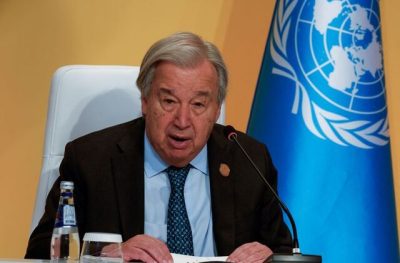
NEW YORK – UN Secretary-General António Guterres has warned that the escalating Gulf war by United States and Israel against Iran is “out of control”.Guterres also urged all sides to step back from the brink and allow diplomacy to prevail, as he announced the appointment of a senior envoy to spearhead peace efforts.Speaking in New York on Wednesday, the UN chief said the conflict had spiralled far beyond what leaders had anticipated.“The world is staring down the barrel of a wider war, a rising tide of human suffering, and a deeper global economic shock,” he said.He added bluntly: “This has gone too far.”In spite of mounting tensions and continued military escalation, Guterres insisted there remains a path forward.“Diplomacy must prevail,” he said. “War is not the answer”. We need a way out of this disaster.”“Diplomacy is the way out. Full respect of international law is the way out. Peace is the way out.”He confirmed he has appointed veteran diplomat Jean Arnault as his Personal Envoy to lead UN efforts to end the conflict.Guterres regretted that the war has upended the entire region with shockwaves spreading worldwide.He noted, especially, the impact on energy markets reliant on the crucial Strait of Hormuz chokepoint.He said the envoy will work “more directly on the ground” “to support all the efforts for mediation, all the efforts for peace”.According to him, he will engage with all parties and assessing the conflict’s far-reaching impacts.Guterres urged the United States and Israel that “it is high time to end the war”, while calling on Iran “to stop attacking their neighbours that are not parties to the conflict”.He also stressed that freedom of navigation, particularly through the Strait of Hormuz, must be respected.He warned that the prolonged disruption of the Strait is choking vital supplies of oil, gas and fertiliser.The Secretary-General also cautioned against the broader global fallout, noting that markets are “in turmoil” and humanitarian operations constrained.He said the economic shock is hitting the most vulnerable hardest, particularly in developing countries already struggling with debt and rising costs.He pointed to the disruption of fertiliser supplies as a looming threat to global food security.“Without fertilisers today, we might have hunger tomorrow,” he warned, adding that soaring energy prices risk fuelling inflation and deepening poverty worldwide. (NAN)
Tag:
UN
Nigeria joins Ghana, 121 others in resolution urging reparations for slavery’s ‘historical wrongs’
written by Administrator
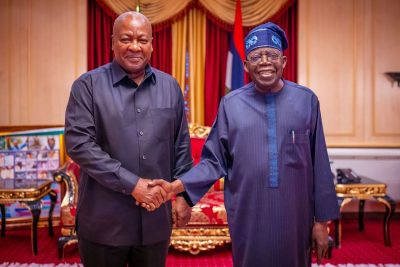
NEW YORK – Nigeria joined Ghana and 121 UN Member States on Wednesday to adopt a resolution declaring the transatlantic slave trade the gravest crime against humanity.
The resolution spearheaded by Ghana, received 123 votes in favour while three countries: Argentina, Israel and the United States voted against and 52 abstained.
The resolution was in commemoration of the Second International Decade for People of African Descent and the African Union’s Decade of Reparations.
Ghana’s President John Mahama, spoke ahead of the vote on behalf of the 54-member African Group, the largest regional bloc at the UN.
“Today, we come together in solemn solidarity to affirm truth and pursue a route to healing and reparative justice,” Mahama said.
For more than 400 years, millions of people were stolen from Africa.
They were put in shackles and shipped to the New World to toil in cotton fields and sugar and coffee plantations under scorching heat and the crack of the whip.
They were denied their basic humanity and even their own names, forced to endure generations of exploitation with repercussions that reverberate today including persistent anti-Black racism and discrimination.
The resolution emphasised “the trafficking of enslaved Africans and racialised chattel enslavement of Africans as the gravest crime against humanity by reason of the definitive break in world history”.
It also noted the scale, duration, systemic nature, brutality and enduring consequences that continue to structure the lives of all people through racialized regimes of labour, property and capital.”
It affirmed the importance of addressing historical wrongs affecting Africans and people of the diaspora in a manner that promotes justice, human rights, dignity and healing.
The resolution also emphasised that claims for reparations represent a concrete step towards remedy.
“The slave trade and slavery stand among the gravest violations of human rights in human history, UN General Assembly President Annalena Baerbock said.
Baerbock added that slavery was “an affront to the very principles enshrined in the Charter of our United Nations and the Universal Declaration of Human Rights, themselves born, in part, from these injustices of the past”.
The countries where enslaved Africans were taken from also suffered “a hollowing out” having lost entire generations who potentially could have helped them to prosper, she said.
“It was, to put it in colder terms, mass resource extraction,” Baerbock stressed.
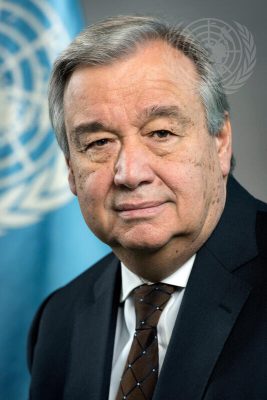
UN Secretary-General António Guterres called for confronting slavery’s lasting legacies of inequality and racism.
“Now we must remove the persistent barriers that prevent so many people of African descent from exercising their rights and realising their potential,” he said.
“We must commit, fully and without hesitation, to human rights, equality, and the inherent worth of every person.”
Guterres urged countries to drive action to eradicate systemic racism, ensure reparatory justice and accelerate inclusive development, marked by equal access to education, health, employment, housing, and a safe environment.
“This includes commitments to respect African countries’ ownership of their own natural resources.
“And steps to ensure their equal participation and influence in the global financial architecture and the UN Security Council.”
The U.S. representative to the UN Economic and Social Council, Dan Negrea, said U.S. “does not recognise a legal right to reparations for historical wrongs that were not illegal under international law at the time they occurred.” (NAN)
NEW YORK – UN Secretary-General António Guterres has called for the immediate release of the 118 UN staff currently detained worldwide.
Guterres, in a statement marking the International Day of Solidarity with Detained and Missing Staff Members, said attacks against the UN increased with 179 personnel arrested or detained in 2025 alone.
The figure marks a significant increase from the 52 UN staff in detention in March 2025.
In Yemen alone, 73 UN staff remain detained by the de facto Houthi authorities, including eight from the UN’s human rights office.
The UN chief said “no colleague is forgotten” and urged Member States to uphold international law to ensure safe and unimpeded humanitarian work.
“Today and every day, let’s stand with those who serve humanity, and ensure they are protected and supported as they carry out their essential work,” Guterres said.
The UN has a presence on the ground in some of the world’s most dangerous and unstable locations including Gaza, Afghanistan, Sudan, Yemen, and the Democratic Republic of the Congo.
President of the General-Assembly, Annalena Baerbock said: “Any detention not only violates fundamental human rights, international law and immunities.
“It also undermines vital humanitarian efforts, delaying lifesaving assistance to millions of people.
“UN staff should never be a target. They are giving their lives, every day, to support communities in dire need and for the principles of the United Nations.”
In Yemen, UN staff continue to face arbitrary arrests whilst “some have been deprived of their liberty for five years now,” the UN High Commissioner for Human Rights, Volker Türk, said.
“Every day, the injustice of their detention is compounded. Their suffering, and that of their families, is intolerable,” he added.
The UN staff are being held in areas of the country under the control of the de facto Houthi authorities.
The Human Rights chief called on the de facto authorities in Yemen to release immediately and unconditionally the 73 UN staff.
“Under no circumstances can UN personnel be detained, much less charged with crimes, for undertaking their vital work on behalf of the Yemeni people,” Türk said.
Türk paid tribute to the thousands of UN staff who work in the most difficult situations, in crises and conflicts, to serve communities in need of support.
The International Day of Solidarity with Detained and Missing Staff Members marks the anniversary of the abduction of Alec Collett.
Collett, a former journalist working for the UN Palestine refugee agency, UNRWA, was abducted by a gunman in 1985 and his body was found in Lebanon’s Bekaa Valley in 2009.
The aim of the international day is to mobilise action, demand justice and strengthen the resolve to protect UN staff and peacekeepers.
The day is also aimed to protect workers in the non-governmental community and the press. (NAN)
Nigeria joins Ghana, 121 others in resolution urging reparations for slavery’s ‘historical wrongs’
written by Content Admin
NEW YORK- Nigeria joined Ghana and 121 UN Member States on Wednesday to adopt a resolution declaring the transatlantic slave trade the gravest crime against humanity.
The resolution spearheaded by Ghana, received 123 votes in favour while three countries: Argentina, Israel and the United States voted against and 52 abstained.
The resolution was in commemoration of the Second International Decade for People of African Descent and the African Union’s Decade of Reparations.
Ghana’s President John Mahama, spoke ahead of the vote on behalf of the 54-member African Group, the largest regional bloc at the UN.
“Today, we come together in solemn solidarity to affirm truth and pursue a route to healing and reparative justice,” Mahama said.
For more than 400 years, millions of people were stolen from Africa.
They were put in shackles and shipped to the New World to toil in cotton fields and sugar and coffee plantations under scorching heat and the crack of the whip.
They were denied their basic humanity and even their own names, forced to endure generations of exploitation with repercussions that reverberate today including persistent anti-Black racism and discrimination.
The resolution emphasised “the trafficking of enslaved Africans and racialised chattel enslavement of Africans as the gravest crime against humanity by reason of the definitive break in world history”.
It also noted the scale, duration, systemic nature, brutality and enduring consequences that continue to structure the lives of all people through racialized regimes of labour, property and capital.”
It affirmed the importance of addressing historical wrongs affecting Africans and people of the diaspora in a manner that promotes justice, human rights, dignity and healing.
The resolution also emphasised that claims for reparations represent a concrete step towards remedy.
“The slave trade and slavery stand among the gravest violations of human rights in human history, UN General Assembly President Annalena Baerbock said.
Baerbock added that slavery was “an affront to the very principles enshrined in the Charter of our United Nations and the Universal Declaration of Human Rights, themselves born, in part, from these injustices of the past”.
The countries where enslaved Africans were taken from also suffered “a hollowing out” having lost entire generations who potentially could have helped them to prosper, she said.
“It was, to put it in colder terms, mass resource extraction,” Baerbock stressed.
UN Secretary-General António Guterres called for confronting slavery’s lasting legacies of inequality and racism.
“Now we must remove the persistent barriers that prevent so many people of African descent from exercising their rights and realising their potential,” he said.
“We must commit, fully and without hesitation, to human rights, equality, and the inherent worth of every person.”
Guterres urged countries to drive action to eradicate systemic racism, ensure reparatory justice and accelerate inclusive development, marked by equal access to education, health, employment, housing, and a safe environment.
“This includes commitments to respect African countries’ ownership of their own natural resources.
“And steps to ensure their equal participation and influence in the global financial architecture and the UN Security Council.”
The U.S. representative to the UN Economic and Social Council, Dan Negrea, said U.S. “does not recognise a legal right to reparations for historical wrongs that were not illegal under international law at the time they occurred.” (NAN)
Gulf war ‘out of control’, Guterres warns, appoints envoy to push for peace
written by Content Admin
NEW YORK- UN Secretary General António Guterres has warned that the escalating Gulf war by United States and Israel against Iran is “out of control”.
Guterres also urged all sides to step back from the brink and allow diplomacy to prevail, as he announced the appointment of a senior envoy to spearhead peace efforts.
Speaking in New York on Wednesday, the UN chief said the conflict had spiralled far beyond what leaders had anticipated.
“The world is staring down the barrel of a wider war, a rising tide of human suffering, and a deeper global economic shock,” he said.
He added bluntly: “This has gone too far.”
In spite of mounting tensions and continued military escalation, Guterres insisted there remains a path forward.
“Diplomacy must prevail,” he said. “War is not the answer”. We need a way out of this disaster.”
“Diplomacy is the way out. Full respect of international law is the way out. Peace is the way out.”
He confirmed he has appointed veteran diplomat Jean Arnault as his Personal Envoy to lead UN efforts to end the conflict.
Guterres regretted that the war has upended the entire region with shockwaves spreading worldwide.
He noted, especially, the impact on energy markets reliant on the crucial Strait of Hormuz chokepoint.
He said the envoy will work “more directly on the ground” “to support all the efforts for mediation, all the efforts for peace”.
According to him, he will engage with all parties and assessing the conflict’s far-reaching impacts.
Guterres urged the United States and Israel that “it is high time to end the war”, while calling on Iran “to stop attacking their neighbours that are not parties to the conflict”.
He also stressed that freedom of navigation, particularly through the Strait of Hormuz, must be respected.
He warned that the prolonged disruption of the Strait is choking vital supplies of oil, gas and fertiliser.
The Secretary-General also cautioned against the broader global fallout, noting that markets are “in turmoil” and humanitarian operations constrained.
He said the economic shock is hitting the most vulnerable hardest, particularly in developing countries already struggling with debt and rising costs.
He pointed to the disruption of fertiliser supplies as a looming threat to global food security.
“Without fertilisers today, we might have hunger tomorrow,” he warned, adding that soaring energy prices risk fuelling inflation and deepening poverty worldwide. (NAN)
NEW YORK- UN Secretary-General António Guterres has called for the immediate release of the 118 UN staff currently detained worldwide.
Guterres, in a statement marking the International Day of Solidarity with Detained and Missing Staff Members, said attacks against the UN increased with 179 personnel arrested or detained in 2025 alone.
The figure marks a significant increase from the 52 UN staff in detention in March 2025.
In Yemen alone, 73 UN staff remain detained by the de facto Houthi authorities, including eight from the UN’s human rights office.
The UN chief said “no colleague is forgotten” and urged Member States to uphold international law to ensure safe and unimpeded humanitarian work.
“Today and every day, let’s stand with those who serve humanity, and ensure they are protected and supported as they carry out their essential work,” Guterres said.
The UN has a presence on the ground in some of the world’s most dangerous and unstable locations including Gaza, Afghanistan, Sudan, Yemen, and the Democratic Republic of the Congo.
President of the General-Assembly, Annalena Baerbock said: “Any detention not only violates fundamental human rights, international law and immunities.
“It also undermines vital humanitarian efforts, delaying lifesaving assistance to millions of people.
“UN staff should never be a target. They are giving their lives, every day, to support communities in dire need and for the principles of the United Nations.”
In Yemen, UN staff continue to face arbitrary arrests whilst “some have been deprived of their liberty for five years now,” the UN High Commissioner for Human Rights, Volker Türk, said.
“Every day, the injustice of their detention is compounded. Their suffering, and that of their families, is intolerable,” he added.
The UN staff are being held in areas of the country under the control of the de facto Houthi authorities.
The Human Rights chief called on the de facto authorities in Yemen to release immediately and unconditionally the 73 UN staff.
“Under no circumstances can UN personnel be detained, much less charged with crimes, for undertaking their vital work on behalf of the Yemeni people,” Türk said.
Türk paid tribute to the thousands of UN staff who work in the most difficult situations, in crises and conflicts, to serve communities in need of support.
The International Day of Solidarity with Detained and Missing Staff Members marks the anniversary of the abduction of Alec Collett.
Collett, a former journalist working for the UN Palestine refugee agency, UNRWA, was abducted by a gunman in 1985 and his body was found in Lebanon’s Bekaa Valley in 2009.
The aim of the international day is to mobilise action, demand justice and strengthen the resolve to protect UN staff and peacekeepers.
The day is also aimed to protect workers in the non-governmental community and the press. (NAN)
NEW YORK- UN Secretary General, Antonio Guterres has called on women to accelerate progress on water and sanitation for all.
Guterres made the call in his message to mark the World Water Day.
World Water Day is an annual United Nations observance day held on March 22 that highlights the importance of fresh water.
The day is used to advocate for the sustainable management of freshwater resources.
The 2026 World Water Day with the theme: “Water and Gender Equality – Where water flows, equality grows,” is a call for a transformative, rights-based approach that places women’s leadership at the centre of water solutions.
The UN chief said too often, water has been a source of conflict but noted it could also unite people and be a contributor to peace.
“This year’s UN Water Conference will bring the world together to accelerate progress on water and sanitation for all.
“Together, let’s make water a force for gender equality, and let the benefits flow to every community in the world,’’ he said.
According to him, this year’s World Water Day reminds us that safe water and sanitation play a critical role in supporting the rights and health of women and girls.
“When access is lacking, it’s women and girls who pay the highest toll, relying on unsafe toilets; caring for family members made sick from contaminated water; and spending hours each day retrieving water from crowded communal sources – a chore that keeps many girls home from school.
“This year’s theme points to the solution: “Where water flows, equality grows.”
“It’s time for governments to scale up investment and strengthen national water and sanitation systems, through improved delivery capacities, workforce training and reliable financing.”
The UN chief further said that developed countries must share the technologies, expertise and financing required to build safe, sustainable and resilient water and sanitation infrastructure. (NAN)
NEW YORK- The 2026 World Happiness Report has highlighted a decline in happiness among young people in some developed countries, notably the U.S, Canada, Australia, and New Zealand.
The News Agency of Nigeria (NAN) reports that the report is part of a series published by the UN Sustainable Development Solutions Network and its partners.
It is published annually to mark the International Day of Happiness (IDH), celebrated on March 20.
In the key finding of the report, Finland took the lead in the top happiest countries in the world followed by Nordic neighbors Iceland, Denmark, Sweden, and Norway.
Finland has been named the world’s happiest country for the ninth consecutive year in the 2026 World Happiness Report.
Nordic nations dominate the top rankings, while the 2026 report specifically highlights concerns regarding youth happiness linked to high social media use, particularly in English-speaking countries.
The report finds that high social media use is associated with lower well-being, though moderate use may not be.
Under top five shift, Costa Rica broke into the top 5, signaling a shift in the traditional top rankings.
It, however, noted that rankings were based on the Gallup World Poll’s 3-year average of life evaluations (Cantril Ladder) across more than 140 countries.
It noted that while top rankings remained stable, significant shifts in well-being were occurring within regions, with rising satisfaction in some central European countries and decreases elsewhere.
However, Mauritius ranks the number one in Africa. The country ranks as the 73rd-happiest country globally, reflecting its strong social support, healthy life expectancy, and economic stability.
The island nation balances a robust tourism sector with a growing finance industry, providing residents with opportunities and a high quality of life.
It followed by Libya, which ranks 81st globally in happiness, emerging as one of Africa’s happier nations in spite of years of political turmoil.
Social support networks remain strong, and residents value freedom to make life choices where possible. GDP per capita is variable, but community and generosity help offset economic uncertainty.
Algeria ranks 83rd globally, reflecting a society with strong family bonds and social cohesion. While economic growth has been uneven, residents benefit from social services and healthcare that support life expectancy.
Mozambique is among top 10, ranks 93rd globally among the happiest countries, thanks to resilient communities and strong cultural traditions. Life expectancy has improved, and social support networks help residents weather economic and environmental challenges.
Also, Gabon, Cote d’ivoire, Cameron,, Niger and Tunisia made it to the top 10.
Tunisia ranks 105th globally, navigating economic pressures and political transitions while maintaining strong social support networks. Life expectancy is relatively high, and access to healthcare remains a priority for its citizens.
Nigeria stands at 106th in the report, indicating a steady slip from 105 in 2025 and 102 in 2024.
According to the UN, IDH is a day to be happy, of course! Happiness is a fundamental human goal.
The United Nations General Assembly recognises this goal and calls for “a more inclusive, equitable and balanced approach to economic growth that promotes the happiness and well-being of all peoples.”
Governments and international organisations should invest in conditions that support happiness by upholding human rights and incorporating well-being and environmental dimensions into policy frameworks, such as the 17 Sustainable Development Goals (SDGs)
The effectiveness of governments in upholding peace and social order, as well as in the fields of taxation, legal institutions and delivery of public services, strongly correlates with average life satisfaction. (NAN)
NEW YORK- The United Nations has decried the slow progress in reducing child mortality as 4.9 million children still die annually before their firth birthday.
Some UN agencies under the aegis of the UN Inter-agency Group for Child Mortality Estimation (UN IGME) stated this in a statement issued on Wednesday, according to a new report.
The new UN report on child mortality fully assesses leading causes of under five deaths for first time.
It states that an estimated 4.9 million children died before their fifth birthday in 2024, including 2.3 million newborns, according to new estimates released on Wednesday.
The report also notes that most of these deaths are preventable with proven, low-cost interventions and access to quality healthcare.
According to the report, titled: “Level and Trends in Child Mortality,” under-five deaths globally have fallen by more than half since 2000.
However, it says since 2015, the pace of reduction in child mortality has slowed by more than 60 per cent.
“This year’s report provides the clearest and most detailed picture yet of how many children, adolescents, and youth are dying, where they are dying, and – for the first time – fully integrates estimates on the causes of death.
“For the first time, the report estimates deaths directly caused by Severe Acute Malnutrition (SAM), finding that more than 100,000 children aged 1-59 months – or 5 per cent – died from it in 2024.
“The toll is far greater when indirect effects are considered, as malnutrition weakens children’s immunity and increases their risk of dying from common childhood diseases,” the report says.
The statement quoted UNICEF Executive Director, Catherine Russell as saying: “No child should die from diseases that we know how to prevent.
“However, we see worrying signs that progress in child survival is slowing – and at a time where we’re seeing further global budget cuts.
“History has shown what is possible when the world commits to protecting its children. With sustained investment and political will, we can continue to build on those achievements for future generations.”
Commenting on the report, WHO Director-General, Tedros Ghebreyesus, said: “The world has made remarkable progress in saving children’s lives, but many still die from preventable causes.
“Children living amid conflict and crisis are nearly three times more likely to die before their fifth birthday.
“We must protect essential health and nutrition services and reach the most vulnerable families so every child has the chance not only to survive, but to thrive.”
Also reacting to the report, World Bank Group Director, Health, Monique Vledder, said: “These findings are a collective call to speed up implementation of the proven, scalable solutions we know are within reach.
“The World Bank Group health target of reaching 1.5 billion people is our concrete commitment to accelerating access to quality primary health services for more children and families.”
The report further stated that mortality data also frequently fail to capture SAM as an underlying cause of death, suggesting the burden is likely substantially underestimated.
Some of the countries with the highest numbers of direct deaths include Pakistan, Somalia, and Sudan.
“Newborn deaths account for nearly half of all under-five deaths, reflecting slower progress in preventing deaths around the time of birth.
“Leading causes among newborns were complications from preterm birth (36 per cent) and complications during labour and delivery (21 per cent).
“Infections, including neonatal sepsis and congenital anomalies, were also important causes,” the report further says.
Beyond the first month, the report states that infectious diseases such as malaria, diarrhoea, and pneumonia are major killers.
It notes that malaria remains the single largest killer in this age group (17 per cent) – with most deaths occurring in endemic areas of sub-Saharan Africa.
After steep declines between 2000 and 2015, progress towards reducing malaria mortality slowed in recent years.
It further reveals that deaths remain concentrated in a handful of endemic countries – such as Chad, Democratic Republic of the Congo, Niger, and Nigeria.
The report explains that these are where conflict, climate shocks, invasive mosquitos, drug resistance, and other biological threats continue to affect access to prevention and treatment.
“Child deaths remain heavily concentrated in a small number of regions. In 2024, sub-Saharan Africa accounted for 58 per cent of all under-five deaths.
“In the region, the leading infectious diseases were responsible for 54 per cent of all under-five deaths.
“In Europe and North America this proportion drops to 9 per cent and in Australia and New Zealand, it drops further to 6 per cent. These stark disparities reflect unequal access to proven, life-saving interventions,” it says.
According to the report, fragile and conflict-affected countries continue to bear a disproportionate share of the burden.
Children born in these settings are nearly three times more likely to die before their fifth birthday than those elsewhere.
The report also finds that an estimated 2.1 million children, adolescents and youth aged 5–24 died in 2024.
Infectious diseases and injuries remain leading causes among younger children, while risks shift in adolescence, with self-harm being the leading cause of death among girls aged 15–19, and road traffic injuries among boys. (NAN)
NEW YORK- UN Secretary General António Guterres on Monday urged countries to “work together” and eradicate a rising tide of anti-Muslim hate, calling for a rejection of “the narratives of fear and exclusion”.
As conflict and instability rage, “millions of Muslims around the world carry that pain with them,” Guterres said in an event marking the International Day to Combat Islamophobia in New York.
“Let us recommit to equality, human rights and dignity of every person, everywhere,” he said.
The secretary-general warned that for far too many Muslims living as minorities, their daily lives faced being shaped by exclusion, institutional discrimination, socioeconomic marginalisation, unwarranted surveillance and profiling.
As the world’s two billion Muslims approach the end of the holy month of Ramadan, Guterres called on governments to take responsibility and introduce measures that “safeguard equality, not entrench prejudice.”
Guterres, however, warned against the “subtle biases” that rarely make headlines but nonetheless “shape lives, erode trust, and send a clear message about who is seen as belonging and who is not.”
These could be “opportunities quietly denied, assumptions left unchallenged, or questions weighted down by suspicion” and “are driven – and dangerously amplified – by anti-Muslim rhetoric, misinformation, and outright hate.”
Guterres said that when discrimination is “echoed by those in positions of authority, prejudice becomes normalised.”
“When stereotypes are left unchallenged, they harden into policy. And when fear is allowed to guide decision-making, injustice follows.”
“Governments have a clear responsibility,” he added, urging them to take action and bring forward legislation and security measures that protect people and respect human rights, “not stigmatise entire communities.”
He also emphasised the responsibility of technology companies and said that “online spaces should bring people together, not drive them apart,” adding that “they must do far more to identify, prevent, and address hate speech and harassment.”
“Silence in the face of hatred only allows it to spread,” the Secretary-General underscored, adding that “we all have a responsibility to speak out against bigotry, xenophobia, and discrimination.”
“As Ramadan draws to a close, Muslims around the world reaffirm values that also form the foundation of the UN Charter… These universal principles must guide our global response to hatred and division.”
Also addressing the event in New York, UN General Assembly President, Annalena Baerbock, said that those prejudices were now amplified in the digital age.
Baerbock said: ”With technology supposed to increase connection, it is instead “accelerating the spread of misinformation and prejudice at an unprecedented speed.
“The consequences are painfully real, with harassment, intimidation, vandalism, threat, and attacks on people and mosques.
“These acts are an “assault on the values that underpin peaceful, inclusive societies everywhere.”
Baerblock added that “standing up against Islamophobia is not only about defending one religious community. It is about defending our shared humanity.”
“I encourage governments, international institutions, technology companies, and civil society to follow the example of the United Nations and play a proactive role in challenging harmful stereotypes while promoting accurate and responsible information,” she added. (NAN)
KABUL- Civilians, primarily women and children, continue to bear the brunt of escalating cross-border hostilities between Afghanistan and Pakistan, the United Nations Assistance Mission in Afghanistan (UNAMA) reported on Friday.
In a statement posted on its official X account, UNAMA revealed that it has documented at least 75 civilians killed and 193 injured in Afghanistan between Feb. 26 and March 13 as a direct result of the ongoing armed clashes.
“We continue to call for an immediate cessation in hostilities to prevent further loss of civilian life,” the mission stated.
The latest appeal comes amid heightened tensions following a series of border skirmishes in late February, with both sides trading accusations over the initiation of violence.(Xinhua/NAN)

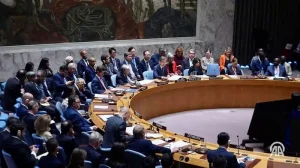
The UN Security Council members meeting on Wednesday
HAMILTON- The UN Security Council adopted a resolution Wednesday condemning Iran’s attacks on Gulf Cooperation Council (GCC) states, as well as Jordan.
The resolution passed with 13 votes in favor, with Russia and China abstaining.
Presented by Bahrain and co-sponsored by 135 countries, the resolution emphasised “strong support for the territorial integrity, sovereignty and political independence” of the GCC states and Jordan.
It strongly condemns the “egregious attacks by the Islamic Republic of Iran against” the Gulf countries and Jordan, emphasising that the attacks “constitute a breach of international law and a serious threat to international peace and security.”
The resolution also condemned the targeting of civilian infrastructure, which “resulted in civilian casualties and damage of civilian buildings.”
Bahrain’s UN envoy Jamal Fares Alrowaiei welcomed the adoption.
“It proved that the Council is committed to maintaining international peace and security.
“We express our deep gratitude to all member states of the United Nations that co-sponsored this resolution.
“Their number amounted to 135 countries. This overwhelming support by the international community reflects a collective awareness of the danger of the unjust Iranian attack against our countries,” he noted.(NAN/AA)
An ‘alarming’ two-thirds of children say cyberbullying has increased – UN report
written by Content Admin
NEW YORK- A report by Najat M’jid, Special Representative of the UN Secretary-General on Violence Against Children has shown that around two-thirds of children worldwide report an increase in cyberbullying.
M’jid said that cyberbullying is increasing and Artificial Intelligence (AI) is a key driver of harm.
The report highlights “alarming trends” and “the urgent need for the entire online ecosystem to act faster and together to protect children”.
The findings come amid increasing threats to children with growing conflicts, displacement, poverty, and levels of violence.
“We meet today once again in a challenging world, where children are paying the highest price,” M’jid, said.
With responses from over 30,000 children across every region, the report emphasised the widespread impact of AI in “fundamentally transforming the threat” facing children online.
She said the rapid advancement and accessibility of generative AI is reshaping cyberbullying, making it faster, more targeted, harder to detect, and capable of spreading across multiple platforms at a massive scale.
In the current climate, which enables AI-generated deepfake photos and videos and the manipulation of children through chatbots and other tools, children often over-trust and cannot distinguish from real human interaction.
AI deepfakes “are increasingly used to humiliate, threaten and exploit children online” the statement released from M’jid office said on Tuesday.
According to the findings, children find it challenging to report cyberbullying because they face stigma and fear, being rejected by their peers or being judged by adults.
The impact of not reporting can be immediate and devastating, causing psychological distress and lasting reputational harm in just a matter of seconds.
In the most tragic cases, it can drive children to take their own lives.
M’jid stressed the need to involve all with a stake in the child online protection ecosystem as the only way to protect children from online harm while enabling safe digital participation. (NAN)
BEIJING – China’s foreign ministry said on Monday Iran conflict killed one Chinese citizen in the capital Tehran, while more than 3,000 were evacuated.
The ministry said China’s embassies and consulates in nearby countries swung into action to help the affected.
Attacks by the United States and Israel from Saturday killed Iran’s Supreme Leader Ali Khamenei, provoking retaliatory Iranian strikes on Israel and other Gulf countries hosting U.S. military bases.
The ministry spokesperson, Mao Ning told a regular press briefing that work groups set up by Chinese embassies and consulates in neighbouring countries will receive and assist those evacuated.
Mao said China was not informed in advance about the U.S. military actions against Iran.
She denied a report that Iran and China were close to reaching a deal to buy supersonic anti-ship missiles, saying China was a responsible major power that “always fulfilled its international obligations”.
Mao reiterated condemnation of the attacks and the killing of Khameini, urging all parties involved to immediately cease military action to prevent escalation.
Jia Guide, China’s ambassador to the United Nations, told the UN Human Rights Council in Geneva that the attacks against Iran and killing of the Iranian leader violated the principles of the UN Charter and the human rights of Iranians.
The sovereignty, security and territorial integrity of the Gulf states should be fully respected and China backs efforts to strengthen communication among countries, Mao said. (Reuters/NAN)
NEW YORK – The UN narcotics control body, INCB, says a shipment of chemicals used to make fentanyl that could have produced up to 1.6 billion potentially lethal doses has been blocked.
The International Narcotics Control Board, which disclosed this in a statement on Thursday, added that an international early warning system intercepted the shipment.
It said the interception highlighted the vital role of cooperation in tackling the rapidly evolving illegal drugs trade.
INCB is an independent, quasi-judicial body established under the 1961 Single Convention on Narcotic Drugs.
In its 2025 Annual Report, INCB said that authorities used its pre-export notification platform to stop the diversion of three tons of the precursor 1-boc-4-piperidone – a chemical intermediary used in the manufacture of fentanyl – between 700 million and 1.6 billion doses of the deadly street drug.
The case in March 2025 is one of several examples cited by the INCB to illustrate what it dubs an “international success story” in terms of cooperation.
“Tackling the trafficking and misuse of drugs, while ensuring the availability of essential medicines, has been carried out effectively over the last 60 years through the drug control conventions, a robust framework for working together with almost universal support.
“Our role is to reinforce the cooperative efforts of countries and territories through our work,” Board President, Professor Sevil Atasoy, said.
The INCB is an independent, quasi-judicial body mandated to monitor implementation of the three international drug control conventions – adopted in 1961, 1971, and 1988 – which form the backbone of the global drug control system.
Under these treaties, Governments provide it with estimates and statistical reports to monitor the cultivation, manufacture, and trade of controlled substances, to ensure their availability for medical and scientific purposes only.
According to the report, the efficiency of this system has kept the diversion of legitimately produced narcotic drugs into illicit markets “very low”, while diversion of psychotropic substances – such as heroin and other opioids – has “virtually stopped.”
In 2025 alone, more than 190 countries and territories cooperated through the online pre-export notification (PEN) platform, monitoring over 34,000 planned shipments of internationally controlled drug precursors.
INCB monitors national compliance with the three international drug control conventions (1961, 1971, and 1988), overseeing the global system that regulates narcotic drugs and psychotropic substances for medical and scientific use while preventing diversion into illicit markets.
Its 13 members are elected by the UN Economic and Social Council for five-year terms. The Board is headquartered in Vienna and is supported by a secretariat linked to the UN Office on Drugs and Crime (UNODC )
Despite such cooperation, the Board warns that trafficking networks are adapting rapidly.
Cocaine trafficking remains the fastest-growing illicit drug market, with increased production in South America driving expansion into Asia and Africa.
In Europe, cocaine trafficking to Western and Central Europe has “dramatically increased,” while the illicit manufacture of synthetic drugs continues to expand.
In North America, synthetic drug overdoses decreased by 17 per cent in Canada and 27 per cent in the United States, but the Board cautioned that it is “too early to assess whether the decrease will develop into a sustained trend.”
In Africa, trafficking in pharmaceutical opioids – including substandard products – is described as the drug-related issue of greatest concern, while the South Asian region accounts for one third of the world’s estimated opioid users.
Methamphetamine remains the dominant synthetic drug threat in East and Southeast Asia, with record seizures reported.
Even as the global supply of opioid painkillers remains stable, the Board highlighted persistent inequalities in access to pain relief medicines, particularly in low- and middle-income countries.
Many countries continue to report difficulties in procuring medications containing morphine, and increasing the availability and affordability of psychotropic substances remains a priority.
“Protecting the health of people around the world from the dangers of illicit drugs is a common and shared responsibility,” Atasoy said.
“The international drug control system relies on the willingness and capacity of countries to work together.” (NAN)
ABUJA- The UN has reaffirmed its commitment to supporting Nigeria’s democratic journey, describing the nation’s electoral success as a critical benchmark for the stability and progress of the African continent.
The UN Resident and Humanitarian Coordinator in Nigeria, Mohamed Fall, stated this when he led a delegation to the Independent National Electoral Commission (INEC) headquarters in Abuja.
Congratulating the INEC Chairman, Prof. Joash Amupitan on his appointment, Fall said the world is expecting to learn from Nigeria, due to its demographic weight and its electoral processes.
“Your success will be our success. Democracy in Nigeria has evolved over the past 27 years, as something defining to the history and trajectory of the country.
“Because of the stakes involved, the United Nations family of 26 agencies is ready to put our global expertise and best practices at your disposal,” he said.
Fall, who previously served as a UNICEF representative in Nigeria, noted that elections were not merely operational but a vital part of the development process.
He highlighted the UN’s “Leave No One Behind” principle, stressing the need for the inclusion of youth, women, and Persons With Disabilities (PWDs).
“We have been supporting young people to participate, we have been supporting women to participate, we have been supporting PWDs, because everything we do in UN, is founded on a principle “leave no one behind.’’ he said.
Ms. Elsie Attafuah, the UN Development Programme (UNDP) Resident Representative, said that the UN looked forward to continued support and work hand-in-hand with INEC at crucial times.
Attafuah noted the the long-standing partnership between the UN and INEC, dated back to 1999, even earlier.
“UN had been part of INEC successes, especially, the introduction of technology in the country’s electoral process.
“I think some of the technological advancements and improvement that happened with INEC, the United Nations family was part of that story.
“Over the years, we’ve worked together to ensure that there’s more inclusion from the youth and gender point of view.
“Over the years, we’ve been supporting with voter education, institutional strengthening and sometimes embedding technical capacity also within to support you,’’ she said.
Attafuah, noted that the UN supports approximately 60 elections globally every year and is keen on leveraging existing programs on human rights, gender equality and parliamentary development to assist Nigeria.
“Nigeria is providing great leadership through the Regional Partnership for Democracy.
“If Nigeria succeeds, Africa advances. We are happy to support you as you work on important milestones for this great country,” Attafuah said.
In his remarks, the Chairman of INEC, Prof. Joash Amupitan, commended the UN renewed partnership with INEC.
He identified public trust, voter apathy, and insecurity as the primary challenges facing Election Management Bodies (EMBs) in Africa.
The Chairman requested UN assistance in the areas of voter education to combat voter apathy, combating disinformation.
Amupitan also listed other support needed to include the strengthening of the commission’s Gender and Inclusivity Department (GID) to better serve Persons with Disabilities (PWDs),
” The commission Braille and specialised aids.
“Secondly, you also have the issue of voter apathy and issue of security,
“It is our responsibility to ensure that you manage all those things together, all those challenges.
“So those are some of the areas we will be liaising with the UN .’’ he said.
Amupitan, informed the UN delegation that the commission was taking proactive steps to clean the national voters’ register and remove deceased persons and all duplicates.
“Our hope is that every election we conduct will be better than the last one,” the chairman said.
He cited the recent successful conduct of FCT area council elections and upcoming off-cycle governorship elections in June and August, as testing grounds for improved result transmission technology and logistics tracking.
“We are in line with best practices in the use of technology.
“Results are transmitted to our portal to ensure transparency, allowing voters to compare real-time data with what is provided at polling units,” he added.(NAN)