
By Chibuike Nwabuko
ABUJA (PRECISE POST) – The United Nations Special Rapporteur on Freedom of Religion or Belief, Professor Nazila Ghanea, has raised serious concerns over worsening insecurity, religious violence and persistent human rights violations in Nigeria, warning that the government has failed to adequately protect citizens from abuses linked to their religious beliefs and identities.
Presenting a preliminary report at the headquarters of the National Human Rights Commission (NHRC) in Abuja on Friday, Ghanea said widespread killings, kidnappings, mass displacement and attacks on communities have created an atmosphere of fear that threatens the constitutional rights of millions of Nigerians.
The report followed a two-week fact-finding mission to Nigeria during which the UN investigative team visited Abuja, Kano and Plateau states and engaged with more than 200 stakeholders, including government officials, security agencies, religious leaders, civil society groups and victims of violence.
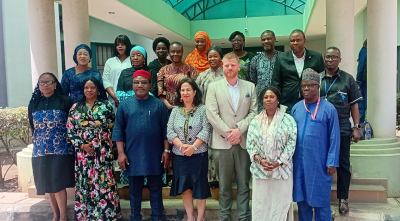
The briefing, held at the NHRC headquarters, was attended by the Executive Secretary of the Commission, Dr. Tony Ojukwu (SAN), directors of the commission, senior officials and representatives of local and international organisations.
Ghanea lamented the continued killings perpetrated by extremist groups, terrorists and criminal gangs, noting that thousands of Nigerians have lost their lives while perpetrators often escape punishment. She warned that the growing culture of impunity has deepened insecurity and eroded public confidence in state institutions.
According to her, the investigation sought to examine how freedom of thought, conscience, religion and belief interact with the broader human rights situation across Nigeria. She said her team held discussions with top government officials, including representatives of the National Security Adviser’s office, the Ministry of Justice, Ministry of Foreign Affairs, Ministry of Women Affairs, the Nigeria Police Force, the Nigeria Immigration Service, the Supreme Court and the National Human Rights Commission.
The UN envoy, however, expressed regret that several requested meetings with other federal officials could not be facilitated during the mission. She stressed that broader engagement with authorities would have enriched the assessment of the country’s religious freedom landscape.
Ghanea stated that while investigators observed pockets of horrendous violence and atrocities in parts of the country, they found no evidence of a nationwide and deliberate government policy aimed at destroying any religious community. She explained that inadequate security responses, recurring attacks and weak accountability mechanisms remain the major drivers of the violence.
She noted that many victims complained of insufficient protection from security agencies and the absence of justice after attacks, warning that the resulting feelings of persecution have heightened tensions among affected communities. She further argued that political manipulation, social labels and religious stereotypes continue to limit freedom of conscience and belief.
The Special Rapporteur called on the Federal Government to domesticate relevant international instruments, including the Rome Statute of the International Criminal Court, to strengthen accountability for violations of religious freedom and other serious crimes. She also urged religious leaders across faiths to openly condemn extremist teachings and reject those who promote violence in the name of religion.
Ghanea cautioned against narratives that portray Nigeria as a sharply divided “Muslim North” and “Christian South,” saying such descriptions oversimplify the country’s realities and risk deepening polarisation. She also raised concerns over requirements for citizens to disclose their religious affiliation during school admissions, employment applications and recruitment exercises, warning that such practices may encourage discrimination.
The report further highlighted concerns over terrorism, banditry, cattle rustling, land disputes, arson attacks, destruction of places of worship and schools, hostage-taking, mass kidnappings and the devastation of farming communities. According to the UN envoy, these cycles of violence, fear and displacement have spread across different parts of the country, while impunity has encouraged their persistence.
While acknowledging community policing initiatives, interfaith dialogue programmes and local peace-building efforts as positive developments, Ghanea called for victim-centred investigations, stronger accountability processes and greater protection for vulnerable communities. She said insecurity prevented her from extending the mission to other parts of the country and announced that her final report on Nigeria’s freedom of religion and belief situation will be presented to the United Nations Human Rights Council in March 2027.

