
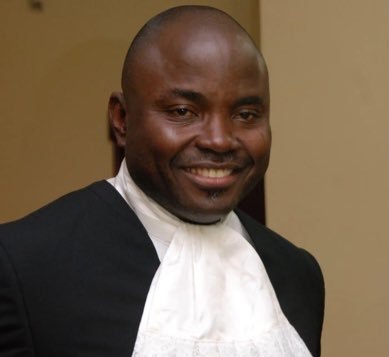
By Clement Nwabuko
ABUJA (PRECISE POST) – Senior Advocate of Nigeria (SAN), Jibrin Okutepa, has condemned the growing tendency in Nigerian politics to legitimise questionable means of acquiring political power once the beneficiary assumes office.
Okutepa warned that the increasing acceptance of political victories secured through inducement, intimidation, manipulation, violence and abuse of public resources poses a serious threat to democratic values, good governance and public confidence in government.
The legal luminary made the observation in a post on his X handle on Sunday, November 22, 2026, where he lamented that the circumstances surrounding the emergence of political officeholders are often overlooked once they successfully assume power.
He noted that what was considered unlawful during the struggle for political office could suddenly be treated as legitimate simply because the beneficiary had emerged victorious.
According to him, this troubling attitude has created a political culture in which the outcome of a contest is increasingly valued above the legality and credibility of the process.
“One of the saddest realities of Nigerian politics in all strata of governance is the growing belief that whatever brings a person to power is acceptable,” he said.
Okutepa argued that such a mindset allows illegitimacy to become legitimised, as those who question questionable political victories are dismissed as bitter or defeated, while beneficiaries of flawed processes are welcomed into the corridors of power.
He cautioned that power acquired through corrupt practices comes at a significant cost, including weakened government authority, declining public confidence and the dangerous perception that integrity is a disadvantage in the pursuit of political office.
The SAN further warned that leaders who ascend to power through improper means may become more concerned with protecting the interests and practices that brought them to office than serving the people or upholding the rule of law.
He said the consequences are ultimately borne by ordinary Nigerians through poor governance, insecurity, injustice and worsening economic hardship.
Emphasising that political victories do not automatically confer legitimacy, Okutepa maintained that the credibility of any election or political contest must be determined by the lawfulness, fairness and transparency of the process.
He urged political parties, democratic institutions and citizens to reject the notion that the end justifies the means, stressing that political success should be assessed not only by who occupies public office but also by the manner through which such individuals emerged.
“Until our parties, institutions and citizens insist on lawful conduct and accountability, corruption in the pursuit of power will continue to masquerade as ordinary politics—and the country will continue to pay the price,” he warned.

