
By Chibuike Nwabuko
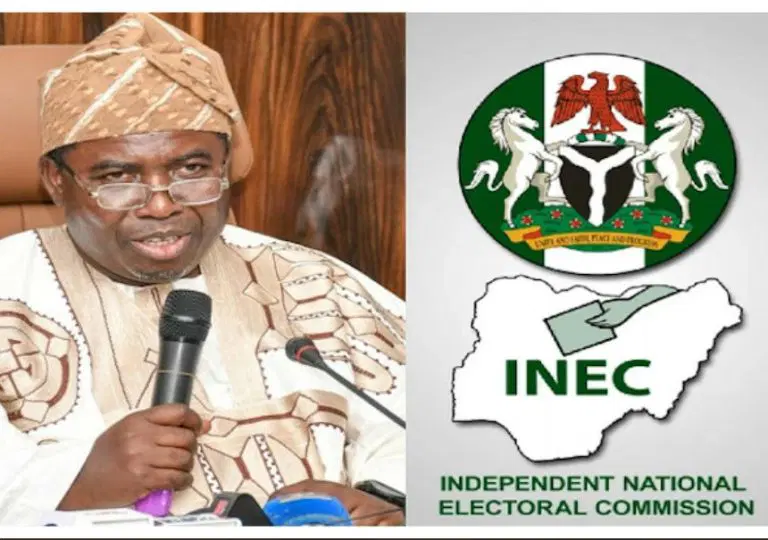
Nigeria’s democracy is approaching another decisive moment. With the 2027 general elections drawing closer, attention is increasingly shifting to the Independent National Electoral Commission (INEC), the institution constitutionally entrusted with the responsibility of organising and conducting elections in the country.
For many Nigerians, the 2027 elections are not merely another electoral cycle. They represent a critical opportunity to restore confidence in the democratic process, strengthen public institutions and reassure citizens that their votes can genuinely determine who governs them.
The stakes, therefore, could hardly be higher.
Nigeria has conducted several general elections since the return to democratic rule in 1999. While there have been notable improvements in electoral administration over the years, including the introduction of the Permanent Voter’s Card (PVC), the Bimodal Voter Accreditation System (BVAS), electronic result-management initiatives and other technological measures, the country’s electoral process continues to face serious challenges.
These include disputes over results, allegations of electoral malpractice, vote-buying, violence, intimidation, poor logistics, misinformation, litigation and declining public confidence in electoral institutions.
INEC must consequently recognise that the credibility of the 2027 election will be judged not merely by whether voting takes place, but by whether Nigerians believe that their votes were accurately counted and respected.
The importance of INEC derives directly from the Constitution. Section 153 of the 1999 Constitution establishes the Independent National Electoral Commission, while the Third Schedule assigns the Commission extensive responsibilities, including organising, undertaking and supervising elections to various elective offices.
The Electoral Act 2022 also provides the legal framework for the conduct of elections. This places an enormous responsibility on the Commission. INEC is not simply an agency that organises polling-day logistics. It is a central institution in Nigeria’s democratic architecture.
Its decisions and actions can determine whether citizens trust the electoral process or become cynical about democracy itself.
That is why INEC must approach the 2027 elections with an overriding commitment to neutrality, transparency, independence, professionalism and accountability.
The concern about the 2027 elections must also be viewed against the broader condition of the Nigerian society.
Millions of Nigerians are currently confronted by economic hardship, unemployment, insecurity, rising living costs, declining purchasing power and widespread frustration with public institutions.
When citizens experience difficulties in virtually every aspect of their lives, the ballot box becomes one of the few peaceful mechanisms through which they can express their preferences and demand accountability from those in authority.
If that mechanism is perceived to be compromised, the consequences could be damaging.
A citizen who believes that his or her vote does not matter may lose interest in participating in elections. Worse still, persistent distrust in democratic institutions can create room for apathy, political violence and anti-democratic sentiments.
This is why the credibility of the 2027 elections goes beyond INEC.
It concerns the survival and legitimacy of democratic governance in Nigeria.
Technology must produce transparency
INEC deserves recognition for embracing technology in the electoral process. The BVAS was introduced to strengthen voter accreditation and reduce opportunities for multiple voting and impersonation. The electronic transmission and management of results have also been presented as important components of efforts to improve transparency.
But technology, by itself, cannot guarantee credible elections.
What matters is how technology is deployed, whether it works consistently, whether its procedures are clearly understood by political parties and voters, and whether the Commission is transparent when technical difficulties occur.
INEC must therefore ensure that technological systems deployed for 2027 are properly tested long before election day.
There should be adequate contingency arrangements for network failures, equipment malfunction and other unforeseen circumstances.
Most importantly, the rules governing the use of technology must be clear to everybody before voting begins.
There should be no room for contradictory interpretations after results have been announced.
The importance of result management
One of the most sensitive aspects of any election is the management and declaration of results.
INEC must ensure that the procedures for collating, transmitting and declaring results are transparent and verifiable.
Where electronic systems are used, political parties, accredited observers and the public should have sufficient understanding of how the systems operate within the limits allowed by law.
The Commission should also communicate promptly and clearly whenever there is a technical or logistical challenge.
Silence creates suspicion.
In an environment already saturated with misinformation and distrust, INEC cannot afford an information vacuum. INEC must demonstrate independence.
The word Independent in the Commission’s name carries enormous significance.
INEC must demonstrate, through its actions, that it is independent of political parties, candidates, governments and other powerful interests.
The Commission must treat every political party and candidate equally.
Its officials at federal, state and local levels must understand that their loyalty is to the Constitution and the Nigerian people—not to any political party or individual.
Recruitment and deployment of electoral personnel must therefore be based on competence, integrity and impartiality.
Where allegations of bias or misconduct arise, they should be investigated promptly and transparently.
Political parties also have responsibilities
While INEC bears the primary responsibility for administering elections, political parties and candidates cannot be absolved of responsibility.
Parties must respect electoral laws, discourage violence, reject vote-buying and educate their supporters on peaceful participation.
Candidates must also learn to accept legitimate electoral outcomes while exercising their constitutional rights to challenge results through lawful channels where necessary.
The judiciary equally has a crucial role to play in resolving electoral disputes promptly and fairly.
Security agencies must remain neutral and professional, while civil society organisations, the media and election observers must continue to scrutinise the electoral process objectively.
In other words, credible elections are a collective responsibility—but INEC remains at the centre of that responsibility.
INEC must learn from previous elections
The Commission should conduct a thorough review of previous elections, identify weaknesses and implement corrective measures before 2027.
The lessons from the 2023 general elections, subsequent off-cycle elections and other electoral exercises should not be ignored.
Every recurring problem—whether involving voter registration, logistics, accreditation, result transmission, collation, communication or the conduct of electoral officials—should be treated as a problem requiring a solution before 2027.
The objective should not be to explain failures after elections.
The objective should be to prevent avoidable failures before elections.
Nigerians are watching
Perhaps the most important message to INEC is that Nigerians are watching.
Civil society organisations are watching.
The media are watching.
Political parties are watching.
International observers will be watching.
And, most importantly, the Nigerian electorate will be watching.
The Commission should therefore understand that every decision taken before, during and after the 2027 elections will be subjected to unprecedented public scrutiny.
The publication of the voters’ register, the nomination process, the deployment of personnel and materials, accreditation, voting, counting, collation, result transmission and declaration must all be handled with exceptional transparency.
Even where the Commission acts correctly, it must communicate effectively enough for Nigerians to understand what it has done and why.
2027 must strengthen, not weaken, democracy
Nigeria cannot afford another election that leaves a substantial portion of the electorate convinced that the democratic process does not work.
Democracy is sustained by trust.
Citizens must trust that their votes count. Candidates must trust that the rules are applied fairly. Political parties must trust that electoral institutions are neutral. And the public must trust that elected governments genuinely emerged from the will of the people.
Without that trust, democratic institutions gradually lose legitimacy.
The 2027 elections therefore offer INEC an opportunity to demonstrate that Nigeria’s democracy is capable of self-correction and institutional renewal.
The Commission must rise above political pressure, resist every attempt to compromise its independence and insist that the law, not political influence, determines the conduct of elections.
It must also be willing to listen to legitimate concerns from political parties, civil society, professional bodies, the media and ordinary citizens.
The historic responsibility before INEC
Nigeria is experiencing one of the most difficult periods in its democratic journey. Public frustration is palpable. Confidence in many institutions is under pressure. Economic difficulties have increased the vulnerability of citizens, while insecurity and other social challenges continue to test the resilience of the nation.
In such circumstances, a credible election can become a powerful instrument for national renewal.
A flawed election, on the other hand, can deepen existing frustration and distrust. This is why INEC must understand the enormity of the responsibility before it.
The Commission has an opportunity to prove that an electoral institution can rise above political interests and faithfully serve the people.
It must ensure that nobody, whether incumbent or opposition, powerful or powerless, is given an unfair advantage.
It must guarantee that every eligible Nigerian who chooses to vote can do so freely and safely, and that every legitimate vote is counted and reflected in the final outcome.
Therefore, the 2027 general elections must not be treated as business as usual. They should be an opportunity for Nigeria to demonstrate that, despite its numerous challenges, democratic institutions can still work. INEC occupies the centre of that responsibility.
The Commission must therefore begin preparations with one overriding objective: to conduct elections that Nigerians, regardless of their political affiliations, can look back on and say were free, fair, transparent and credible.
The credibility of the 2027 elections will ultimately be measured not by the sophistication of INEC’s technology, the number of officials deployed or the volume of materials distributed. It will be measured by one fundamental question:
Did the Nigerian people freely choose their leaders, and were their choices faithfully respected?
INEC must ensure that, in 2027, the answer is an unequivocal yes.
Comrade Clement Chibuike Nwabuko – an economist, political analyst and good governance crusader, writes in from Abuja. He can be reached on ncchibism@ yahoo.com.

