
By Chibuike Nwabuko
“For someone occupying an advisory or diplomatic role, every public statement should help Nigerians understand how national interests are being advanced.”
Public office is not a ceremonial title to be displayed like a badge of honour. It is a solemn trust bestowed by the people, directly or indirectly, with the expectation that those entrusted with authority will generate ideas, influence policy, solve problems and improve lives. Every appointment, whether elective or appointive, carries an obligation of accountability. Citizens deserve to know not merely where their officials have been or whom they have met, but what tangible value those engagements have created for the nation.
In recent years, social media has become an important tool for public officials to communicate with citizens. Properly used, it can deepen transparency, explain government policies and allow the public to evaluate the performance of those serving in government. Unfortunately, it is increasingly being used by some public office holders as a digital album of photographs, handshakes and protocol events, with little or no explanation of what was achieved.
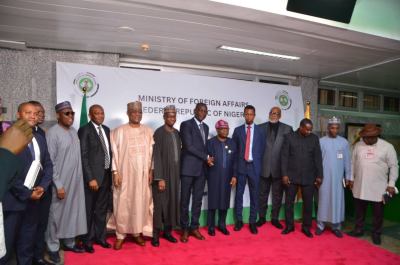
A recent Facebook post by Femi Fani-Kayode illustrates this growing trend. He wrote:
“Honored to have been part of the delegation that received and had a meeting with Minister Ronald Lamola, South Africa’s Minister of International Relations and Co-operation, and his team at the Ministry of Foreign Affairs in Abuja yesterday.”
He continued:
“The meeting was candid and frank but also fruitful and productive.”
And concluded:
“Despite numerous challenges the relationship between South Africa and Nigeria remains cordial and strong.”
There is nothing inherently wrong with expressing gratitude for participating in a diplomatic engagement. Indeed, diplomacy often involves relationship-building behind closed doors. However, the communication leaves an important question unanswered: What exactly was discussed that benefits Nigerians?
When taxpayers fund government activities, they are entitled to more than assurances that meetings were “fruitful” or “productive.” Such adjectives, while positive, are too vague to enable meaningful public scrutiny. Fruitful in what sense? Productive towards which objective? What agreements were reached? Which sectors of the economy stand to benefit? Were discussions held on trade, investment, technology transfer, security cooperation, energy, agriculture, education, mining or tourism? Were timelines agreed? Are there follow-up mechanisms?
These are the questions that citizens expect responsible public communication to answer.
Political appointments should never become platforms for ceremonial appearances or endless displays of proximity to power. They are meant to inject expertise into governance, contribute fresh thinking, influence national decision-making and help deliver measurable outcomes. The real honour of public service lies not in standing beside ministers during official photographs but in leaving behind policies that improve lives.
Every government official should recognise that visibility is not the same as productivity. Attendance is not achievement. Presence in high-level meetings is not performance. A handshake with a minister does not automatically translate into economic growth, job creation or better governance.
In mature democracies, citizens increasingly judge officials by outcomes rather than appearances. After bilateral meetings, governments typically issue detailed communiqués outlining the agenda discussed, agreements reached, areas of cooperation identified and the next steps. Such information enables citizens, journalists, researchers and civil society organisations to monitor implementation and hold public officials accountable.
This culture of substantive communication is one Nigeria should continue to strengthen.
For someone occupying an advisory or diplomatic role, every public statement should help Nigerians understand how national interests are being advanced. If discussions centred on attracting South African investments, the public should know which sectors were targeted. If both countries explored cooperation in manufacturing, telecommunications, energy, mining, agriculture or infrastructure, those details should be shared. If visa facilitation, security collaboration or educational exchanges featured prominently, saying so would demonstrate that the engagement produced concrete value.
Such transparency benefits both government and the official involved. It allows citizens to appreciate the work being done while creating measurable benchmarks against which performance can later be assessed.
The challenge is not unique to one individual. It reflects a broader culture in which some public officials appear more eager to publicise access to power than the substance of governance. Social media updates often celebrate attendance at meetings without explaining their outcomes. Yet history rarely remembers who attended meetings; it remembers who changed institutions, improved policies and solved national problems.
Public office should therefore never be reduced to what many Nigerians jokingly describe as owambe—a succession of colourful ceremonies, protocol visits and group photographs. Neither should it become what critics dismiss as political pageantry or bacchanalian excitement over proximity to influential personalities. Citizens expect considerably more.
Going forward, whenever Femi Fani-Kayode or any other political appointee shares updates from official engagements, Nigerians would be better served by learning what policies were discussed, what investments were pursued, what diplomatic breakthroughs were achieved and what concrete benefits are expected to flow from those engagements. Such communication would transform routine announcements into genuine instruments of accountability.
Ultimately, appointments are not rewards for loyalty or opportunities for prestige alone. They are responsibilities to innovate, advise, negotiate, influence policy and improve national development. Public trust is earned not by the number of dignitaries one meets but by the measurable difference one’s service makes.
The true legacy of any political appointee will never be counted in photographs, handshakes or expressions of being “honoured” to attend meetings. It will be measured by ideas translated into policy, promises converted into action and public resources transformed into lasting benefits for the people. That is the standard democratic governance demands, and it is the standard citizens have every right to expect.
Comrade Chibuike Nwabuko, an Economist, Political Analyst, Human Rights Crusader writes in from Abuja. He can be reached on [email protected].

