
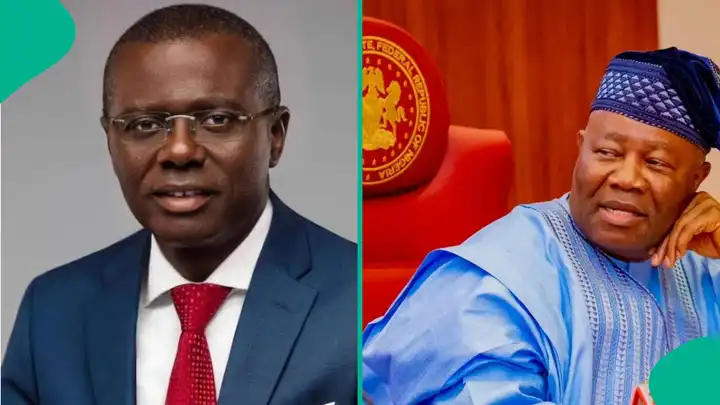
The Lagos State Government has filed a motion before the Supreme Court, seeking permission to initiate contempt proceedings against the National Assembly for allegedly violating a subsisting judgment that declared federal control over lottery and gaming unconstitutional.
In the motion filed by the Attorney-General and Commissioner for Justice, Lagos is seeking leave to enforce the apex court’s 2024 judgment through Form 48 — a legal notice that serves as a formal warning under Nigerian law, which may lead to committal proceedings if ignored.
Lagos Accuses National Assembly of Breaching Supreme Court Ruling
The state’s legal team, led by Bode Olanipekun (SAN), argued that the National Assembly’s ongoing review of the proposed Central Gaming Bill directly contradicts the Supreme Court’s decision in SC.1/2008: Attorney-General of Lagos State & Ors. v. Attorney-General of the Federation & Ors., delivered on November 22, 2024.
According to Lagos, several clauses in the proposed bill — notably Sections 7 and 21–64 — deal extensively with lottery and gaming, despite the apex court’s earlier ruling that such matters fall under state jurisdiction.
Lagos Faults Federal Overreach in Gaming Legislation
The affidavit filed by the state government stated that the contentious sections of the new bill mirror those of the now-voided National Lottery Act, which was struck down by the Supreme Court in 2024.
Lagos further highlighted Clause 62, which seeks to preserve actions taken under the invalidated law, describing it as “a deliberate attempt to undermine the authority of the Supreme Court.”
The government maintained that since the 2024 judgment, there has been no constitutional amendment to the Second Schedule of the 1999 Constitution, which defines the Exclusive and Concurrent Legislative Lists, thereby confirming that lottery and gaming remain exclusive to state jurisdiction.
Lagos Warns Against Constitutional Crisis
In its landmark 2024 decision, the Supreme Court held that the regulation of lottery and gaming does not fall within the National Assembly’s legislative powers, dismissing arguments that federal control could be inferred from Item 62 (Trade and Commerce) or the interstate nature of gaming.
By returning to the Supreme Court, Lagos is seeking to reaffirm that ruling through contempt proceedings — a move observers say could shape future interpretations of legislative boundaries between federal and state governments.
Earlier, the Attorney-General and Commissioner for Justice, Mr. Lawal Pedro (SAN), had publicly warned the National Assembly to halt deliberations on the Central Gaming Bill, describing it as a direct breach of both the Constitution and the Supreme Court’s standing judgment.
“The bill represents legislative overreach and could trigger a constitutional crisis,” Pedro said at a press briefing in Lagos.

