

By Chibuike Nwabuko
ABUJA (PRECISE POST) – Human rights lawyer and public affairs analyst, Chidi Odinkalu, has drawn attention to what he described as far-reaching revelations contained in a new book by former Director of the Department of State Services (DSS), Dennis Amachree, arguing that some of the disclosures deserve serious public and institutional scrutiny.
In remarks shared via his verified social media platform on Sunday, Odinkalu said the book, which chronicles 40 years of the Department of State Services (DSS), has generated widespread public interest, particularly over its account of the death of Nigeria’s late military ruler, General Sani Abacha.

According to Odinkalu, the former DSS director wrote that Abacha died of what he described as a “coitus-induced cardiac arrest,” a claim contained on page 252 of the publication.
The revelation has since attracted significant attention and renewed discussions over the circumstances surrounding the former Head of State’s death in June 1998.
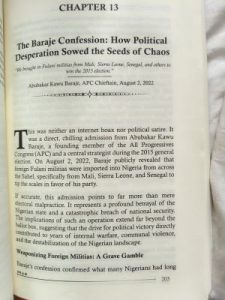
However, Odinkalu argued that an even more consequential disclosure in the book concerns allegations relating to Nigeria’s 2015 general elections.
He said the publication validates long-standing claims that, in the build-up to the 2015 presidential election, the All Progressives Congress (APC) allegedly imported “Fulani militias” from across the Sahel region, including Mali, Sierra Leone and Senegal—to influence the electoral outcome.
Quoting from the book, Odinkalu stated that the alleged operatives were brought into Nigeria “to tip the scales” in favour of the APC during the landmark election that ushered the party into power.
He described the implications of the allegation as “staggering,” suggesting that, if substantiated, the claims could have profound consequences for Nigeria’s democratic history, national security architecture and electoral integrity.
The rights advocate noted that the allegations extend beyond partisan politics and touch on broader questions about the conduct of elections, the role of security institutions and the possible involvement of foreign actors in Nigeria’s democratic process.
Neither the APC nor the DSS had publicly responded to the specific claims highlighted by Odinkalu at the time of filing this report.
Precise Post reminds that the allegations contained in the book remain unverified, and no independent evidence has been publicly presented to substantiate the claims.
Nevertheless, the disclosures have sparked fresh debate over the events surrounding Nigeria’s 2015 general elections and are expected to fuel further public discourse on accountability, security and the country’s democratic evolution.

