
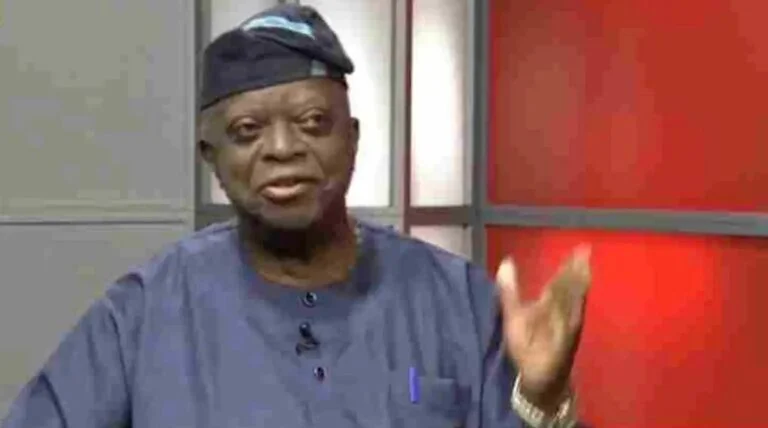
LAGOS – Poverty and economic hardship have limited citizens’ participation in Nigeria’s democratic process, weakened civic engagement and reduced the capacity of pressure groups to hold leaders accountable, Prof. Femi Otubanjo has said.
Otubanjo, a Research Professor at the Nigerian Institute of International Affairs (NIIA) said this in an interview with newsmen in Lagos on Thursday ahead of Nigeria’s Democracy Day celebration on June 12.
“The majority of Nigerians are struggling in an economy that is not doing well. People do not even have the resources to be part of pressure groups.
“To be a member of such groups, you have to spend money and attend meetings,” he noted.
The political scientist said Nigeria had made some progress in democratic governance, but still lacked the essential values that defined a truly democratic society.
He said that certain aspects of democracy were functioning in the country, including freedom of speech and lawmaking through elected institutions rather than military decrees.
According to him, these remained largely superficial indicators of democratic practice.
“The essence of democracy is responsible leadership, and that is where we still have challenges,” he said.
The professor expressed concern over the country’s electoral process, noting that many Nigerians were not convinced that those in power were always the genuine choices of the electorate.
He also pointed to the conduct of party primaries as evidence that democratic values had yet to take root within political institutions.
“What we lack is a democratic culture. We do not have a culture of open, free and transparent elections even within political parties.
“The recent primaries showed how untidy the process can be.
“We have the format, but not the substance. Democracy is organic and must grow through consistent practice and commitment to democratic principles,” Otubanjo said.
He stressed the need for citizens and institutions to continue working toward strengthening democratic norms and ensuring that governance reflected the will and interests of the people.
The professor, however, acknowledged that the task would not be easy, arguing that many political actors were already focused on the 2027 elections.
Otubanjo called for greater involvement of independent-minded citizens willing to invest their time and resources in promoting reforms and strengthening democratic institutions.
“We need well-meaning people, who can participate independently and use their resources to help change the system.
“It is necessary, but will take time,” he said. (NAN)

