
By Our Reporter
ABUJA (PRECISE POST) – Nigeria’s maritime sector, the gateway through which more than 80 percent of the nation’s international trade flows, is entering a new phase of transformation driven by sweeping reforms aimed at modernising ports, digitising trade processes and strengthening institutional capacity.
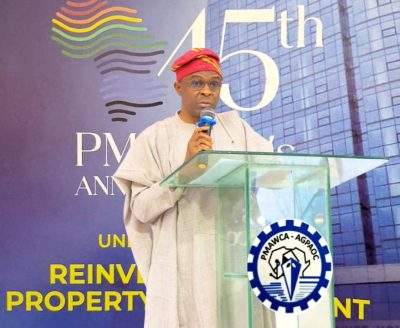
At the centre of this transformation is the Nigerian Ports Authority (NPA) under the leadership of Managing Director Abubakar Dantsoho, whose reform-driven strategy is repositioning the country’s seaports as competitive hubs within the global shipping ecosystem.
Recent performance indicators suggest that the reforms are already beginning to yield results.
Historic Surge in Maritime Activity
The NPA’s 2025 Operational Performance Report revealed a remarkable surge in maritime activity across Nigerian ports, with total cargo throughput increasing by 24.8 percent — rising from approximately 103.6 million metric tons in 2024 to more than 129.3 million metric tons in 2025.
Describing the development as one of the most significant annual increases in Nigeria’s maritime history, Dantsoho said the milestone underscores the country’s growing competitiveness in regional and global trade.
According to him, the growth did not occur overnight but is the result of coordinated policy reforms by the administration of Bola Ahmed Tinubu, implemented through the Ministry of Marine and Blue Economy and operationalised by the NPA.
For decades, Nigeria’s ports were plagued by infrastructural decay, congestion, administrative bottlenecks and outdated operational systems that slowed cargo clearance and increased logistics costs for businesses. Analysts estimate that inefficiencies in port operations cost the country over one trillion naira annually in lost economic opportunities.
However, the tide appears to be turning.
The reform agenda spearheaded by the Ministry of Marine and Blue Economy under Adegboyega Oyetola is targeting the structural weaknesses that historically undermined Nigeria’s maritime competitiveness.
Infrastructure Overhaul Across Major Ports
A central pillar of the reform programme is the large-scale reconstruction and modernisation of Nigeria’s key seaports.
The federal government has initiated a comprehensive infrastructure renewal plan covering major facilities including Apapa Port, Tin Can Island Port, Port Harcourt Port, Warri Port, and Calabar Port.
The modernisation programme aims to rehabilitate ageing quay walls, deepen navigation channels, upgrade cargo-handling equipment and expand terminal capacity to accommodate larger vessels and growing trade volumes.
Many of Nigeria’s major ports were built decades ago and have struggled to keep pace with the demands of modern maritime trade. Shallow drafts, obsolete equipment and limited cargo-handling infrastructure often resulted in long vessel waiting times and port congestion.
By upgrading port infrastructure, authorities expect to significantly reduce vessel turnaround time and cargo dwell time — two critical indicators of port efficiency.
Faster cargo handling will also reduce demurrage and storage charges for importers and exporters, helping to lower the cost of goods in the domestic market.
The reforms are also expected to reverse a long-standing trend in which Nigerian-bound cargo is diverted to neighbouring ports in Benin, Togo and Ghana, where modern facilities and efficient systems have historically attracted shipping lines.
Digital Revolution Through the National Single Window
While infrastructure modernisation is critical, policymakers acknowledge that physical upgrades alone cannot create an efficient port system without complementary digital reforms.
This is where the National Single Window initiative comes into play.
Nigeria is set to launch the National Single Trade Window platform on March 27, a move announced by the Chief of Staff to the President, Femi Gbajabiamila.
The digital platform will allow importers, exporters and logistics operators to submit all trade documentation through a single electronic portal instead of dealing separately with multiple government agencies.
Under the traditional system, traders are required to process documentation with several regulatory bodies, including customs, port authorities and inspection agencies. The fragmented process often leads to duplication, delays and bureaucratic bottlenecks.
The National Single Window seeks to eliminate these inefficiencies by integrating all trade-related processes into a unified digital ecosystem.
The result is expected to be faster cargo clearance, improved transparency and stronger accountability across the maritime sector.
NPA’s Role in Digital Integration
As a key stakeholder in the National Single Window project, the NPA has already begun aligning its operational processes with the new digital architecture.
The authority has been actively involved in the NSW implementation committee alongside technical partners KPMG and CrimsonLogic.
Part of the preparation process involves integrating the NPA’s Revenue Invoice Management System (RIMS 2.0) with the National Single Window platform to ensure seamless information exchange.
The authority has also completed initial user acceptance testing and delivered critical system integration codes to enable coordination between the two platforms ahead of the first phase of the system’s rollout.
The combination of modern infrastructure and digital trade facilitation represents one of the most ambitious attempts to unlock the economic potential of Nigeria’s maritime sector in decades.
Boosting Trade, Revenue and Investment
Beyond improving port efficiency, the reforms are expected to generate significant economic benefits.
Analysts project that a fully operational National Single Window could increase customs revenue by between 10 and 20 percent annually — translating to an additional ₦600 billion to ₦1.2 trillion in government earnings.
The system is also expected to reduce cargo dwell time by as much as 45 percent while cutting trade transaction costs by up to 25 percent.
Such improvements would significantly enhance Nigeria’s logistics performance and strengthen its ranking in global ease-of-doing-business indicators.
The reforms are already reflected in the financial performance of the NPA.
The authority generated ₦894.86 billion in revenue in 2024 and is projecting ₦1.28 trillion for 2025, driven by increased cargo volumes, digital automation and improved operational efficiency.
In 2024 alone, the NPA remitted a record ₦400.8 billion to the Consolidated Revenue Fund — nearly double the amount remitted the previous year.
Positioning Nigeria as a Regional Maritime Hub
The broader objective of the reforms is to position Nigeria as a major maritime logistics hub in West and Central Africa.
Nigeria’s geographic location places it along some of the busiest global shipping routes connecting Europe, Asia and the Americas with Africa.
With modern ports, efficient logistics systems and streamlined trade procedures, analysts believe Nigeria could become the preferred maritime gateway for cargo serving the West African sub-region.
Evidence of this potential can already be seen in the rapid expansion of Lekki Deep Sea Port, which has significantly increased container traffic and trans-shipment activity.
Economic Ripple Effects
Efficient ports generate economic benefits far beyond the maritime sector itself.
Improved logistics infrastructure supports export-oriented industries, reduces production delays for manufacturers and enhances the global competitiveness of Nigerian products.
Maritime infrastructure investments also stimulate job creation across engineering, logistics, information technology and port operations.
Industry analysts estimate that a fully digitised maritime ecosystem could generate more than 100,000 direct and indirect jobs across the logistics and ICT sectors.
Charting a New Maritime Future
Taken together, the ongoing reforms represent one of the most ambitious overhauls of Nigeria’s trade infrastructure in decades.
By combining port modernisation with digital trade facilitation, the administration of President Tinubu is laying the groundwork for a more efficient and globally competitive port system.
With strategic policy coordination from the Ministry of Marine and Blue Economy and operational leadership from the NPA under Abubakar Dantsoho, Nigeria’s maritime sector is gradually being repositioned as a powerful engine of economic growth.
If sustained, analysts say the reforms could transform Nigeria’s ports into modern logistics gateways capable of supporting industrial expansion, regional trade integration and long-term economic prosperity — redefining the country’s place in the evolving architecture of global trade.