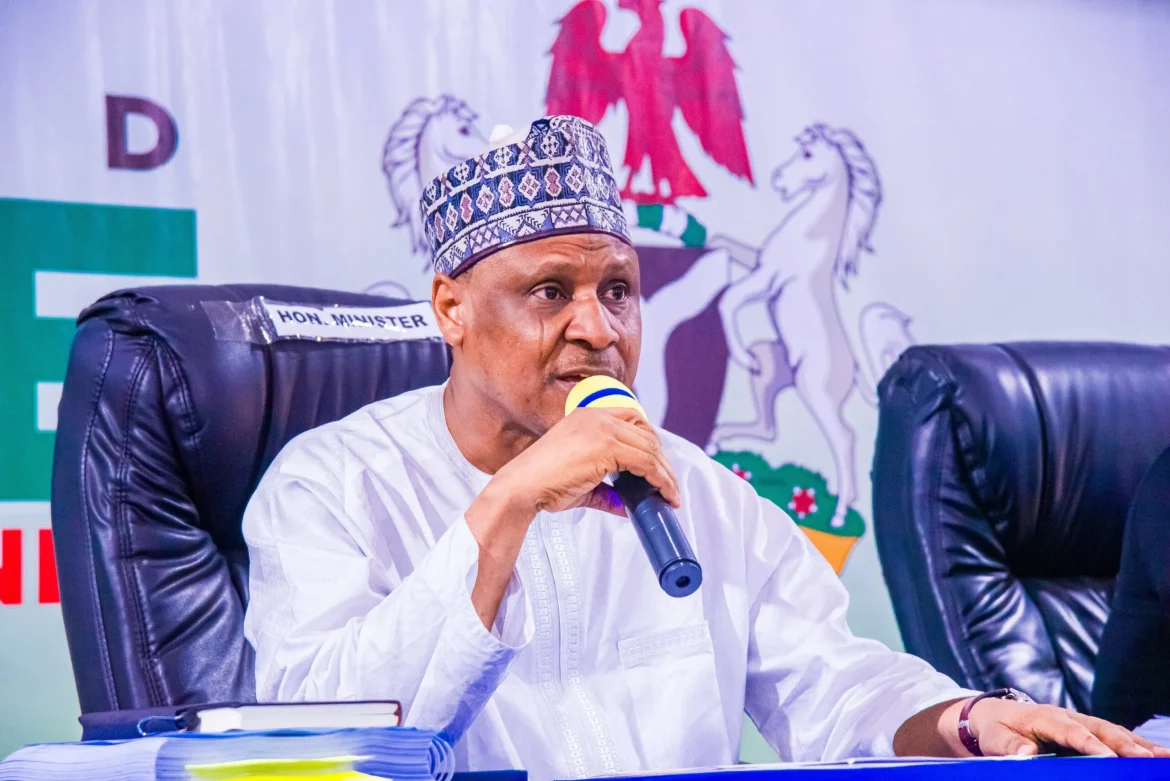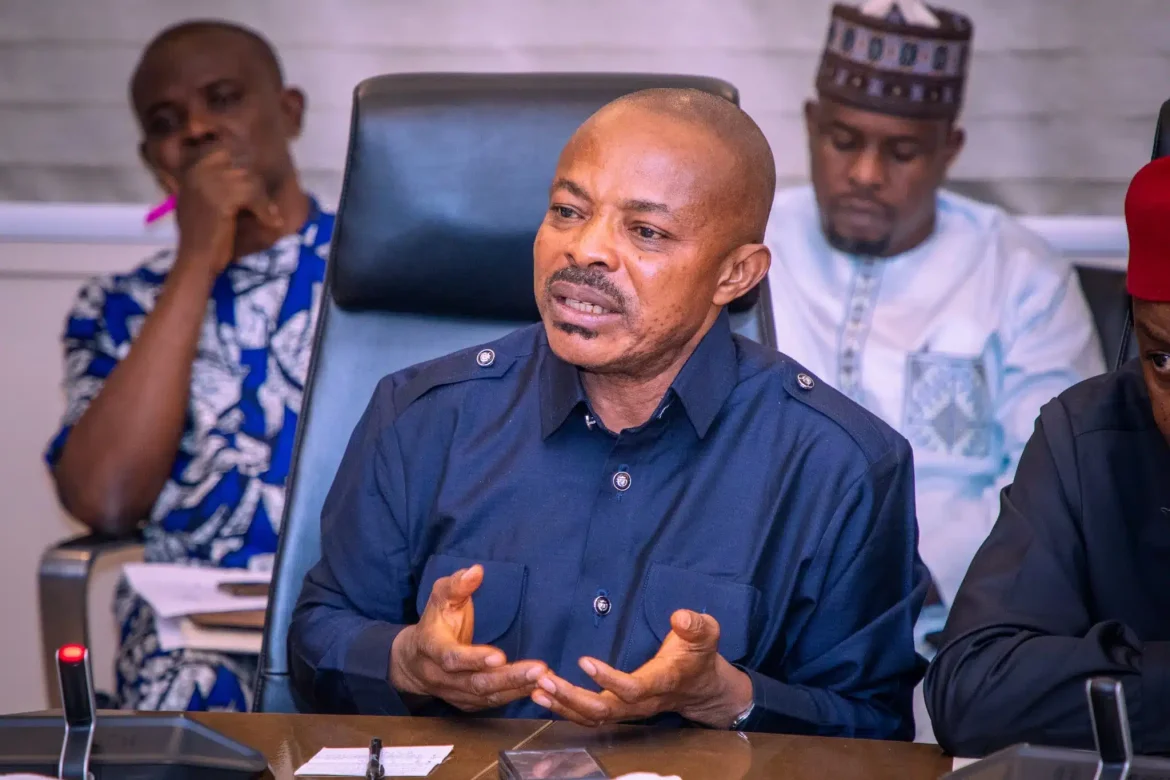
ENUGU – The Federal Government on Thursday, said that the reconstruction of the Enugu–Onitsha federal highway would cost 350 billion naira.
Sen. David Umahi, the Minister of Works said this while inaugurating completed portions of the roads.He said that President Bola Tinubu had demonstrated unrivaled resolve to complete the project.Umahi said that the federal government reviewed the original 202 billion naira contract for the road and retained part of it.“The FG further carved a 72-kilometre stretch for reconstruction using reinforced concrete pavement.and this section costs about ₦150 billion.“This section is being executed to higher durability standards similar to those used on the Lagos–Calabar coastal highway,” he said.The minister said that the first 15 kilometres of the reinforced concrete section was about 97 per cent completed.“This section is presently being opened to traffic to ease movement during the Easter celebration.“Another 18-kilometre stretch is under construction towards Anambra while a separate 39-kilometre segment extendind from the river niger bridge axis is also ongoing,” he said.He further said that contractors handling asphalt portions of the road had been directed to adopt the same concrete standard for the remaining 23 kilometres.“This is due to longer lifespan and minimal maintenance requirements of concrete roads compared to asphalt.“Asphalt fails over time but concrete can last between 50 and 100 years with little or no maintenance.“Fifty per cent of the entire highway would be constructed on reinforced concrete, significantly improving durability and reducing long-term costs,” he said.Umahi commended Tinubu for his resolve to change the infrastructural narrative of the south east, enumerating other roads being reconstructed or constructed across the zone.Reports that the supervisors of various sections of the road commended the federal government for its support and pledged the completion of the project in 2026. (NAN)
Tag:
FG
ABUJA – The Federal Government has declared Friday and Monday as public holidays to enable Christians celebrate the death and resurrection of Jesus Christ.
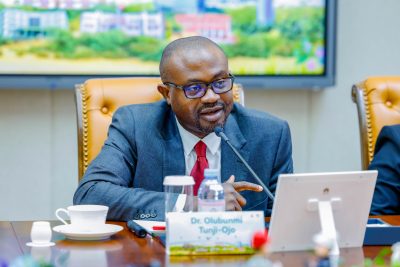
The Minister of Interior, Dr Olubunmi Tunji-Ojo, made the announcement on behalf of the Federal Government in a statement issued on Wednesday in Abuja.
Tunji-Ojo urged Nigerians to imbibe the virtues of selflessness, forgiveness, forbearance and love as exemplified by the life and teachings of Jesus Christ.
He called on citizens to remain committed to the values of tolerance and community that keep Nigeria together as a nation.
The minister reiterated the Federal Government’s committment to making decisions that would lead to national rebirth, economic growth and shared prosperity.
Tunji-Ojo wished all Christians in Nigeria and the diaspora a joyous Easter celebration.(NAN)
LAGOS – The Federal Government on Tuesday said that it would begin enforcement on Producer Pays Principle (PPP) in the Beverages and Packaging sector to encourage circular economy and protect the environment for sustainability.
Prof. Innocent Barikor, Director-General, National Environmental Standards and Regulations Enforcement Agency (NESREA), gave the information at a stakeholders workshop held in Lagos State.
The event had the theme “Stakeholders Engagement and Sensitisation Workshop on Extended Producer Responsibility (EPR) Programme for The Packaging Sector”.
The News Agency of Nigeria (NAN) in Lagos reports that the event, attended by industry players, regulators and policy makers, is to educate and evaluate policies and challenges toward the move from voluntary compliance to mandatory compliance enforcement.
EPR fosters a circular economy that compels producers to take responsibility of waste from their products from beginning to the end of its life cycle.
It encourages the recycling of waste to wealth that creates value chain and reduces environment pollution.
Speaking at the event, Barikor described the compliance enforcement as a departure from the voluntary compliance approach to a mandatory one to be instituted before the end of 2026.
He said that the event came at a pivotal moment in Nigeria’s journey toward environmental sustainability.
According to him, the challenge of waste management, particularly plastic waste, has evolved into a pressing national priority demanding our collective action.
“Under the mandate of NESREA, we are charged amongst others, with the responsibility of protection of the Nigerian environment toward the overall global drive on sustainable development.
“Central to our strategy is the `Polluter Pays Principle’ which is a key tool under the Sustainable Development Goals”.
“In this regard, we believe that the outcome of a product’s environmental impact should not rest solely on the government or the end-consumer, but should be shared by the producers who introduce these products into the marketplace.
“The EPR programme is, thus, the cornerstone on which we rely for our circular economy transition from the old to the new in line with international best practices.
“From the year 2025 into 2026, we have evolved from a voluntary framework to a mandatory enforcement phase”.
According to him, this means that producers, importers, and brand owners are now legally required to take responsibility for the entire lifecycle of their products; that is, from when the product is designed and produced, to its end-of-life.
“When disposed including collection and recycling activities. Management of the post-consumer products’ packaging is no longer just ” good corporate action or social responsibility” but a regulatory requirement for doing business in Nigeria.
“Today, we will therefore formally sensitise people on the National Guidelines for the implementation of EPR Programme in line with circular economy on Plastic Packaging.
“This document is not merely a set of rules, but a roadmap and masterplan that would guide you to compliance as enshrined in the emerging National Environmental (Plastic Waste Control) Regulations, 2026,” he said.
The NESREA boss urged producers to register with the authoritiy for a seamless tracking regulations.
He said that the guideline provided amongst others, clear targets with regards to specific annual targets for collection, recovery and recycling, definition of roles and responsibilities of Producers, Producer Responsibility Organisations (PROs).
He commended the interface of the Food Beverage Recycling Alliance (FBRA) and recyclers, as well as the interplay amongst these sector players and reporting standards in relation to standardisation formats.
He stressed that the EPR programme was not a “tax” levied on industries.
“It is rather an invitation on them to innovate and reinvent.
“By embracing circular economy initiatives, Nigerian industries can reduce operational costs through resource recovery, create Green Jobs – in the collection and recycling value chains, enhance brand reputation by meeting the global demand for sustainable products.
“We, therefore, appreciate our development partners,
“WE thank especially the Government and people of Japan, and the United Nations Environment Programme (UNEP) for their invaluable support to the agency through this project, accelerating a circular plastic economy to reduce plastic pollution and its impacts in African Region and its countries”.
“To our private sector partners, we are committed to working with you and supporting your transition, but will remain firm in our resolve to protecting our ecosystems through enforcement where the need arises.
“The sector Producer Responsibility Organisation (PRO), in this regard FBRA, by this sensitisation, is also urged to raise the bar of your coordination activities amongst sector subscribers in ensuring that they are equipped with the requisite knowledge on the EPR programme unto compliance”. (NAN)
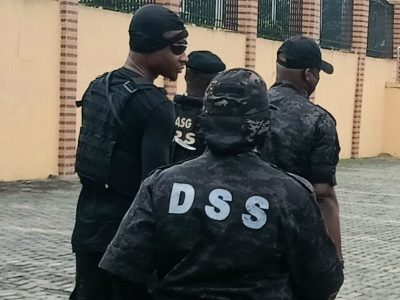
ABUJA – The Department of State Services (DSS) arraigned a 28-year-old man, Halidu Abdulmumeen before a Chief Magistrates’ Court, Wuse, Abuja, for allegedly circulating inciting statements against the Federal Government.
The DSS charged the defendant with inciting disturbance.
The prosecuting counsel, Y.I. Umar alleged that the defendant used his X account, formerly twitter handle to call Nigerian Shia ( Islamic Movement in Nigeria) to attack US embassy in Nigeria.
Umar further alleged that the defendant tagged the First Lady Remi Tinubu and described her as a new hater of Northern Muslims, reminding her that time may be ticking but the northern Muslims will always remember.
He added that the post was capable of causing break down of law and order and constituting threat to the internal security of Nigeria.
The offence, he said contravened the provisions of section 114 of the Penal Code.
The defendant however pleaded not guilty.
The defence counsel, C.I. Nnemeka made a bail application for the defendant citing section 36(5) of the 1999 constitution saying that the charge was a mere allegation.
Nnemeka added that the defendant was presumed innocent until proven otherwise and urged the court to exercise its discretional powers and admit the defendant to bail in the most liberal terms.
The Magistrate, Abubakar Sadiq granted the defendant N500,000 bail with one reliable surety who must be an employee of a private or public organisation.
Sadiq ordered that the surety provide his employment letter, National Identity Management Commission (NIMSC) card, voters and official Identity card and swear to an affidavit of means of livelihood.
He added that the surety must reside within the court’s jurisdiction and address verified by the court’s registrar.
The Magistrate adjourned the matter until June 18 for hearing. (NAN)
ABUJA – The Chairman of National Sports Commission ( NSC), Shehu Dikko, says the 3rd National Para Games is repositioning sports and promoting equality across all disciplines.
Dikko, who stated this while declaring the games open on Saturday at the Moshood Abiola National Stadium, Abuja, said the event aligns with the Federal Government’s vision sports development.The chairman, who spoke on behalf of President Bola Tinubu, described the games as a platform to reset and refocus Nigerian sports while ensuring equal opportunities for all athletes.“Every sport is equal and should be given the opportunity to live its dreams,” he said.He assured para athletes of sustained support, noting that the sector is receiving increased attention and encouragement under the current administration.The chairman urged participants to view the games as a celebration of unity and shared humanity, rather than mere competition.“It is not just about winning; it is about togetherness. By being here, you are already winners,” he said.Dikko commended para athletes for their consistent performances at international competitions, including the Paralympic Games, Commonwealth Games and African Games, where they have won medals and brought pride to the country.In his remarks, Habu Gumel ,President of the Nigeria Olympic Committee ( NOC) described the Para Games as a significant platform for talent discovery ahead of upcoming international competitions.Gumel said the event would help identify athletes capable of representing Nigeria at future competitions, including the Commonwealth Games and the Youth Olympic Games Dakar 2026.He commended the organisers and the National Sports Commission for their efforts in developing sports in the country.Earlier, the Chairman of the Local Organising Committee (LOC), Opara Thecla, welcomed participants and highlighted the importance of the games in advancing para sports development.Opara, who also serves as Director, National Sports Festival and Para Sports, and General Coordinator of the games, noted that the previous edition held in December 2023 helped to draw attention to the needs of para athletes.She recalled that Nigeria’s contingent to the Paralympic Games Paris 2024 won seven medals, underscoring the potential of para athletes when adequately supported.“This shows that we are on course to give our athletes the platform to excel and achieve their aspirations,” she said.She commended the leadership of the NSC for its commitment to ensuring the successful hosting of the games and urged athletes to compete freely and enjoy the events.Reports that the games has attracted participants from across the country and is expected to serve as a platform for talent discovery and preparation for future international competitions.Reports that the Games, which began on Thursday, will end on April 3, is Nigeria’s flagship para-sport event, bringing together over 3,000 athletes from the 36 states and the Federal Capital Territory.Atheletes at the games will compete in 15 different sports in the one-weeklong games.(NAN)ABUJA – The Federal Government has directed the implementation of a one-stop joint-interest screening system to enhance security at Nigerian airports.
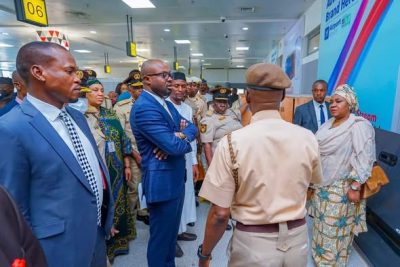
Mr Ahmadu Danjuma, the Acting Regional Manager, North Central, Federal Airports Authority of Nigeria (FAAN), disclosed this in an interview with the News Agency of Nigeria (NAN) on Sunday in Abuja.
Danjuma said the Office of the National Security Adviser issued the directive to, among others, ensure herdsmen and hoodlums were kept far away from the nation`s airports.
Reports that a one-stop joint-interest screening system in aviation is a centralised checkpoint where multiple agencies jointly screen passengers, cargo, and staff members in a single process.
It improves security, reduces duplication, and enhances efficiency by combining immigration, customs, and security checks into one streamlined, coordinated operation.
Danjuma said FAAN had also increased surveillance, deployed more personnel and installed modern security equipment, including X-ray machines and L3 scanning machines across major airports
‘’We have constant patrol along our perimeter fences.
“We collaborate with other security agencies to go intermittently round the airports with our security men to assure the public that the airports are safe and secure.
‘’To God be the glory, throughout this year, here at Abuja airport and others, we have not had a course to worry about security breaches even during the busy period of festivals,” he said.
Danjuma reiterated that FAAN had enhanced perimeter security and intelligence gathering to keep off herders, stray herds, and intruders from the airports.
He added that the authority had deployed training, capacity building, and technology integration to strengthen security and meet international standards.
The acting regional manager also stated that the government had approved aviation security personnel to bear arms to enhance security.
He disclosed that the Nigeria Civil Aviation Authority (NCAA) had mandated the Basic STP123 AVSEC course for all aviation security personnel.
According to him, Basic STP123 AVSEC course is a mandatory training programme for aviation security personnel in Nigeria.
It aimed at equipping them with the necessary knowledge, skills, and competencies to effectively implement aviation security preventive measures.
“This course covers key areas like; understanding aviation security threats, working safely within an airport, communication and cooperation with other agencies.
“It covers control of people and vehicular movement, recognising restricted articles, explosives screening and searching, passengers, baggage and cargo screening procedures.
”The course also covers emergency response to security incidents and airport emergencies,’ he said.
Danjuma said the course, approved by the NCAA, is a basic requirement for all security personnel before deployment.
He said the new measures reflected the government’s commitment to strengthening aviation security through collaboration, advanced technology, and improved personnel training across airports.
He expressed confidence that the reforms would sustain safety standards, prevent security breaches.
The acting regional manager reassured passengers of secure and efficient airport operations nationwide.(NAN)
FCCPC intensifies market sensitisation to boost consumer protection, compliance
written by Administrator
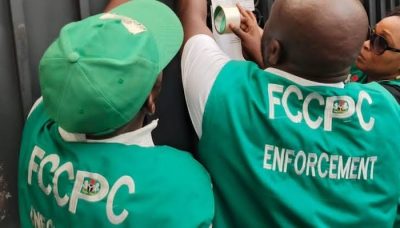
LAGOS – The Federal Competition and Consumer Protection Commission (FCCPC) has intensified its market sensitisation campaign aimed at promoting consumer awareness and strengthening regulatory compliance across key commercial centres.
Mrs Olubunmi Otti, Zonal Coordinator, South-West Zonal Office, during a market sensitisation programme on Thursday in Lagos, said the initiative adopts a “street-level sensitisation” approach designed to engage traders and consumers directly within their everyday business environments.
“We are taking sensitisation to the streets because we want to meet businesses and consumers where they are. The goal is to turn regulatory awareness into everyday market practices,” she said.
Otti explained that the exercise, already conducted in locations such as Computer Village and ongoing in other major markets, forms part of the commission’s broader strategy to entrench a culture of compliance at the grassroots.
“This sensitisation is geared towards building a culture of compliance and consumer consciousness from the ground up. We want to prevent violations before they occur by ensuring traders understand their obligations and consumers know their rights and responsibilities,” she said.
She noted that consumer education remains a critical tool in protecting the public from exploitation.
“When you empower consumers with the information they need before going to the market, you have already protected them,” she added.
Otti clarified that the commission does not regulate prices but ensures fairness and healthy competition in the marketplace.
“The FCCPC does not fix prices. We allow the forces of demand and supply to interact. However, prices must be fair, and any form of price fixing by businesses is a violation of the law,” she said.
She warned that price fixing, whether through verbal, written or tacit agreements, contravenes the provisions of the Federal Competition and Consumer Protection Act (FCCPA) 2018.
On enforcement, Otti said the commission is currently prioritising advocacy but will not hesitate to take action where violations are established.
“We are creating awareness first. But when violations happen, the law will take its course,” she said.
She added that the commission’s Surveillance and Investigations Department conducts routine inspections in markets to ensure compliance with safety and quality standards.
“Our officers go to markets regularly to inspect products. Any product found to violate the provisions of the Act will be sanctioned,” she said.
Otti also emphasised the importance of collaboration with other regulatory agencies to strengthen consumer protection efforts nationwide.
On product labelling, she reiterated that all goods must carry information in English to ensure clarity and accessibility for consumers.
“English is the official language of Nigeria. Any product not labelled in English has violated the law. Information must be clear and understandable to all categories of consumers,” she said.
She urged consumers to report unfair business practices, stressing that consumer protection requires collective responsibility.
“Consumer protection is not just for regulators; it involves all stakeholders. If you see anything unfair in the market, alert us,” she noted.
Meanwhile, traders and consumers at Alaba International Market have commended the commission for intensifying sensitisation campaigns aimed at protecting consumers from exploitation and substandard goods.
The exercise, carried out in collaboration with the National Orientation Agency (NOA), focused on educating market stakeholders on their rights regarding goods and services.
Mr Monye Bernard, Principal Programme Officer, NOA, said the initiative was designed to empower consumers with the knowledge needed to seek redress when exploited.
“We are here to inform consumers about their rights on goods and services. This is a collaboration between the NOA and the FCCPC to ensure Nigerians are protected.
“For example, during the festive period last December, there were arbitrary increases in transport fares, in some cases from about N120 to over N300. The Federal Government does not want such exploitation to continue.
“The same applies to the sale of fake or substandard electronics. If a consumer buys a product that fails to function as expected, they should report to the FCCPC,” he said.
Bernard urged consumers to lodge complaints at the FCCPC office located in Lagos, or through its official communication channels.
A trader, Mrs Augustina Okenna, described the sensitisation as timely, noting that many consumers were previously unaware of their rights.
“At least now, when we buy something and it is not correct, we know where to report. This programme will help everyone because people will begin to stand for their rights,” she said.
Okenna added that she would share the information with other traders and customers, stressing that increased awareness would discourage unfair practices in the market.
Another electronics dealer, Mr Chinedu Okafor, said the campaign would also help genuine traders distinguish themselves from those dealing in counterfeit goods.
“When customers know their rights, it will reduce the activities of those selling fake products. Serious business owners will also benefit because trust will increase,” he said.
Similarly, a customer, Mr Emeka Nwankwo, said the initiative would encourage accountability among sellers.
“Many of us have been victims of buying items that stop working almost immediately. Knowing that we can report and get justice gives us confidence,” he said.
Nwankwo urged the government to sustain the awareness drive across markets in Lagos and beyond.
Some transport operators in the area also acknowledged the need to address arbitrary fare increases during peak periods.
They noted that excessive hikes place undue burden on commuters. They, however, appealed to government to address rising operational costs affecting businesses.
Reports that the FCCPC has continued to expand its consumer education campaigns nationwide to curb exploitative practices and promote fair market competition. (NAN)
Court orders final forfeiture of $13m linked to Aisha Achimugu in CBN’s account
written by Administrator
ABUJA – The Federal High Court (FHC) in Abuja, on Wednesday, made an order for final forfeiture of the sum of 13 million dollars to the Federal Government linked to the industrialist, Aisha Achimugu and her company, Oceangate Engineering Oil & Gas Ltd.
Justice Emeka Nwite, in a ruling, ordered that the funds traced, found and recovered by the Economic and Financial Crimes Commission (EFCC) from Nigeria Upstream Petroleum Regulatory Commission Commission (NUPRC)’s account domiciled with the Centtral Bank of Nigeria (CBN) be forfeited, having been reasonably suspected to be proceed of unlawful activities.
Justice Nwite, in the ruling on the motion for final forfeiture of the funds filed by the EFCC, held that neither Oceangate nor Achimugu had been able to show to the court that the money was legitimately gotten.
The judge held that the argument by Oceangate’s lawyer, Darlington Ozurumba, that the $13 million dollars came from gifts to Achimugu and earnings from gas and oil-related contacts could not be substantiated by material facts.
He also dismissed Ozurumba’s argumemt that the court lacked jurisdiction to have granted the Aug. 22, 2025 interim forfeiture while the court sat as vacation court.
The judge agreed with the submission of the EFCC’s lawyer, Rotimi Oyedepo, SAN, that relevant laws, including Order 46(5) of the FHC, Section 17 of the Advance Fee Fraud Act, 2006, and others, were complied with in granting the order.
Justice Nwite also described the arguement that the anti-graft agency was a meddlesome interloper since no person or corporate body had approached it to complain that their money was missing as “baseless.”
According to the judge, the respondent/applicant (Oceangate) failed to demonstrate to this honourable court how Oceangate was able to earn the funds sought to be forfeited.
His words: “All that is contained in the affidavit to show cause before this honourable court are mere Insinuations that the said sums are proceeds from gift and earnings from oil and gas-related contracts.
“The interested party herein has not shown the particulars of the individuals who gave this huge and mind-blowing gifts.
“In any event, the said Aisha Achimugu, who purportedly received these gifts, had not shown cause before this honouarble court while this sums should not be forfeited.
“The only party who has attempted to show cause is Oceangate Oil and Gas Ltd.
“The applicant/respondent (EFCC), having fulfilled the requirements of the law, has now approached this honourable court for final forfeiture order.
“It should also be noted that steps taken by the applicant is permitted by the Constitution of the Federal Republic of Nigeria, 1999 (as amended).
“See Section 44(2)(b) of the Constitution of Nigeria as amended and Section 17 of the Advance Fee Fraud.
“In the final analysis, I am of the view and I so hold that the respondent applicant (Oceangate) had not discharged the legal obligation placed on it to show to this honourable court the legitimacy of the funds sought to be forfeited and appplicant/respondent (EFCC) had satisfied the requirements for the grant of its application for final forfeiture.
“Consequenttly, I made the following orders;
“I hereby made final forfeiture order forfeiting to the Federal Government of Nigeria the sum of 13 million United States of American dollars traced, found and recovered from Nigeria Upstream Petroleum Regulatory Commission Commission’s account domiciled with the Centtral Bank of Nigeria which sum is reasonably suspected to be proceed of unlawful activities.”
Reports that Justice Nwite had, on Aug. 22, 2025, granted the anti-graft agency’s motion ex-parte for an interim order forfeiting the sum of $13 million linked to Oceangate Ltd to the Federal Government over allegations that the fund was a proceed of unlawful activity.
The judge then directed the commission to publish the order in a national daily for interested person(s) to show cause within 14 days why the fund would not be permanently forfeited to the Federal Government.
The EFCC investigator, Usman Aliyu, deposed that the commission received a credible intelligence report alleging that a company known as Oceangate Engineering Limited, without following due process, used funds reasonably suspected to be proceeds of unlawful activity to acquire oil blocks from NUPRC.
Aliyu said their investigation revealed that Oceangate, a limited liability company, was registered with the Corporate Affairs Commission (CAC) on Feb. 25, 2005 with number: RC 617736.
He said in 2024, Oceangate participated in an oil block licensing bid for deep offshore PPL302 and shallow water- PPL 3007.
He said upon completion of technical and commercial bid, NUPRC notified the company of its winning bidder status and the condition precedent to be fulfilled before issuance of a licence to the company.
Aliyu said it was discovered that the total financial obligations of Oceangate Ltd to the government before the issuance of the Petroleum Prospecting License (PPL) to the company was $37, 223,144.00.
He said the company, through its Zenith Bank account number: 5074678281, at different installments, transfered millions of dollars to the Federal Government, including $1.1 million, $1.1 million, $3.8 million, $1.2 million, $3.05 million, $2.1 million, and $500, 000.
The investigator said that on March 27 and 28, 2025, Providus Bank Limited, acting for and on behalf of Oceangate Engineering Oil and Gas Limited, transferred the total sum of $7 million to the Federal Government.
He said his team recovered the evidence of these transactions through Providus Bank Limited from the Central Bank of Nigeria (CBN) vide a letter dated June 24,02025.
He said the company between March 20, 2025 and April 3, 2025, paid the total sum of $20 million to the Federal Government for the acquisition of the PPL 302 and PPL 3007.
The officer alleged that to fulfil the requirements for payments of the signature bonuses for PPL 302 and PPL 3007, Oceangate conspired with some unlicensed Bureau de Change (BDC) operators and bank officials to retain and transfer funds totalling $13 million which funds are reasonably suspected to be proceeds of unlawful activity.
“That one Suleiman Muhammed Chiroma was procured and aided by Oceangate Engineering Oil and Gas Limited to collect through his associates in cash and without going through a financial institution, both in Abuja and Lagos the total sum of $13,000,000.00.
“That whilst acting in concert with Oceangate Limited, Muhammed Chiroma engaged one Dantani Abubakar Hassan of Ashrab Energy and Oil Services Limited and one Tirmizi Muhammed Usman of Tripple A & Tee Oil Nigeria Limited, to collect the said $9 million in cash and without going through a financial Institution for the sole purpose of using same to pay for the signature bonuses of the two oil blocks allocated to Oceangate Oil and Gas Limited.”
He alleged that the company equally procured Chiroma, Tirmizi Usman and Dantani Hassan to receive funds reasonably suspected to be proceeds of unlawful activities from different contractors with the Lagos State Government.
He said to receive and retain funds reasonably suspected to be proceeds of unlawful activity from different contractors with Lagos State, Dantani Abubakar used his company, Ashrab Energy and Oil Services Limited, with account number 1229255048 domiciled in Zenith Bank Plc.
“That whilst still working in concert with Oceangate Engineering Oil and Gas Limited and Suleiman Chiroma, Dantani Abubakar used his company, Ashrab Energy and Oil Services Limited with account Number 1907084038 domiciled in Access Bank Plc to receive and retain the total sum of N855, 057, 560.00 from different contractors executing contracts for and on behalf of the Lagos State Government which sum reasonably suspected to be proceeds of unlawful activity.”
He said the combine sum of N2, 455, 651, 560.00 received in both Zenith and Access Bank accounts of Ashrab Energy were converted to US dollars and subsequently transferred same to Oceangate’s Zenith Bank account for onward payment for the signature bonus of the two oil blocks; PPL 302 and PPL 3007 allocated to the company, among other averments.
Aliyu insisted that the $13 million used by Oceangate to pay for the Signature Bonuses in respect of PPL302 and PPL3007 were not proceeds of any lawful and legitimate business of Oceangate but rather represent funds reasonably suspected to be proceeds of unlawful activity.
According to him, part of the funds used by Oceangate Engineering Oil and Gas Limited to pay for the Signature bonuses in respect of PPL 302 & PPL 3007 was derived from the huge sum of money transferred by the Lagos State Government to the contractors for the execution of contracts for the benefit of the state.
The investigator alleged that there were never any contractual or business relationships between Oceangate and the contractors who transferred the aforementioned public funds to the account of the company (Oceangate Engineering).
He said the contractors, who transferred the aforementioned public funds to Oceangate, were neither investors, directors, nor shareholders in Oceangate.
Aliyu, who said he made the deposition in good faith, said it would be in the interest of justice and public policy to grant the application.
But Oceangate, in its affidavit to show cause deposed to by one of the company’s directors, Iliya Wakil, said it came to his knowledge that the court made an order of interim forfeiture of the company’s $13 million used to pay for the signature bonuses of Deep Offshore PPL 302 and Shallow Water PPL 3007 between March 20, 2025 and April 3, 2025.
Wakil prayed the court not to make the order of final forfeiture of the funds because all the funds were derived partly from legitimate earnings of the company and partly gifts given to the Group Chief Executive Officer (GCEO) of the Company, Dr Aisha Achimugu.
He disagreed that the company did not conspire with any unregistered BDC operator and bank officials to retain and transfer the sum or any sum of money whatsoever which had anything to do with unlawful activity.
He argued that Suleiman Chiroma referred to by the EFCC, in its application for interim forfeiture, is a licensed BDC agent engaged lawfully by the company fo help it source the US dollars needed by the company to settle the signature bonuses of PPL 302 and PPL 3007 oil blocks respectively as same was required to be paid in dollars by the Nigerian Government.
He stated that Chiroma acted fully independently and without any form of control by Oceangate Limited.
The director said the company did not know Dantani Hassan or the company known as Ashrab Energy and Oil Services Limited.
Besides, he said Oceangate did not know one Tirmizi Usman and Tripple A & Tee Oil Nigeria Limited, adding that the company had never met, dealt with or transacted with any of the persons statéd in paragraphs 15 and 16 of the EFCC’s affidavit in any manner and for.any reason whatsoever.
He said Oceangate only relied fully and depended on the avowed expertise of
Chiroma, a licensed: BDC agent and believed that he followed the due process to source all the funds remitted to the company for the purpose of settling the signature bonuses as stated.
He said the entire naira swapped for the dollars came from legitimate sources, attaching the audited accounts of the company as exhibits.
Oceangate, in a motion on notice filed with the affidavit to show cause, sought an order setting aside the order of interim forfeiture of the $13 million which it claimed belong to it.
The company argued that the order was made by the court without requisite jurisdiction and against the principle of fair hearing.
But EFCC, in its reply to affidavit to show cause filed by Oceangate, prayed the court to dismiss the application.
Aliyu, who also deposed to the affidavit on behalf of the commission, said they found that Iliya Wakil, who deposed to Oceangate’s affidavit to show cause, was a mere nominal director with no shareholding status of the company.
Besides, the investigator said Wakil was an employee of Felak Concept Group Limited, also owned by Achimugu, and incorporated on May 5, 2000.
He said Wakil admitted, in his extrajudicial statement to his team on April 15, 2025, that he had worked with Felak Concept from 2000 to date.
He said Wakil also admitted that he held so many positions, “among which are Manager Admin, General Manager Admin and Finance and presently Group General Manager Admin and Finance.’
He said Wakil also stated that he had consistently drawn his monthly salary from his known employer Felak Concept and WishWhich Koncept Limited.
He argued that there was no record of Wakil drawing salary from Oceangate.
Besides, the officer said Wakil admitted in his extra judicial statement that he got all his instructions from Achimugu, the GCEO, and he, in turn gave same instructions to Chiroma via telephone conversation.
Aliyu described Oceangate as “a briefcase/shell company created as a vehicle for the purpose of holding petroleum related assets procured with funds reasonably suspected to be proceeds of unlawful activity.”
He said, “Hence, describing the company as ‘a professional oll and gas consortium, operating in diverse sectors of the oil and gas sectors of the Nigerian economy,’ is nothing but describing the devil as an angel of light.”
He alleged that the modus operandi of Oceangate is to acquire “petroleum-related assets with tainted funds.”
The officer said the $13 million forfeited in the interim by the court to the Federal Government was not proceeds of any lawful, legitimate, provable, known and justifiable income of the company.
Aliyu also averred that Oceangate equally procured an auditor, Godwin Ukah, to prepare an audit report which was attached to its affidavit to show cause as exhibit.
He said Ukah was invited to the EFCC’s office after which he volunteered his extra judicial statement and admitted that he did not see the various account statements of Oceangate when he prepared the audit report.
Besides, he said Ukah admitted that Oceangate had not actively earned from oil and gas exploration.
He said Ukah, who prepared the audit report attached as exhibit relied solely on a memorandum of understanding and not the financial books of Oceangate.
Aliyu said his team also invited Aisha Achimugu, the GCEO of Oceangate and she volunteered her extra-judicial statement.
According to him, she (Achimugu) admitted in her extra-judicial statement that she has the most significant control of Oceangate Oil and Gas Limited.
He said the businesswoman equally admitted that; ‘Oceangate Oil & Gas Limited does not do contract for now nor has it carried out any contract either in private or public sector’.
The investigator told the court that it would be in the interest of justice to forfeit the $13 million to the Federal Government, same having been reasonably suspected to be proceeds of unlawful activity.
Reports that Justice Nwite had, on Sept. 15, 2025, ordered the final forfeiture of $7 million lodged in Providus Bank branch in Ikoyi, Lagos State but recovered by the EFCC, after nobody had come forward to claim the funds.
A company, Felak Concept Group Limited, later issued a statement to dismiss reports linking its GCEO, Achimugu, and its subsidiary, Oceangate Engineering Oil and Gas Ltd, to the controversial $7 million cash transaction allegedly tied to Providus Bank.(NAN)
Alleged Yelwata massacre: Trial of 9 stalled after defendant slumps in court
written by Administrator
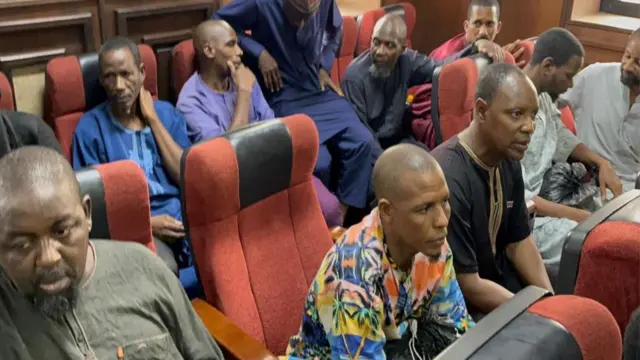
ABUJA – The trial of nine suspected terrorists linked with the June 2025 Yelwata killings was, on Tuesday, stalled after one of the defendants fainted in court.
Alhaji Haruna Abdullahi, the 3rd defendant, slumped from his seat and fell to the floor, prior to the commencement of the case before Justice Joyce Abdulmalik of the Federal High Court in Abuja.
The prison officials who brought them to court tried to revive him and later helped him back on his chair, but he remained unresponsive.
Upon resumed hearing, counsel to the prosecution, Rotimi Oyedepo, SAN, told the court that, the matter was slated for trial-within-trial.
Oyedepo, however, said that he was informed by officials of the Nigerian Correctional Service that, the 3rd defendant, Abdullahi, who came to court by himself, developed serious health issues while in court.
He said, the Federal Government is not persecuting the defendants but that, the defendants are being prosecuted over their alleged involvement in the killings in Yelwata Community in Guma Local Government Area of Benue.
According to the lawyer, the defendant must be well to face his trial in court.
Ahmed Mohammad, who appeared for Alhaji Abdullahi, told the judge that even though his client came to court by himself, his health condition got worse leading to his collapsed in court.
He prayed the court for an adjournment to enable the defendant get medical attention at any hospital in Abuja.
Counsel to the 1st defendant, Ibrahim Angulu, SAN, including Oyedepo did not object to the request for adjournment.
Consequently, the judge adjourned the matter untill March 30 and 31 for continuation of trial.
She also ordered that hearing notices should be served on the defendants.
Reports that the defendants who were arraigned on 57-count amended charge bordering on alleged terrorism offences, pleaded not guilty to all the counts.
They were alleged to have carried out the terror attack on June 13, 2025, on Yelwata town where many houses were burnt down and about 150 people were massacred, while others sustained various degree of injuries.
The suspects are Lawal Dono, Muhammadu Saidu, Haruna Abdullahi, Yakubu Adamu, Musa Mohammed, Abubakar Adamu, Shaibu Ibrahim, Sale Mohammed and Bako Jibrin.
In count one of the charge, marked: FHC/ABJ/CR/471/2025, the defendants and others still at large were alleged to have, sometime between May and June 2025 in Nasarawa State, knowingly and directly participated in meetings in connection with the commission of an act of terrorism.
They were said to have planned the attack on Yelwata Community in Guma Local Government Area of Benue, and subsequently carried it out June 13, 2025, resulting in the burning of houses, grievous bodily harm, and the death of approximately 150 persons.
The offence is said to be contrary to Section 12(a) of the Terrorism (Prevention and Prohibition) Act, 2022 and punishable under the same section.
In count 25, Dono (1st defendant) was alleged to have, between May and June 2025 in Nasarawa State, “instigated and instructed other chiefs and Fulani youths in Nasarawa State, Kwara , Taraba, Giza, and other surrounding villages to carry out attack on Yelwata Community” on June 13, 2025.
Authorities said 150 persons died.
The offence is contrary to Section 26(2)(b) of the Terrorism (Prevention and Prohibition) Act, 2022 and punishable under the same Act, among other counts.(NAN)
Insecurity: Allow Amotekun to bear sophisticated weapons – Ondo lawmaker urges FG
written by Administrator
AKURE – Mr Olatunji Ifabiyi, lawmaker representing Odigbo Constituency 1 in the Ondo State House of Assembly, has urged the Federal Government to allow Amotekun Corps to bear sophisticated weapons to fight insecurity.
Ifabiyi, in a telephone interview with newsmen on Monday, said that Amotekun would not be effective if left with the usage of outdated arms and ammunition such as dane gun and pump action.
The lawmaker noted that members of the Corps had absolute knowledge of all the terrain within the state but needed to be equipped with modern security gadgets to fight insecurity.
According to him, if the Federal Government permits Amotekun to operate with sophisticated weapons, insecurity especially across the South-West, will be reduced to the barest minimum.
Ifabiyi, who is the Chairman of the Assembly’s Committee on Security Matters, said that the legislative body had not relented in its efforts to guarantee safety of lives and property in the state.
“On our efforts in supporting the fight against criminalities in the state, is not limited to Amotekun, but cutting across all security agencies.
“We have met with heads of security agencies in the state and we have shown our readiness to assist them in whatever capacity within our constitutional power.
“On Amotekun, there was no bill in strengthening the Corps that was not given speedy passage.
“We’re pleading with the Federal Government to allow them to bear sophisticated weapons in carrying out their duties.
“They cannot continue to bear old weapons while fighting enemies with lethal weapons and AK-47; we should not deceive ourselves.
“Whatever appropriation that will enhance the security architecture of the state has always been approved by the Assembly.
“It’s left for the government to grant this request so that Amotekun can complement the efforts of other security agencies,” he said.
He commended the Federal Government for the initiative of Forest Guards, saying that such move when implemented fully would flush out criminals from the forest reserves across the states. (NAN)
ABUJA – The Federal Government says security agencies are working round the clock to ensure citizens’ safety, while taking sustained steps to strengthen security nationwide.
The federal government said the efforts were aimed at protecting lives and property and as well preventing further attacks.
The Minister of Information and National Orientation, Mohammed Idris, gave the assurance in a statement issued by his Special Assistant on Media, Rabiu Ibrahim, on Saturday in Abuja.
Idris said this during an interview with the British Broadcasting Commission (BBC’s) Victoria Uwonkunda, where he addressed intelligence operations following recent security concerns, including the attack in Maiduguri.
The interview was published via YouTube on Friday at https://youtu.be/qA1kQeluZ7w?si=wJvya9fpDNL9dXFx.
He dismissed claims of failure by Nigeria’s security agencies, stating that more work was required to consolidate ongoing efforts.
“I don’t think they failed. I think that more work needs to be done. Nigerian security agencies are working round the clock to ensure that this does not happen again.”
The minister added that Maiduguri had witnessed significant improvements in peace and stability over time.
“The government is putting a lot of attention. The reform agenda of the President is aimed at ensuring that Nigerians are safe and that this does not happen again,” he said.
On global developments, particularly tensions in the Middle East and their potential impact on Nigeria, Idris said Nigeria remained ready to support global stability, especially in the energy sector.
“Nigeria is ever ready to contribute to energy security around the world. Whatever Nigeria can do to ease tension, it will do. The world needs oil, and Nigeria is there,” he said.
Speaking on President Bola Tinubu’s ongoing engagements abroad, Idris described the visit as significant for strengthening Nigeria’s international relations.
“This visit underscores the historical relationship, the cultural ties, and the economic ties between Nigeria and the United Kingdom. We hope that we will deepen it further in the interest of both countries,” he said.
The minister further highlighted the positive impact of the administration’s reforms, noting that they are already improving Nigeria’s global standing.
“With the reforms that President Bola Tinubu has instituted, we have seen a significant uplift in the economy.
“The invitation extended to the President reflects how positively these reforms are being viewed globally,” he said.
He reaffirmed that the federal government was committed to sustaining reforms, strengthening security, and ensuring that Nigerians could live and work in safety.
He added that the government was positioning Nigeria as a responsible and reliable global partner.(NAN)
LAGOS – An expert, Mr Joe Nwakwue, has urged the Federal Government to adopt a proactive, structured strategy to address Nigeria’s economic challenges amid global uncertainty.
Nwakwue, Chief Executive Officer of Zera Advisory and Consulting Ltd., warned that the Middle-East crisis threatened Nigeria’s economy and demands urgent action.
He spoke in an interview with newsmen on Friday in Lagos.
Nwakwue said Nigeria must define clear intervention thresholds to shield the economy from shockwaves of the deepening Middle-East crisis.
He warned that tensions were posing “substantial challenges to the global market order” by disrupting supply chains and raising essential commodity costs.
According to him, ripple effects are evident in rising global prices, with Nigeria particularly exposed due to structural vulnerabilities.
“The Middle-East crisis is not just a regional issue; it is a global economic disruptor.
“Supply dislocations are translating into higher prices across markets, and Nigeria is no exception,” he said.
Nwakwue said Nigeria’s heavy reliance on petroleum products for transport and industry leaves it vulnerable during global shocks.
“Given our reliance on petroleum products, sustained global price increases will raise transport and manufacturing costs domestically.
“This creates higher logistics costs, increased production expenses, and inflationary pressure on consumers,” he said.
He stressed that without a clear response framework, the economic impact could deepen, eroding purchasing power and slowing growth.
To mitigate risks, he urged the Federal Government to adopt a proactive and structured intervention strategy.
He said this must go beyond ad hoc measures and focus on clearly defined economic triggers and policy objectives.
“Government must determine price thresholds for intervention, its objectives, mechanisms, and when measures will be phased out,” he said.
He warned that poorly designed or open-ended interventions could distort markets and strain public finances if not carefully managed.
Nwakwue highlighted the “naira-for-crude” mechanism as a viable option to cushion the economy against foreign exchange volatility.
“The naira-for-crude framework offers a practical pathway among alternatives.
“It can stabilise domestic pricing and ease pressure on foreign reserves within a disciplined policy structure,” he explained.
He said the crisis presents an opportunity for Nigeria to rethink long-standing energy and economic dependencies.
He said: “This is a moment for strategic recalibration.
“Nigeria must accelerate efforts to diversify energy sources and reduce reliance on imported petroleum products.”
Nwakwue said decisive, transparent, and time-bound policy actions were critical to navigating global uncertainty.
“The cost of inaction or poorly timed intervention could be severe.
“What is required now is clarity, discipline, and commitment to protecting the economy without undermining market stability,”he said. (NAN)
ABUJA – The Federal Government says it is determined to protect Nigerians rights and privacy in the digital space.
To achieve that, it said it has developed several policy and regulatory frameworks to strengthen cybersecurity.
Dr Ayodele Bakare, Assistant Director, Cybersecurity Department, National Information Technology Development Agency (NITDA) said this during an interview with newsmen in Abuja on Monday.
He said that cybersecurity governance in Nigeria was implemented through a collaborative approach involving multiple government institutions with different responsibilities.
According to him, the Office of the National Security Adviser (ONSA) provides overall coordination of national cybersecurity efforts through the National Cybersecurity Coordination Centre which serves as its operational arm.
“At the national level, cybersecurity implementation is done collectively and different government organisations are responsible for implementing different aspects of the national cybersecurity framework.
“At the top, however, the Office of the National Security Adviser coordinates these efforts through the National Cybersecurity Coordination Centre,” he said.
Bakare said that one of the key policy instruments guiding the country’s cybersecurity efforts was the National Cybersecurity Policy and Strategy Framework.
He also highlighted the legal framework provided by the Cybercrimes Prohibition and Prevention Act 2015 which was recently amended in 2024 to strengthen Nigeria’s response to cyber threats and digital crimes.
According to him, NITDA has also introduced sector-specific regulations to enhance cybersecurity in the country.
“One of such regulations is the National Public Key Infrastructure Regulation which is one of the core infrastructure required to ensure trust and security in digital communications and transactions,” he said.
Bakare said that NITDA played a pioneering role in Nigeria’s data protection landscape through the Nigeria Data Protection Regulation 2019, which laid the foundation for the current data protection framework.
He said the regulation had since evolved into a full legal framework implemented by the Nigeria Data Protection Commission.
Bakare disclosed that the agency was also finalising an Information Security Regulation that would soon be made available to the public.
He further explained that the regulation would provide organisations and individuals with clear guidelines on their responsibilities in safeguarding information and digital assets.
“Nigeria has continued to strengthen its legal and policy environment for cybersecurity, a development reflected in the country’s performance in the Global Cybersecurity Index.
“One of the pillars of the index focuses on legal measures and assesses the availability of national cybersecurity laws and regulations.
“Nigeria recorded a strong performance under the legal measures pillar, reflecting the country’s efforts to establish the necessary frameworks to support cybersecurity governance,” he told NAN.
He said that sustained collaboration among government agencies and stakeholders remained essential to effectively implement the existing policies and strengthen Nigeria’s digital security architecture.(NAN)
ABUJA – The Nigeria Labour Congress (NLC) has called for government’s intervention to address the surge in petrol prices between N1,170 and N1,300 per litre across the country.
The demand was contained in a statement signed by Mr Joe Ajaero, President of the NLC, on Thursday.
Ajaero said the rising cost of petrol had worsened the hardship faced by Nigerian workers, particularly in transportation, food prices and general cost of living.
“The sudden increase in petrol price to between N1,170 and N1,300 per litre has further deepened the economic hardship faced by Nigerian workers and the general populace.
“The rising cost of fuel has made transportation increasingly unaffordable for workers, while food prices and other essential commodities continue to surge beyond the reach of ordinary Nigerians.
“The government must urgently introduce measures, including wage support and cost-of-living relief, to cushion the devastating impact of the current fuel price crisis on workers and vulnerable citizens,” he said.
The NLC boss urged the Federal Government to introduce immediate relief measures, including wage support and policies to cushion the impact of the price increase on workers and vulnerable citizens.
Ajaero said the current situation had exposed the vulnerability of Nigeria’s downstream petroleum sector to global market volatility.
He stressed the need for the government to ensure that public refineries in the country become fully operational to reduce dependence on imported petroleum products.
According to him, reviving the nation’s refineries will help stabilise domestic supply and shield Nigerians from sudden price shocks.
The NLC president also called for tax relief for low-income earners and expanded social support programmes for vulnerable Nigerians.
He said such measures would help cushion the harsh economic realities confronting workers and their families.
Ajaero further urged the government to ensure transparency in the management of expected oil revenue gains arising from current global developments.
He noted that any windfall from rising crude oil prices should be channelled toward improving the welfare of Nigerians.
He also called for sincere dialogue between government and organised labour to address the growing economic challenges facing workers.(NAN)
ABUJA – The Federal Government has commenced structured development of the Ikom Multipurpose Dam and Hydropower Project under a Public-Private Partnership (PPP) framework.
The Director-General of ICRC, Jobson Ewalefoh, said this in a statement on Thursday in Abuja.
Ewalefoh said the move followed the inaugural meeting of the Presidential Project Development Committee (PDC) convened by the Infrastructure Concession Regulatory Commission (ICRC).
The committee was established pursuant to resolutions reached at a high-level stakeholder meeting held at the Aso Rock Presidential Villa, where the Ikom Multipurpose Dam was designated a strategic national intervention.
At the meeting, a Project Steering Committee and a Project Development Committee were constituted to drive the development process, with the ICRC mandated to chair the PDC.
According to Ewalefoh, the assignment is significant and requires strong technical, regulatory and strategic coordination.
He said the dam had been designated a strategic national asset rather than merely a hydropower initiative.
”The project is designed as a multipurpose infrastructure intervention to control flooding, provide renewable energy, optimise water resources and support regional economic development.
”The responsibility of the committee is to guide the project from concept to bankability while protecting public interest and attracting credible private sector participation,” he said.
Ewalefoh outlined immediate next steps to include review and validation of existing feasibility and hydrological studies and clarification of the project scope.
He said that the committee would also determine the appropriate PPP structure and risk allocation framework and commence the process of appointing a transaction adviser.
The director-general further said that the committee would develop a clear project preparation roadmap to ensure transparency and compliance with national PPP standards.
The Minister of Finance and Coordinating Minister of the Economy, Wale Edun, said the Ikom project would be structured as a sustainable, viable and commercially significant transaction capable of attracting credible private sector participation.
He said the project should also operate efficiently over the long term while delivering social and economic value.
Edun added that under the leadership of President Bola Tinubu, Nigeria was strengthening economic reforms and building a system anchored on fiscal discipline and long-term value creation.
He said distortions that once threatened financial stability had been removed, creating stronger conditions for strategic investments.
The meeting was attended by representatives of the Federal Ministry of Water Resources, the Nigeria Sovereign Investment Authority (NSIA), Nigerian National Petroleum Company Limited, the Cross River Government and Ikom Power Limited.
Members of the Project Development Committee were drawn from the Federal Ministries of Finance, Water Resources and Power, the Cross River Government, ICRC, NSIA, the Nigerian National Petroleum Company Limited and Ikom Power Limited.
The Ikom Multipurpose Dam is planned as a strategic intervention within the River Benue Basin to address recurring flooding while delivering about 250 megawatts of renewable base-load hydropower.
The project is also expected to enhance flood resilience, strengthen energy security, optimise water resources and stimulate economic growth in Cross River and adjoining regions.
As a presidential initiative, the Federal Government has activated a structured governance framework to ensure the project is developed transparently and responsibly in line with national PPP standards.(NAN)
ABUJA – The Federal Government says it will collaborate with the Dairy Sub-sector Group of the Manufacturers Association of Nigeria (MAN) to scale-up investment in the dairy sector to meet local demands.
The Minister of Livestock Development, Alhaji Idi Maiha, said this when a delegation from MAN paid courtesy visit on the ministry on Wednesday in Abuja.
Maiha said that strategic partnerships with industries were critical to revitalise the dairy sector and unlock Nigeria’s vast livestock potential.
The minister who identified Nigeria as the largest market in Africa for vaccines and dairy products said that dairy production like milk and others were grossly inadequate to meet local demand.
“If you look at the statistics today, we spend $1.5 billion to import milk and dairy product, we also spend $1.5 billion to import vaccines into the country in spite having the largest market for the products in Africa,” he said.
According to him, there are huge opportunities for public private partnership for the revival of the sector.
He said areas of investment opportunities to included revitalisation of the 38 moribund livestock facilities across the country; milk collection centres; breed multiplication, goat, pig, cattle breeding centres.
According to him, working with MAN is the shortest possible way of reviving the sector.
“The ministry is working to attract investors into the sector through strategic public-private partnerships.
“We have 417 grazing reserves that we are going to rehabilitate, and each of them is available for investors who are willing to work with us.
“This is one of the ways to revive the dairy sector and increase local production.
“Other areas of investment opportunities are feed and fodder, milk production, seed multiplication among others,” he said.
Maiha also urged MAN to focus on breed improvement, milk collection centres and aggregation.
He said the country was yet to exhaust its inherent capacity of milk.
“We are challenged by the poor rural infrastructure. At the peak of the rainy season farmers drain their milk because women cannot cross rivers to supply milk.
“So these are areas we need milk collection centres. Capacity building is another area we need to up our games.
“We are out and ready to work with you to make sure we revive the dairy sector because that is where the money is,” he said.
Earlier, Ore Famurewa, Chairperson, Dairy Sub-sector Group of MAN and Executive Director, Corporate Affairs of FrieslandCampila WAMCO Nigeria said that current estimates indicated that the country consume 1.6 million to 1.7 million metric tonnes of milk annually.
Famurewa however said that the country produces about 600,000 to 700,000 metric tonnes locally, leaving a significant supply deficit.
She said that the gap presented both a challenge and a tremendous opportunity.
“Nigeria possesses substantial assets for dairy development including an estimated 20 million cattle population, vast grazing and agricultural land resources, a large and growing consumer market and dynamic food and beverage manufacturing sector,” she said.
She said some challenges in the sector were low milk productivity per animal, inadequate dairy infrastructure, limited access to finance for farmers, security and grazing challenges and weak value chain integration challenge.
Famurewa said that addressing the challenges required a coordinated approach involving government, private sector investors, development partners and local farming communities.
Famurewa said the visit was to reaffirm the group’s commitment to Nigeria’s organised dairy industry and strengthen collaboration with the ministry in implementing the National Dairy Policy..
According to her, although Nigeria has a strong demand for dairy products, local milk production remains significantly below national consumption levels, creating a substantial supply gap. (NAN)