
By Clement Nwabuko
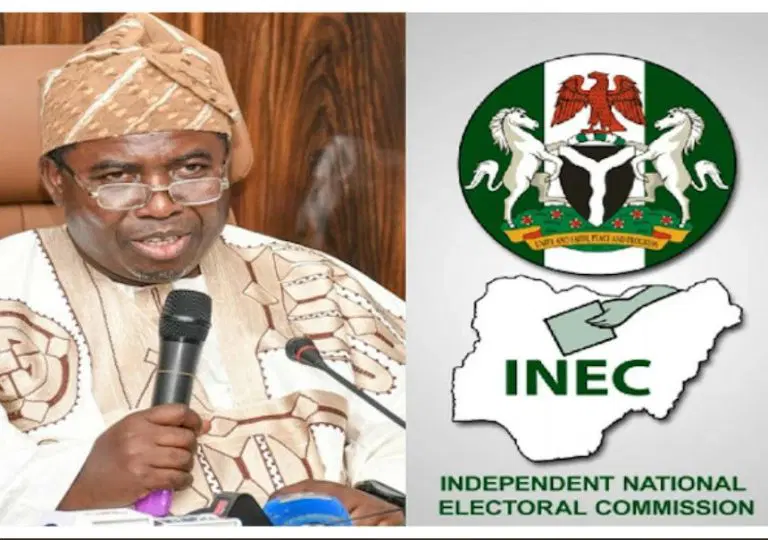
The Independent National Electoral Commission (INEC) has raised fresh questions about its administrative competence and institutional preparedness for the 2027 general elections following its admission that numerous errors occurred in the final lists of governorship and State Houses of Assembly candidates.
The commission’s disclosure that it approved 66 petitions seeking corrections to the published candidates’ lists, while rejecting 64 others, represents a troubling development for an electoral umpire whose credibility rests fundamentally on accuracy, diligence, transparency and strict adherence to the law.
What makes the situation particularly concerning is that the errors occurred in a process involving the verification and publication of candidates nominated by political parties. This is a critical statutory responsibility that demands painstaking attention to detail, especially when the commission is expected to administer elections involving millions of voters and competing political interests.
According to a statement issued on Thursday, October 29, by Mohammed Kudu Haruna, chairman of INEC’s Information and Voter Education Committee, the commission received 69 petitions from 12 political parties across 26 states concerning governorship candidates. Of these, 41 succeeded, while 28 were rejected.
For the State Houses of Assembly elections, 61 petitions were received from 11 political parties across 11 states. Twenty-five succeeded, while 36 failed.
In total, INEC received 130 petitions and upheld 66, meaning that approximately 50.8 per cent of the petitions were successful. This proportion is significant and warrants a comprehensive explanation from the commission about the nature, causes and circumstances of the errors identified.
The complaints involved the omission of political parties, the wrongful inclusion of candidates whose names were absent from the membership registers submitted by their parties, and alleged multiple nominations. INEC also acknowledged that some candidates had been wrongly published and subsequently removed after the commission verified the relevant records.
These are not inconsequential administrative oversights. The publication of a candidate’s name determines whether that individual is officially recognised as eligible to contest an election under the applicable legal framework.
Similarly, the omission of a qualified candidate or political party can have serious implications for political participation, electoral competition and the rights of affected aspirants.
An electoral commission entrusted with such consequential responsibilities should not require dozens of successful petitions before identifying and correcting errors in a document officially designated as the final list of candidates.
More troubling is the question of how these errors survived the commission’s internal verification processes in the first place. What procedures were followed before the lists were published? Were the submitted membership registers adequately cross-checked against the nominated candidates? What safeguards existed to detect multiple nominations, wrongful inclusions and omissions before the commission certified the lists as final?
INEC owes political parties and Nigerians clear answers to these questions. Its decision to correct the affected lists is necessary, but correcting mistakes after complaints have been filed is not an adequate substitute for preventing those mistakes from occurring.
The development also raises broader concerns about the commission’s quality-control mechanisms as it prepares for the 2027 general elections. If discrepancies can occur during the compilation and verification of candidates’ lists, Nigerians are entitled to ask what additional safeguards are in place to prevent errors in the more sensitive processes of vote counting, result collation, transmission and declaration.
Election results involve figures that must be accurately counted, recorded, reconciled and attributed to the appropriate candidates and political parties. Errors in these processes, whether arising from human mistakes, inadequate verification or technological failures, can generate disputes, undermine confidence in declared outcomes and place additional burdens on the courts.
However, it would be premature to conclude that the errors acknowledged in the candidates’ lists establish that INEC will miscalculate or misallocate election results. The two processes are distinct, and the commission’s admission does not constitute evidence that errors have occurred in the collation of votes. Nevertheless, the acknowledged lapses provide a legitimate basis for demanding stronger preventive controls, independent verification and greater accountability.
The timing of the disclosure makes the matter even more important. With the 2027 elections approaching, INEC must demonstrate that it has learned from the mistakes identified and that similar shortcomings will not undermine the credibility of subsequent electoral processes.
The commission should therefore publish a detailed account of the errors established through the petitions, explain how the discrepancies occurred and identify the officials, departments or procedures responsible where appropriate. It should also disclose the corrective measures being introduced to prevent a recurrence.
Beyond the candidates’ lists, INEC should strengthen its verification and reconciliation procedures for election results, including the systematic cross-checking of polling-unit figures, proper documentation of corrections, reliable electronic result management and transparent procedures for resolving discrepancies.
Political parties and accredited observers should also be afforded appropriate opportunities to scrutinise relevant electoral records within the limits of the law. Such measures would not only help detect mistakes but also provide verifiable evidence that the commission’s processes are being conducted accurately and fairly.
Ultimately, public confidence in elections cannot be sustained by assurances alone. It must be earned through demonstrable competence, consistent accuracy, transparency and accountability at every stage of the electoral process.
INEC has repeatedly been entrusted with the responsibility of protecting the integrity of Nigeria’s democracy. That responsibility demands the highest standards of professionalism, particularly at a time when electoral credibility remains central to public confidence in democratic governance.
The commission must therefore treat the errors exposed by these petitions as a serious institutional warning, rather than a routine administrative matter. Nigerians deserve an electoral umpire that identifies and corrects mistakes before they become disputes, not one that depends on petitions to uncover errors in its own official records.
As preparations for the 2027 elections intensify, the central question is no longer simply whether INEC has corrected the affected candidates’ lists. It is whether the commission can demonstrate, through verifiable reforms and effective safeguards, that the processes responsible for these errors have been addressed.
For an electoral umpire, accuracy is not optional, and public confidence cannot rest on assurances unsupported by demonstrable competence.
Comrade Clement Nwabuko – an Economist, political analyst, human rights advocate and good governance crusader writes in from Abuja. He can be reached on [email protected]

