
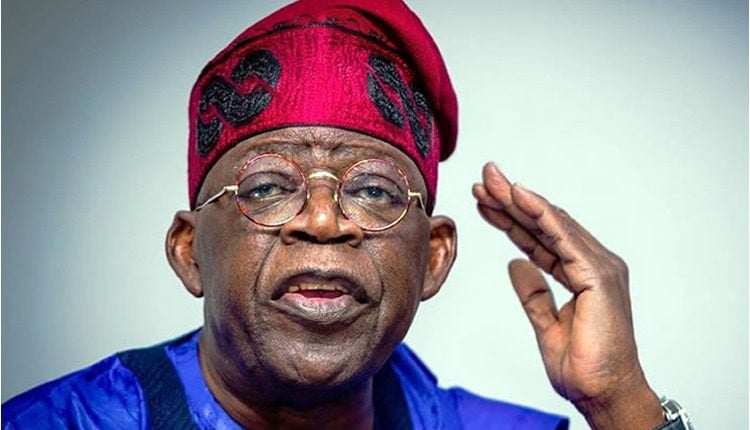
President Bola Ahmed Tinubu has called on African nations to take full control of their critical mineral resources and push for a reformed global financial system that empowers the continent rather than exploits it.
Speaking through Vice President Kashim Shettima at the Second High-Level Roundtable on Critical Minerals Development, hosted by the Africa Minerals Strategy Group (AMSG) on the sidelines of the 80th United Nations General Assembly (UNGA) in New York, Tinubu made a passionate case for African sovereignty in the global minerals value chain.
In a statement released Tuesday by the Senior Special Assistant to the President on Media and Communications, Stanley Nkwocha, Tinubu outlined a bold vision for a mineral-led renaissance on the continent — one driven by African financing, innovation, and unity.
“We must take the bull by the horns in financing our future. Never again shall we wait for capital to trickle in,” Tinubu declared.
“With sovereign funds, blended finance vehicles, and innovation tools like the Africa Mineral Token, Africa shall finance Africa.”
He urged African nations to act as a continental bloc, leveraging critical minerals like cobalt, lithium, graphite, gold, and rare earth elements to shape global supply chains and rewrite decades of economic marginalisation.
Tinubu’s 4-Point Agenda to Unlock Africa’s Mineral Power
President Tinubu identified four strategic imperatives to transform Africa’s mineral economy:
1. Climb the Value Chain
Africa must stop exporting raw minerals and importing finished goods. From beneficiation to green manufacturing, the continent must build value-added industries on African soil.
2. Control Geological Data
With initiatives like AMREC and PARC, Africa will no longer rely on external knowledge of its own land. “Our data will be mapped, standardised, and owned by Africans,” Tinubu said.
3. Accelerate Mineral Exploration
Tinubu stressed the need for government-led geological mapping and exploration:
“Without exploration, there is no sovereignty. Without mapping, there is no value.”
Each African country must prioritise nationwide surveys, strengthen geological agencies, and share expertise through the AMSG.
4. Finance Africa’s Future
Using sovereign wealth funds, blended finance, and digital innovations like the Africa Mineral Token, African nations must fund their own resource development.
Call for Collective Leadership
Tinubu praised countries such as Zimbabwe, Gabon, Uganda, Burkina Faso, Mali, Botswana, Ghana, and Nigeria for leading the movement to restrict raw mineral exports in favour of domestic value addition. He highlighted:
Zimbabwe’s 2022 ban on raw lithium exports
Gabon’s commitment to end manganese exports by 2029
Kenya’s planned restrictions on raw gold exports
Nigeria’s ongoing reforms to boost local beneficiation and job creation
“Let us rise with a communiqué of clarity, a framework for action, and a spirit of unity,” Tinubu declared.
Other Key Voices at the Roundtable
Dr. Dele Alake, Nigeria’s Minister of Solid Minerals and Chair of the Roundtable, called for transparency, inter-African cohesion, and shared strategy to unlock the continent’s sustainable development potential.
Ahunna Eziakonwa, UN Assistant Secretary-General and UNDP Regional Director for Africa, urged leaders to prioritise technology transfer, beneficiation, and job creation over exploitation.
Jozef Sztela, EU Commissioner for International Partnerships, cited the EU’s 2024 Critical Raw Materials Act, and revealed 14 strategic partnerships in raw materials value chains, including four in Africa.
President Tinubu’s remarks reflect a growing urgency among African leaders to reclaim the continent’s mineral wealth as a catalyst for industrialisation, economic sovereignty, and global influence.
