
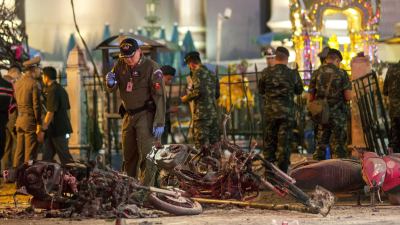
On Aug. 17, 2015, a bombing took place inside the Erawan Shrine at the Ratchaprasong intersection in Pathum Wan district, Bangkok, Thailand, killing 20 people and injuring 125.
The explosion occurred in an area popular with foreign tourists with five of the dead from mainland China and two from Hong Kong.
According to the court, the actions of both defendants constitute multiple separate offenses, adding that the sentence includes punishment for the charge of premeditated murder, which resulted in the death penalty.
Chamroen Panompakakorn, one of the two lawyers representing the convicted men, Adem Karadag and Yusufu Mieraili said the convicts had previously denied all charges brought against them.
Panompakakorn said he will appeal against the death sentence while telling the convicts “don’t be frightened, there are three other courts.’’
Choochat Kanpai, the other lawyer, said the court had not considered multiple factors in their defence, adding that he would ask for an extension to file an appeal.
Under Thai law, appeals will have to be made within a month of a verdict.
The case has taken more than 10 years to reach trial, with prosecutors collecting evidence from hundreds of witnesses.
They also struggled to find an appropriate interpreter for the suspects.
No group claimed responsibility for the 2015 bombing but security experts said it was an act of retaliation against the forced deportation of more than 100 Uyghurs from Thailand in the previous month.
China has faced criticism for the perceived tough restrictions it has imposed on religious and cultural freedoms in Xinjiang, where the majority of Uyghurs live.
China foreign ministry spokesperson Lin Jian he supported the Thai court’s verdict.
“The perpetrators acted with utter inhumanity and committed a heinous crime,” he said.
In 2025, Thailand deported another 40 Uyghurs back to China, defying calls from United Nations human rights experts, who said they would be at risk of torture, ill-treatment and “irreparable harm” if returned. (Xinhua/NAN)

