
By Our Reporter
ABUJA (PRECISE POST) – The Federal Government has taken a major step toward evaluating a sweeping $200 billion infrastructure proposal that could reshape Nigeria’s energy and transport landscape.
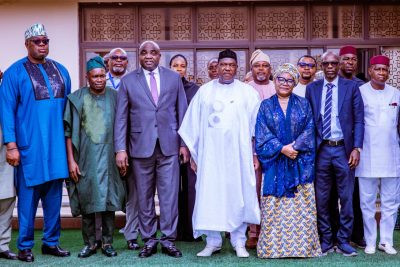
The Secretary to the Government of the Federation, George Akume, on Thursday inaugurated a high-level technical committee tasked with reviewing the proposed Integrated Gas, Power and High-Speed Rail Project.
The ambitious initiative seeks to combine gas development, electricity generation and transmission, alongside the construction of a 4,000-kilometre high-speed rail network linking key economic hubs such as Lagos, Abuja, Kano and Port Harcourt.
Speaking at the inauguration, Akume described the project as a potential game-changer for Nigeria, noting that it could significantly boost economic growth, strengthen energy security and enhance national connectivity.
“The project is envisioned as a multi-phase programme that integrates critical sectors and has the potential to transform transport infrastructure, stimulate industrial development and deepen national integration,” he said.
Precise Post recalls that the newly inaugurated committee has been directed to rigorously assess the proposal, including verifying claims made by promoters and examining its technical, legal and environmental implications. It is also expected to deliver objective, evidence-based recommendations to guide government decisions.
Akume urged members to carry out their assignment with professionalism and patriotism while engaging relevant stakeholders and adhering to global best practices.
The committee is chaired by the Permanent Secretary of the Political and Economic Affairs Office and includes top officials from key ministries such as transportation, petroleum resources, finance, justice and environment. Representatives from major regulatory and security agencies are also part of the panel.
Presenting the proposal, Samuel Ukoh, Managing Director of De-Sadel Nigeria Limited, described the project as a transformative venture capable of cutting inter-city travel time by up to 75 percent.
Ukoh said the planned rail network would span 4,000 kilometres, connect all 36 states and the Federal Capital Territory, and operate on a dual-track high-speed system.
He added that the project would also generate about 3,500 megawatts of electricity to power the rail system, further integrating Nigeria’s energy and transport infrastructure.
If approved and implemented, the project could rank among the largest infrastructure undertakings in Africa, marking a significant leap in the country’s development ambitions.

