
By Chibuike Nwabuko
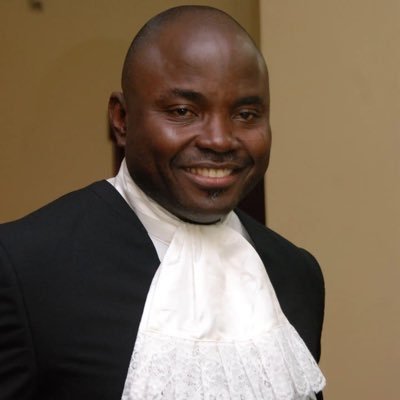
ABUJA (PRECISE POST) – Legal luminary Jibrin Okutepa SAN, has expressed concern over what he described as a “deafening silence” in Nigeria, lamenting the apparent normalisation of abnormalities, abuse of power and disregard for the rule of law.
Okutepa, in his remarks, released on his X handle on Thursday, said Nigeria appeared to be on a path of retrogression, accusing professional bodies and civil society organisations of failing to speak out against developments that undermine good governance, justice and citizens’ rights.
He recalled that professional organisations, including the Nigeria Labour Congress (NLC), Trade Union Congress (TUC), Nigerian Union of Journalists (NUJ), Academic Staff Union of Universities (ASUU), Nigerian Bar Association (NBA), Nigerian Medical Association (NMA) and National Union of Petroleum and Natural Gas Workers (NUPENG), had historically played significant roles in defending the interests of Nigerians.
“Even under military rule, Nigerians and these organisations were advocates of good governance and the economic emancipation of the people,” he noted.
The lawyer particularly expressed concern over what he described as the declining role of the NBA in defending the rule of law and due process.
According to him, the legal profession once operated under strict ethical standards, with lawyers regarded as “ministers in the temple of justice.”
He, however, lamented that the situation appeared to have changed, saying Nigerians had gradually become accustomed to abnormalities to the extent that normal conduct was now perceived as unusual.
“There is a deafening silence from those in whom we placed our hopes to defend Nigeria, fight the battles for a just society, secure better living conditions for Nigerians, uphold the rule of law and promote an egalitarian society,” he said.
The lawyer’s comments followed his reaction to a recent court ruling in which an enrolled order of court that allegedly did not reflect the judgment delivered in open court was set aside.
While a colleague had reportedly remarked that “anything is possible in the judiciary” these days, the lawyer argued that the problem extended beyond the judiciary.
“When we limit ‘anything is possible’ to the judiciary alone, we miss the point. The legal profession in Nigeria is in a state of disarray, and it appears nobody is ready to talk about it,” he stated.
He alleged that the abuse of power had become widespread, while institutions established to protect citizens were increasingly being used against them.
“We do wrong things and get away with them. Power is whimsically and capriciously abused, and we defend it. The rule of law is destroyed, and we celebrate it,” he lamented.
The lawyer further argued that Nigeria could not achieve sustainable economic development without respect for the rule of law.
“We cannot run a country on the platform of the rule of convenience and expect to grow and achieve economic development,” he said.
He also raised concerns over the alleged arrest and detention of a protester identified as Tony Tony following protests in Ankpa, Kogi State, over what he described as inadequate social amenities and poor road infrastructure.
According to him, the incident was another example of the alleged abuse of power and shrinking civic space in the country.
He said justice was being undermined daily without those responsible being held accountable, warning that the situation was damaging public confidence in the country’s justice system.
“Justice is in a state of coma in Nigeria,” he declared, adding that some people trained to administer justice appeared to be doing so in ways that undermine the principles of sound jurisprudence.
The lawyer also expressed concern that many Nigerians who know what is right but wish to speak out had been intimidated by fear of reprisals.
“Many who know what to say and want to speak the truth are afraid of the repercussions of the whimsical misuse of power without corresponding remedies,” he said.
Okutepa finally blamied what he described as the “deafening silence” in the country on the perceived weakness, capture or ineffectiveness of institutions expected to uphold justice and protect citizens.
“It is that bad,” he said.