By Chibuike Nwabuko
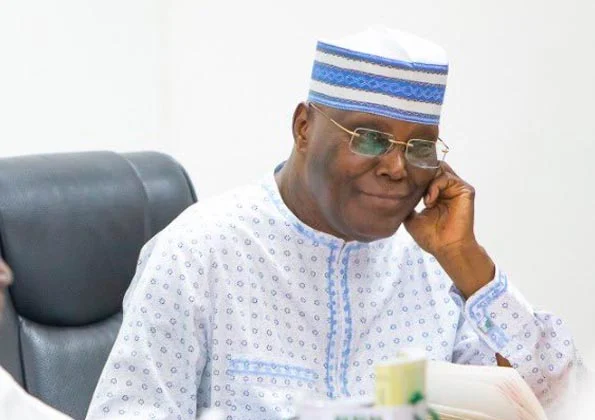
ABUJA (PRECISE POST) – The Presidency has criticised former Vice President Atiku Abubakar’s proposal to restore petrol subsidy if elected president, describing the policy as retrogressive, fiscally unsustainable and incompatible with Nigeria’s current petroleum-sector realities.
The Special Adviser to the President on Information and Strategy, Bayo Onanuga, made the remarks in a statement posted on his X handle on Thursday, August 20, 2026, in response to Atiku’s recently unveiled economic plans ahead of the 2027 presidential election.
He accused the former vice president of abandoning his previous position on fuel subsidy removal for political reasons, arguing that Atiku had previously advocated the elimination of the subsidy regime before the 2023 presidential election.
According to Onanuga, Atiku’s renewed support for subsidy amounted to an opportunistic reversal designed to appeal to Nigerians facing economic hardship.
“We respect Alhaji Atiku Abubakar’s constitutional right to propose alternative policies, to seek the support of Nigerians and recant a major policy prescription,” Onanuga said.
He, however, insisted that Nigerians were entitled to know how the proposed subsidy would be financed and whether it could legally and practically operate under the current petroleum-sector framework.
Onanuga argued that fuel subsidy was not simply money available in government coffers for distributing cheaper petrol, but represented the government absorbing the difference between the cost of supplying petrol and the regulated pump price.
He rejected Atiku’s claim that the government had accumulated a ₦30 trillion subsidy windfall or savings following subsidy removal, describing such a figure as nonexistent.
The presidential aide said the old petrol subsidy regime had been dismantled as part of the reforms introduced under the Petroleum Industry Act (PIA), which established a new framework for Nigeria’s downstream petroleum market.
He maintained that the PIA had provided for the end of the subsidy regime by the end of June 2023, adding that President Bola Tinubu merely accelerated the process by a few weeks.
Onanuga also argued that Nigeria’s petroleum industry had changed substantially since 2023, particularly with the emergence of large-scale domestic refining capacity.
He cited the Dangote Refinery as a major development that had altered the country’s dependence on imported petrol, while arguing that the return of subsidy could undermine the growth of domestic refining.
“Atiku’s proposal portends a reversal of current local production, and it will spell bankruptcy for smaller local refineries like Aradel’s, causing attendant job losses and a loss of foreign exchange,” he said.
According to him, Nigeria has moved towards producing refined petroleum products domestically and exporting refined products, a development he described as a major departure from the period when the country depended heavily on imported refined products.
He contrasted the present situation with the period when Atiku served as vice president under former President Olusegun Obasanjo, noting that refined petroleum products were then among Nigeria’s largest import categories.
Onanuga further claimed that the removal of the petrol subsidy had freed significant resources for the three tiers of government.
He said the funds that would previously have been used to finance discounted petrol had instead contributed to increased allocations to federal, state and local governments.
The presidential aide cited the July Federation Account allocation of about ₦3 trillion as evidence of improved public finances following the removal of the petrol price subsidy and changes to the foreign-exchange regime.
He said Nigeria was increasingly moving towards a system in which crude oil could be processed domestically and supplied to the local market, creating opportunities for improved energy security, foreign-exchange conservation, industrial development and job creation.
Onanuga acknowledged the hardship caused by higher petrol and transportation costs but argued that sustainable solutions should focus on reducing energy costs without recreating an expensive subsidy regime.
He pointed to the Federal Government’s promotion of compressed natural gas (CNG) as one alternative, saying CNG could be significantly cheaper than petrol for taxis, private vehicles and distribution trucks.
He also cited the adoption of CNG-powered trucks by major companies, including Dangote and BUA, while urging commercial transport operators to pass the benefits of lower energy costs on to consumers.
Onanuga challenged Atiku to provide detailed answers on the financial and legal implications of his subsidy proposal.
“If the subsidy is restored, who pays for it? What will the new pump price be? N200 or N500?” he asked, arguing that if petrol were sold below its economic cost, the government would ultimately have to bear the difference.
He warned that such a burden could translate into reduced funding for infrastructure and social services, lower allocations to states and local governments, increased borrowing or higher public debt.
The presidential aide also asked whether restoring subsidy would require amendments to the Petroleum Industry Act and other petroleum-sector regulations, as well as how subsidy payments would be verified and protected against the abuses associated with the former regime.
He said the debate over fuel subsidy should be based on the realities of Nigeria’s current petroleum market rather than the conditions that prevailed before 2023.
“Political promises must be backed by fiscal arithmetic,” Onanuga said, urging all political actors, including Atiku, to provide Nigerians with the full fiscal and legal implications of any proposal to restore fuel subsidy.
He maintained that Nigeria could not afford to return to policies whose costs were hidden from citizens and later emerged as public debt, reduced government spending and pressure on the naira.