
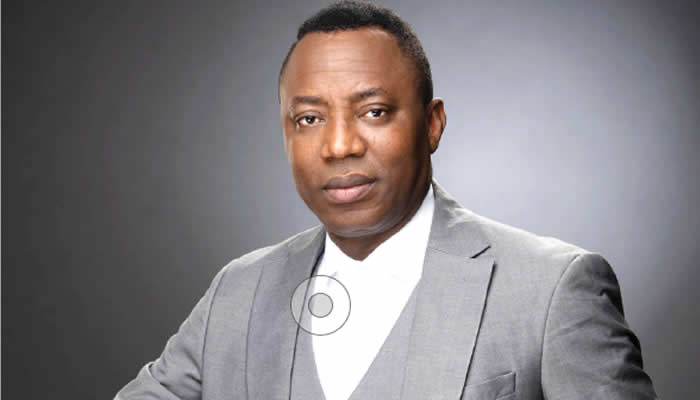
Nigeria has tried almost everybody except the people who actually frighten the system, who can shake, even extirpate, the status quo and who can cause the sort of creative destruction to needs to refashion itself.
For sixteen years, the PDP ruled Nigeria and accumulated enough sins, real and imagined, to make its initials almost synonymous with everything that was wrong with the country. Its opponents excoriated its corruption, pooh-poohed its incompetence, scorned and protested its petrol-price increases, savaged its incapacity to keep the country secure, and railed against its profligacy and remoteness from the pains of everyday Nigerians.
The loudest of these opponents called themselves “progressives.” They cultivated an image of ideological and moral difference from the PDP and became virtuosos of oppositional indignation. Then they got power.
Since 2015, the people who had perfected the vocabulary of outrage against the PDP have had ample opportunity to show Nigerians what they would do differently. Nigerians can judge the results from their own lives. They do not need the World Bank, the IMF, APC propagandists or opposition politicians to tell them whether food is affordable, whether transportation costs have risen, whether their salaries still have value or whether life has become easier.
The point here is larger than Bola Tinubu, Muhammadu Buhari, the APC or the PDP. Nigeria has now subjected itself to a long experiment with the two dominant tendencies of the Fourth Republic. The PDP establishment governed for sixteen years. The coalition that defined itself largely through opposition to that establishment has governed since 2015. The personnel change, parties change, slogans change and campaign colors change. The fundamental grammar of elite politics has proved remarkably resilient.
So what exactly do Nigerians mean when they say they want change? That question brings me to Omoyele Sowore.
Sowore has sought the presidency since he launched his first presidential campaign in 2018. INEC records show that he received 33,953 votes in the 2019 presidential election. He ran again in 2023 and is again seeking the presidency on the platform of the African Action Congress. His electoral numbers have so far been minuscule, but the interesting question for me is why a country that endlessly complains about its political establishment shows so little curiosity about one of the few presidential candidates who stands conspicuously outside it.
Sowore is contrarian, irreverent, iconoclastic and almost constitutionally incapable of genuflecting before constituted authority. His political temperament was formed long before presidential ambition entered the picture.
He emerged from the radical student activism of the late military era, later founded Sahara Reporters and has spent decades irritating successive governments, sometimes at considerable personal cost.
Many Nigerians find his ideas outlandish. Some find him abrasive. Some regard his promises as economically fantastical. His current proposal for a N500,000 minimum wage, for example, naturally raises questions about inflation, productivity, public revenue and the capacity of private employers to pay it. Sowore says between N3 trillion and N4 trillion can be recovered by eliminating government waste and that additional revenue can come from unpaid oil royalties and the plugging of financial leakages. Those claims deserve interrogation on their merits.
What interests me more is the political sociology of his persistent marginality.
The question came up recently when I addressed lecturers and students in the Political Science Department of Lagos State University. A lecturer told me that he had always voted for Sowore and wondered aloud why young Nigerians who say they are sick and tired of the status quo have never gravitated toward him in anything approaching the enthusiasm they showed Peter Obi in 2023.
I offered two explanations.
The first is symbolic capital. Sowore has never been a governor, minister or senator. He has no sprawling business empire whose size Nigerians can use as shorthand for importance. In a political culture in which wealth, office, convoys, sirens and proximity to power are routinely mistaken for substance, that is a serious handicap.
We have also managed to corrupt the meaning of political “experience.” In Nigerian political discourse, experience often means prolonged membership of the very political class that people complain has ruined the country. Someone becomes “experienced” by being a governor, minister or senator, irrespective of what he actually accomplished there. Familiarity with the machinery of elite power becomes its own qualification.
Sowore has a different kind of political experience. His experience is in agitation, organization, confrontation with authority, media insurgency and advocacy. Whether that translates into competent executive government is a legitimate question. It is at least worth recognizing that these are different conceptions of what political experience means.
The second explanation is what I call the absence of a primordial constituency.
This, I think, is even more consequential. Successful Nigerian politicians almost always possess an ethnic, regional or religious home base from which political affection radiates outward. Sowore fits awkwardly into this architecture.
Although he is culturally, linguistically and geographically associated with the Yoruba world, he identifies his ancestry with the Ijaw people of Ondo State. More important, he does not organize his politics around ethnic ownership. He refuses the familiar invitation to become somebody’s ethnic candidate.
Religion offers him no comparable political anchorage either. INEC listed him in 2023 as Omoyele Stephen Sowore, reflecting his Christian naming background. Yet religion has never been the organizing idiom of his politics.
That leaves him without the two most potent instruments of primordial political mobilization in Nigeria: ethnicity and religion.
His natural political constituency, to the extent that he has one, consists of people who understand themselves principally through their experience of exclusion, economic deprivation or abuse of state power. The difficulty is that class and subaltern identities often lose political contests to primordial ones.
A poor Nigerian may know intimately that he is poor. He also knows that he is Hausa, Yoruba, Igbo, Ijaw, Baatonu, Tiv, Christian, Muslim or something else. Poverty describes his condition. Ethnicity and religion frequently inhabit his conception of himself.
That distinction helps explain the peculiar predicament of political figures who cannot easily be converted into ethnic property. A politician with an identifiable primordial constituency begins a national contest with emotional capital already deposited in the bank. Someone like Sowore must manufacture political solidarity from interests that cut across inherited identities. That is a much more difficult undertaking in Nigeria.
There is another aspect of Sowore that deserves scrutiny, and that is his reputation for personal incorruptibility.
A senior figure in government once told me about his dealings with Sahara Reporters. He said when they were in opposition, people inside government sometimes supplied them with documentary evidence of wrongdoing, which they handed to Sowore to publish. According to him, Sowore would independently verify the material, publish what he judged to be credible and refuse to publish what he could not authenticate.
What impressed him even more, he said, was Sowore’s refusal to accept gifts. “He rejected even transport fare,” he told me.
That is an anecdote from someone who said he dealt with him, so I cannot independently authenticate every detail of it. I recount it because it illuminates the reputation Sowore has cultivated among people who have encountered him.
None of this resolves the substantive questions surrounding his candidacy. His economic program can be interrogated. His lack of executive governing experience can be interrogated. His temperament can be interrogated. His promises can be costed. His assumptions can be challenged.
But Nigerians should perhaps also interrogate something closer to home: their conception of political change itself.
If every presidential candidate must first have been manufactured by the system, enriched by the system, validated by the system and endowed with a primordial constituency before Nigerians regard him as “serious,” the demand for radical change begins to contain a contradiction.
We keep asking the political establishment to give us somebody who will overthrow the habits of the political establishment. And every four years we are astonished when it gives us itself again.

