
By Joyce Remi-Babayeju
ABUJA (PRECISE POST) – The Federal Government has called for stronger policies, health systems and community support to improve breastfeeding practices in Nigeria, as only 29 per cent of infants are exclusively breastfed during their first six months of life.
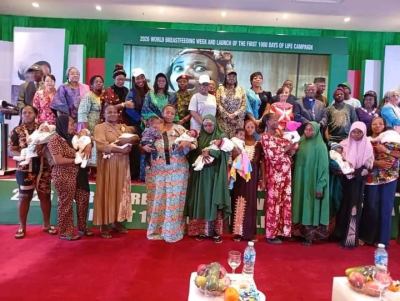
The call was made on Monday at the launch of the 2026 World Breastfeeding Week (WBW) in Abuja, with stakeholders stressing that breastfeeding remains a critical investment in child survival, maternal health, human capital development and national prosperity.
Speaking on behalf of the Federal Ministry of Health and Social Welfare (FMOHSW), the Director of Nutrition, Mrs. Olufunmilola Adegbite, said the first 1,000 days—from conception to a child’s second birthday—represent the most critical period for growth, brain development and lifelong health.
Adegbite said the 2024 National Demographic and Health Survey showed that while 95.6 per cent of Nigerian children had been breastfed at some point, only 35.5 per cent were put to the breast within one hour of birth.
She added that 67.7 per cent of children continued breastfeeding between 12 and 23 months, but noted that exclusive breastfeeding remained below national and global targets.
Furthermore , she expressed concern over Nigeria’s persistent malnutrition burden, disclosing that stunting stood at 40 per cent, wasting at eight per cent and underweight at 27 per cent among children aged six to 59 months.
According to her, the figures underscore the urgent need to strengthen nutrition interventions throughout the life course.
“Breastfeeding is far more than a health intervention. It is an investment in education, economic productivity, environmental sustainability and national development,” she said.
The Director said the Ministry was introducing Multiple Micronutrient Supplementation for pregnant women during antenatal care and expanding the Baby-Friendly Hospital Initiative, breastfeeding counselling services and community-based support systems.
She also called for breastfeeding-friendly workplaces, improved maternal protection and stronger enforcement of the International Code of Marketing of Breast-milk Substitutes.
In his goodwill message, delivered by the Programme Manager, Mr. Ridwan Awosanya, the Executive Secretary of Civil Society–Scaling Up Nutrition in Nigeria (CS-SUNN), Mr. Sunday Okoronkwo, described breastfeeding as a foundation for human capital development, progressive communities and sustained national prosperity.
He urged governments at all levels, employers, the private sector, families, communities and development partners to strengthen policies and support systems that enable mothers to initiate breastfeeding early, practise exclusive breastfeeding and continue breastfeeding in line with global recommendations.
Okoronkwo said CS-SUNN would continue to advance evidence-based advocacy, mobilise communities and promote multi-sectoral partnerships to improve maternal, infant and young child nutrition outcomes across Nigeria.
“Investing in breastfeeding is investing in Nigeria’s future,” he said.
Also speaking, the World Health Organization (WHO) representative, Dr. Pindar Wakawo, said that evidence had shown that targeted breastfeeding counselling and the Baby-Friendly Hospital Initiative could significantly improve exclusive breastfeeding rates.
He identified stronger legislation, quality breastfeeding services, family and community support, increased funding and nationwide scale-up of proven interventions as key priorities.
Wakawo reaffirmed WHO’s commitment to supporting the Federal Government and other stakeholders to ensure that every mother receives adequate support to initiate breastfeeding within one hour of birth, exclusively breastfeed for the first six months and continue breastfeeding for two years and beyond.
The United Nations Children’s Fund (UNICEF) representative, Deputy Representative, Rownak Khna noted that breast milk is available to mothers regardless of income level and remains one of the most accessible and cost-effective interventions for improving child survival.
“Breast milk is Zero cost, and also available regardless of any family income. It doesn’t matter whether a mother is super rich, comes from a middle-income country, or comes from a low-income background—all mothers have breastmilk for their children”, she stressed.
Khan added that overwhelming evidence had shown that breastfeeding could save thousands of maternal and child lives annually.
Stakeholders at the event pledged to strengthen existing programmes and create enabling environments that would ensure that every mother receives the support needed to give every child a healthy and sustainable start in life.
Daybreak reports the theme for the 2026 WBFW celebration is “Breastfeeding for a Sustainable Start in Life: Strengthening What Works.”

