
By Our Reporter
ABUJA (PRECISE POST) – The International Criminal Police Organization (INTERPOL) has identified 126 suspected Foreign Terrorist Fighters (FTFs) through a counter-terrorism operation that deployed artificial intelligence (AI), facial recognition technology and international intelligence-sharing to track terrorist networks operating in the digital space.
INTERPOL disclosed this in a statement released on its official X handle on Friday, following Operation Shams II, a five-day operation conducted from June 1 to 5, 2026, in Tunis, Tunisia.
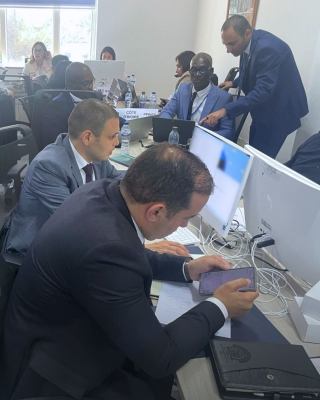
According to the organisation, the operation brought together 28 specialised officers and experts from 11 countries, who worked to identify suspected terrorists from visual content published online by jihadist groups.
INTERPOL said investigators extracted 108,076 facial images from the online visual material and subsequently deployed programmed AI agents and advanced AI-generated scripts to automate aspects of the data collection and investigative process. The technology was used to remove duplicate images and conduct quality checks, reducing the massive dataset to 6,362 unique, high-quality facial images suitable for further examination through INTERPOL’s Facial Recognition System.
The organisation, however, stressed that AI did not independently determine the identities of the suspects. It said AI-generated results were subjected to human review and verification by trained officers and analysts, in accordance with INTERPOL’s Rules on the Processing of Data.
Following the processing and comparison of the facial images, INTERPOL said 126 Foreign Terrorist Fighters had so far been identified. The intelligence obtained from the operation has subsequently been added to INTERPOL’s global databases, where it can be used to enrich existing profiles of suspected terrorists and support efforts to detect, track and disrupt their movements across border.
INTERPOL explained that its Facial Recognition System compares submitted facial images with biometric information contained in its databases to generate potential matches. However, the system’s automated results are subject to manual examination by qualified INTERPOL officers before an identification is established.
The agency said officers from its National Central Bureau in Baghdad, Iraq, also provided a substantial intelligence dataset relating to terrorism suspects during Operation Shams II, resulting in hundreds of additional images being extracted and processed.
The operation has already generated investigative leads, INTERPOL said, with some of the intelligence being used to support judicial procedures in participating countries, including a case involving two currently detained suspected Foreign Terrorist Fighters.
It added that thousands of additional images remain to be processed, meaning further comparisons could produce additional investigative leads.
Beyond facial recognition, Operation Shams II also employed cryptocurrency-tracing tools to investigate possible terrorist financing.
According to INTERPOL, the financial investigation resulted in three urgent requests to a virtual asset service provider for customer information, with the objective of disrupting suspected terrorist financing flows.
The operation also involved engagement with representatives of the online gaming industry over concerns surrounding youth radicalisation in online environments. INTERPOL said the engagement was aimed at strengthening cooperation and improving information-sharing between law enforcement and relevant private-sector stakeholders.
INTERPOL Director of Counter-Terrorism, María Carmen Muñoz González, said the operation demonstrated the potential of combining international law-enforcement cooperation with responsible AI-assisted analytical capabilities.
She said the operational model could provide a foundation for future international law-enforcement operations targeting criminal actors.
The participating countries in Operation Shams II were Côte d’Ivoire, Ghana, Iraq, Kenya, Malaysia, Nigeria, the Philippines, Qatar, Tajikistan, Tunisia and Uzbekistan.
The operation was carried out under INTERPOL’s CT TECH+ Project, funded by the European Union’s Foreign Policy Instruments and supported by the United Nations Office of Counter-Terrorism.
INTERPOL said the latest operation builds on its broader use of biometric data to identify terrorism suspects and other individuals involved in transnational crime. Its facial recognition system is designed to help police compare facial images against global biometric records, while manual verification remains an essential part of the identification process.
The development marks a significant expansion in the use of AI-assisted investigative tools against terrorist networks operating online, while also highlighting the continued role of trained law-enforcement personnel in verifying machine-generated intelligence.

