
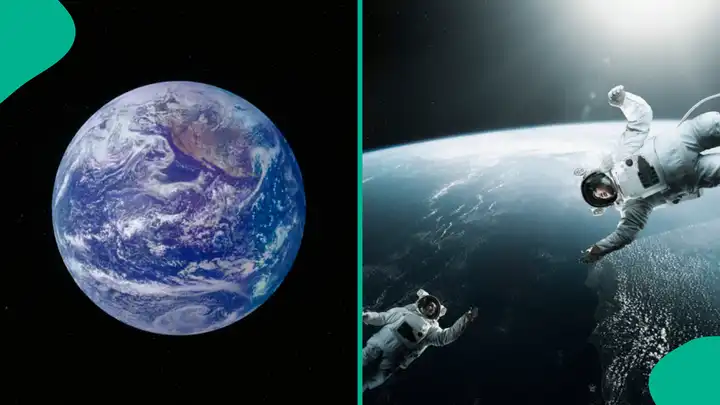
A groundbreaking study conducted by NASA, in partnership with Toho University in Japan, has made startling predictions about the possible end of the world.
Using cutting-edge supercomputer simulations, scientists modeled how rising solar radiation, climate change, and the gradual evolution of the Sun could make Earth uninhabitable — potentially much sooner than previously thought.
The research, published in Nature, detailed how the Sun’s increasing brightness and changes in Earth’s atmosphere could destabilize the planet’s delicate ecosystem. The findings warned that rising temperatures and altered oxygen levels may threaten complex life far earlier than the Sun’s transformation into a red giant.
Supercomputer Models Reveal Alarming Tipping Points
NASA’s advanced simulations allowed researchers to analyze the interactions between solar radiation, atmospheric chemistry, and ecological systems. The results showed several critical tipping points beyond which life as we know it would no longer be sustainable.
While the Sun’s red giant phase is still billions of years away, its gradual brightening poses a more immediate risk.
Lead researcher Kazumi Ozaki explained:
“For many years, the lifespan of Earth’s biosphere has been debated in relation to the Sun’s increasing brightness. Even small rises in solar output can cause extreme temperature shifts and disrupt weather patterns, rendering vast parts of the planet uninhabitable.”
According to NASA’s models, by the year 1,000,002,021, Earth’s surface temperatures could become so high that oceans would evaporate, the atmosphere would thin, and complex life would no longer survive.
Climate Change and Oxygen Decline Pose Earlier Threats
Although the planet itself may physically persist for billions of years, the study emphasized that human survival faces far more immediate dangers.
Rising temperatures, shrinking oxygen levels, and dwindling natural resources could push civilization to a tipping point within a few centuries — far sooner than any astronomical catastrophe.
The research underscored how human-driven climate change is accelerating these natural processes. Greenhouse gas emissions, deforestation, and industrial pollution are compounding the effects of the Sun’s gradual warming, hastening the planet’s decline.
Oceans Could Vanish — Ending Life as We Know It
One of the most catastrophic scenarios predicted by NASA’s models is the complete evaporation of Earth’s oceans.
Oceans regulate global climate, produce oxygen, and sustain most of Earth’s biodiversity. Their loss would mark a decisive collapse of the planet’s ecosystems, leading to mass extinction.
As temperatures rise, water will transition from liquid to vapor, drastically altering the atmosphere and leaving Earth barren and lifeless. Scientists warn that this transformation could happen long before the Sun becomes a red giant, prompting urgent discussions about interplanetary survival strategies.
Related: Asteroid Threatens Earth
In a separate report, scientists revealed that a newly discovered asteroid, 2024 YR4, has a 1-in-83 chance of striking Earth in December 2032. The asteroid, estimated to be 196 feet (60 meters) wide, is currently about 27 million miles away — close enough for ongoing observation.

