
By Chibuike Nwabuko
Politics is, by its very nature, a contest for power, influence and the direction of society. Political disagreements are therefore inevitable. Allies become opponents, protégés become rivals, and political friendships sometimes collapse under the weight of competing ambitions.
But there are moments when politics ought to yield to humanity.
The burial of a parent is one of those moments.
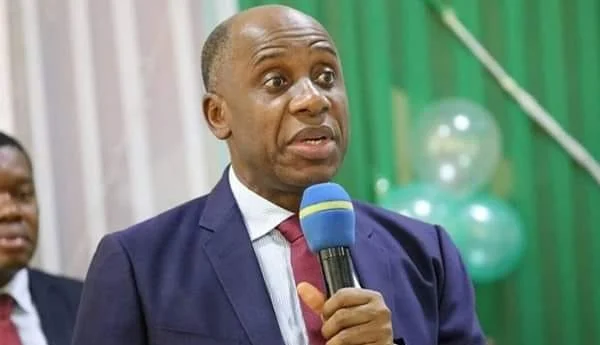
The recent burial of Dame Ezinne Mary Oduah Amaechi, mother of former Rivers State Governor and former Minister of Transportation, Chibuike Rotimi Amaechi, has therefore provided a poignant test of whether Nigeria’s political class can distinguish between political rivalry and basic human compassion.
The absence of the Minister of the Federal Capital Territory, Nyesom Wike, from the funeral has attracted considerable attention, particularly because of the extraordinary political history between the two men. Wike and Amaechi were once political associates, with Wike serving as Amaechi’s Chief of Staff when Amaechi was governor of Rivers State. Their relationship subsequently deteriorated into one of Nigeria’s most enduring and bitter political rivalries.
The significance of Wike’s absence becomes even more striking when placed beside the example set earlier this year by Kaduna State Governor Uba Sani.
When the mother of former Kaduna State Governor Nasir El-Rufai died, Sani attended the funeral despite the well-known political differences that had developed between him and his predecessor. Reports described the occasion as one in which political rivals and former allies temporarily put their differences aside to mourn with El-Rufai.
The contrast raises a fundamental question:
At what point should political rivalry stop and humanity begin?
The Wike-Amaechi relationship is particularly instructive because it did not begin with hostility.
Amaechi appointed Wike Chief of Staff after becoming governor in 2007. Prior to the appointment though, Wike had served as chairman of Obio-Akpor Local Government Area. His appointment to the Government House inner circle placed him at the heart of the Amaechi administration.
The two men subsequently travelled different political roads. Their relationship deteriorated dramatically as political interests, alliances and ambitions changed. By the time of the 2015 Rivers governorship contest, they had become fierce opponents. The rivalry subsequently extended beyond the state and became part of the broader national political contest.
The depth of their disagreement is no longer in doubt. Amaechi has publicly described Wike as a former employee, while Wike has repeatedly criticised his former principal. Their political camps have continued to trade accusations and counter-accusations over the years.
Yet political history does not erase personal history. A former political associate remains a fellow human being. A political opponent remains someone’s brother, husband, father or son. And the death of a parent is not an electoral contest. That distinction is crucial.
It is important to be fair: absence from a funeral by itself does not conclusively establish hatred, bitterness or malicious intent. A politician may have private reasons for not attending an event, and it would be irresponsible to claim knowledge of Wike’s personal motivations without evidence.
However, Wike did not merely miss an ordinary social gathering. He was absent from the burial of the mother of a man with whom he shares a remarkable political history and a common Rivers State identity.
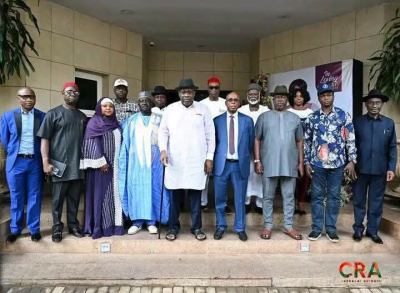
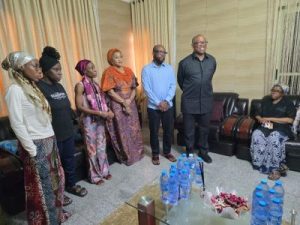
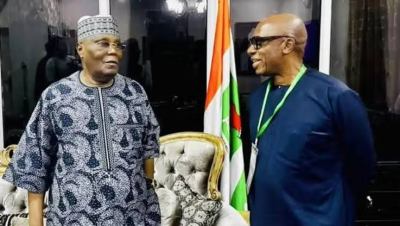
The circumstances also attracted attention because Wike had a civic reception scheduled in Ikwerre Local Government Area on the same day as the burial. Reports subsequently confirmed that Wike and Rivers State Governor Siminalayi Fubara were absent from the burial, while several prominent national politicians, including Atiku Abubakar, Peter Obi, Donald Duke and David Mark, among others attended.
That coincidence inevitably created a political narrative.
It is therefore understandable that Nigerians would ask whether the political wounds between Wike and Amaechi have become so deep that even bereavement cannot temporarily suspend them. That is where the matter becomes bigger than Wike and Amaechi.
The Uba Sani-El-Rufai Example:
The conduct of Governor Uba Sani at the burial of Hajiya Umma El-Rufai offers a useful contrast.
Sani succeeded El-Rufai as governor of Kaduna State. Their relationship subsequently became politically complicated, with Sani charting his own political course and differences emerging between the former governor and his successor.
Yet when El-Rufai lost his mother in March 2026, Sani attended the funeral. He did not have to surrender his political convictions.
He did not have to endorse every action or position of El-Rufai.
He simply recognised that mourning a deceased person’s mother is not the same thing as endorsing the politics of her son.
That is an important lesson. Indeed, reports described the funeral as an unusual moment in which political rivals and former associates came together in mourning.
This is precisely how mature politics ought to function. One can oppose a man’s policies without opposing his humanity. One can reject his political ambition without rejecting his family. One can contest his ideas without celebrating his misfortune.
Obviously, there is a larger danger when political rivalry becomes permanently personal.
When politicians begin to treat every disagreement as an existential war, society suffers. The first casualty is often civility.
The second is institutional cooperation. The third is social cohesion.
And ultimately, democracy itself suffers.
Political opponents who cannot sit together, shake hands, attend each other’s ceremonies or sympathise with each other’s bereavement send a disturbing message to their followers: that political affiliation is more important than human fraternity.
That is dangerous in a country as ethnically, religiously and politically diverse as Nigeria.
Rivers State in particular cannot afford a politics in which the personal battles of its political heavyweights become permanent divisions among ordinary citizens.
The history of Rivers politics demonstrates how powerful these rivalries can become. Amaechi and Wike have for years occupied opposing political camps, and their disagreements have influenced alliances, elections and political alignments far beyond the state.
But there must be a boundary. Politics should determine who governs; it should not determine who deserves compassion.
There is another dimension that Nigerian politicians sometimes underestimate.
Political leaders have followers.
When a political leader demonstrates extraordinary hostility toward an opponent, supporters frequently imitate that attitude. What begins as a disagreement between two politicians can therefore descend into hostility between communities, families and ordinary citizens.
A politician can reconcile privately tomorrow, but
followers who have spent years being taught to despise one another may find reconciliation much harder. This is how political bitterness acquires a life of its own.
The Wike-Amaechi saga should therefore not merely be viewed through the personalities of the two men. It should be examined as a lesson in the consequences of allowing political disagreements to become deeply personal.
Wike has every right to maintain his political convictions, just as Amaechi has the right to maintain his.
But human decency does not require political reconciliation.
Wike could attend the funeral without joining Amaechi’s political camp. He could offer condolences without withdrawing his criticisms.
He could shake Amaechi’s hand without supporting his political ambitions.
He could mourn with the bereaved family without forgetting whatever grievances he believes he has.
That is precisely the distinction mature political culture requires.
The appropriate counsel is therefore not necessarily that Wike must abandon his political opposition to Amaechi.
Rather, he should consider separating political disagreement from personal compassion.
If there are grievances, they can remain grievances.
If there are political battles, they can continue through legitimate democratic channels.
But death and bereavement should constitute a humanitarian ceasefire.
A visit to a grieving family does not make one weak.
Sometimes, it demonstrates strength.
It says: I disagree with you, but I will not allow our disagreement to destroy my humanity.
That is the standard Uba Sani’s conduct at El-Rufai’s mother’s funeral demonstrated.
And it is a standard worth encouraging among Nigerian politicians.
The people of Rivers State have witnessed too many political battles among their leaders.
From the Amaechi-Wike rivalry to the later Wike-Fubara confrontation, political differences have repeatedly dominated public discourse in the state. At some point, the political class must ask itself whether the people are benefiting from these endless confrontations.
Rivers needs roads, schools, hospitals, employment, security, investment and accountable governance.
It does not need politicians permanently locked in vendettas.
The state’s political leaders should therefore begin demonstrating that disagreement does not have to become hatred, and competition does not have to become vengeance.
A funeral should be bigger than politics
Ultimately, the controversy surrounding Wike’s absence from Amaechi’s mother’s burial is not really about whether Wike and Amaechi should become political friends again.
It is about whether political rivalry should have limits.
Dame Ezinne Mary Oduah Amaechi was a mother before she became part of a political family’s history. Her burial should have been viewed primarily as an occasion to mourn a life, comfort a bereaved family and honour the dead.
Many Nigerians understood this distinction and travelled to Rivers State despite their own political affiliations. Atiku Abubakar, Peter Obi, David Mark and other prominent figures attended the funeral.
Nigeria needs politicians who can fight fiercely over ideas and policies, but still embrace each other when humanity demands it.
The Uba Sani-El-Rufai episode shows that political rivalry can be suspended without political principles being surrendered.
The Wike-Amaechi episode, by contrast, risks reinforcing the impression that some Nigerian political rivalries have become so deeply personal that even death cannot bring a temporary truce.
That is not a healthy model for democracy.
Wike and Amaechi may never become political allies again. They may continue to disagree on virtually every major political question.
But Nigeria should expect something more fundamental from both men—and from all its political leaders:
Fight your political battles. Defend your principles. Challenge your opponents. But never allow politics to become so bitter that you lose the capacity to mourn with a fellow human being. Because political power is temporary.
Political offices expire. Elections are won and lost.
But the scars left by bitterness can outlive the politicians who created them.
And perhaps the most enduring political legacy is not how fiercely a politician defeated his opponent, but whether, in moments when politics should have been silent, he remembered to be human.
Comrade Chibuike Nwabuko – an economist, political analyst and good governance crusader, writes in from Abuja. He can be reached on ncchibism@ yahoo.com.